2026 Best Photovoltaic Distribution Box for Global Buyers
Choosing the right Photovoltaic Distribution Box can determine how safely and efficiently a solar installation operates. In 2026, global buyers face more options, but also more technical uncertainty. A low-quality enclosure may show heat discoloration, loose terminals, or moisture marks after months outdoors. These details matter. They are not cosmetic.
Dr. Martin A. Green, a leading photovoltaic researcher, has often emphasized a practical principle: “Reliable solar power begins with reliable components.” This idea applies directly to the Photovoltaic Distribution Box. Buyers should examine rated voltage, current capacity, surge protection, insulation, enclosure materials, and thermal performance. They should also verify test reports, traceable manufacturing data, and compatibility with the project’s modules and inverters. A box that looks strong may still contain undersized conductors or poorly sealed cable glands.
Real projects rarely match a catalogue perfectly. Dust, salt air, freezing temperatures, and intense sunlight can change performance. That is where product selection becomes more than a price comparison. Global buyers need clear specifications, responsive technical support, and documented quality controls. Certification alone is not enough. Sometimes, it is only a starting point.
This guide compares leading Photovoltaic Distribution Box options for commercial, industrial, and utility-scale applications. It considers protection, installation effort, maintenance access, and long-term value. Some conclusions may remain imperfect because site conditions differ. That limitation deserves attention. The best choice is not always the most advanced model. It is the model that fits the system, environment, and installer’s real experience.
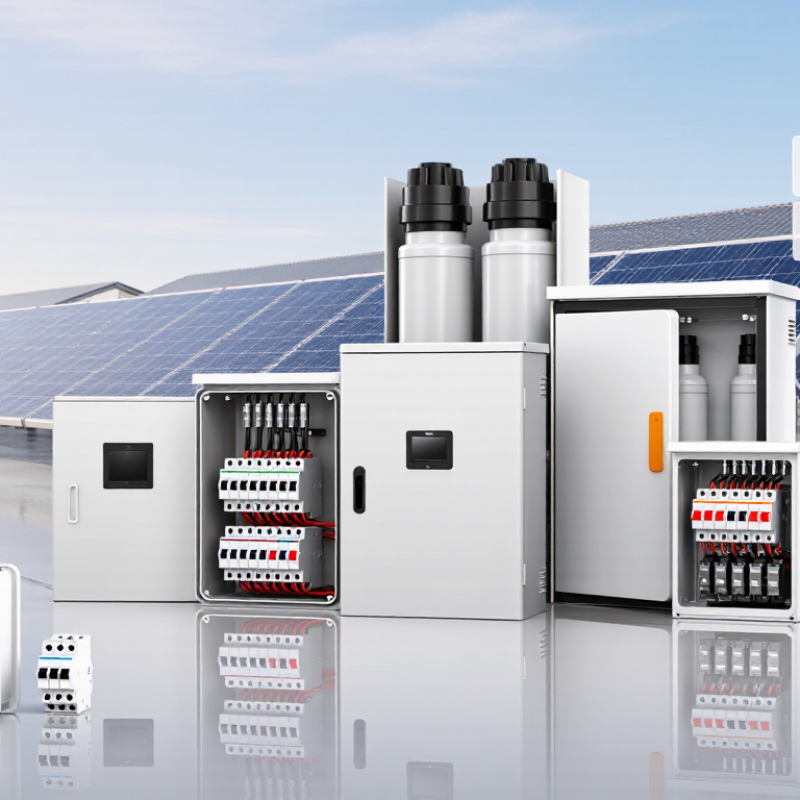
2026 PV Distribution Box Basics: 600–1,500 V DC Ratings
2026 Best Photovoltaic Distribution Box for Global Buyers
A photovoltaic distribution box rated from 600 to 1,500 V DC must match the array’s real operating conditions. The rating describes the highest permitted system voltage, not guaranteed protection in every situation. Check cold-weather open-circuit voltage carefully. Small errors matter. Temperature can increase module voltage beyond a simple nameplate calculation.
Experienced installers also verify string current, short-circuit current, fuse ratings, and isolator capacity. Every internal component should withstand the same DC voltage class.
A 1,500 V enclosure with a lower-rated surge protector creates a weak point. Use a surge protective device with a suitable photovoltaic DC rating. Confirm its discharge path and replacement indicator before commissioning.
The box needs more than a high voltage label. Inspect insulation distances, terminal spacing, enclosure strength, UV resistance, and ingress protection. Heat inside a dark enclosure can become severe. Ventilation helps, but it can also admit moisture and dust. Local climate and installation altitude deserve attention.
Relevant IEC requirements and local certification rules should guide the design, with test records available from qualified laboratories. A neat wiring diagram is useful, yet field labels often fade. Durable markings and torque records are easy to overlook. Do not guess. Review the finished box under load, because paperwork can look perfect while one connection remains dangerously loose.
Selection Criteria: IP65+, Type 2 SPD, and IEC 61439 Compliance
2026 Best Photovoltaic Distribution Box for Global Buyers
For photovoltaic projects, IP65 or higher is a practical starting point. It protects the enclosure from dust and water jets, but it does not permit immersion. Check the door gasket, cable glands, and drainage design before purchasing. A Type 2 SPD should protect against transient overvoltage on the DC or AC side, depending on the system layout. Confirm its voltage rating, discharge capacity, short-circuit rating, and coordination with upstream protection. Selection is not just about adding more components.
IEC 61439 compliance requires more than a printed label. Request design verification, routine verification records, temperature-rise data, and clear ratings for current and voltage. The assembly should match local grid conditions, installation altitude, ambient temperature, and conductor sizes. Field inspections often find loose terminals or crowded wiring. Small details matter.
Tips: Ask for test documents before approving samples. Inspect the SPD indicator window and torque markings. Compare the stated IP rating with actual gland installation. Do not assume every “IEC-ready” box has complete verification. That assumption can become expensive. A careful review may feel slow, yet it prevents avoidable failures during installation and maintenance.
2026 Best Photovoltaic Distribution Box for Global Buyers
Selection criteria: IP65+, Type 2 SPD, and IEC 61439 compliance
IP65 or Higher The first digit 6 indicates complete protection against dust. The second digit 5 indicates protection against water jets from any direction.
Type 2 SPD A Type 2 surge protective device is intended for protection against transient overvoltages caused by indirect lightning effects and switching events.
IEC 61439 The assembly should be supported by design verification and routine verification documentation in line with the applicable IEC 61439 requirements.
The chart shows the codified IP65 protection levels. IP rating levels are not a substitute for verifying Type 2 SPD documentation and IEC 61439 assembly compliance.
String Protection: 15–32 A Fuses for Modern PV Arrays
A photovoltaic distribution box needs precise string protection, especially in large and changing PV arrays. Fuses rated from 15 to 32 A can limit fault current before damaged cables overheat. However, the correct rating depends on module short-circuit current, maximum series fuse rating, and expected temperature.
A 15 A fuse may suit a lower-current string, while a 32 A fuse may support higher-output modules. Higher is not always safer. The fuse must also match the system’s maximum DC voltage and interrupting capacity. Check the technical data, not only the label. Field inspection should include fuse accessibility, secure terminals, correct cable polarity, and clear circuit markings.
Temperature deserves attention. A box installed on a dark roof can become extremely hot. Heat may reduce fuse performance and age insulation faster. Select a weather-resistant enclosure with suitable ingress protection for the installation environment. Use properly rated DC components and follow applicable electrical standards.
Small details matter. Loose torque can create heat spots. Poor cable routing can invite water entry. A neat enclosure can still hide a weak connection. Rechecking the design after installation is worthwhile, even when the drawings look perfect. No fuse arrangement is universal. Each array needs measured data, documented assumptions, and a qualified final inspection.
Global Comparison: 1,000 V vs 1,500 V Systems and 2–24 Strings
For global buyers, the 1,000 V versus 1,500 V choice changes more than the label. IEA PVPS reported over 1.6 TW of global photovoltaic capacity by the end of 2023. Larger plants now demand denser, better-monitored distribution equipment. A 1,500 V box can carry longer strings and reduce current for the same power. This may lower cable losses and simplify field layouts. The advantage is not automatic.
String count matters. A small rooftop array may need only 2–4 strings. Commercial systems often require 8–16. Utility projects can reach 24 strings per box.
Buyers should check rated current, fuse coordination, surge protection, insulation distance, and enclosure protection. A 24-string box is not always the better purchase. It can create unused channels, higher maintenance exposure, and awkward cable routing.
NREL’s utility-scale PV cost benchmarks identify 1,500 V architecture as an established design direction, especially for large ground-mounted projects. Yet cold-weather open-circuit voltage can exceed assumptions. That detail is easy to miss. A 1,000 V system may remain practical for compact arrays, shorter cable runs, or mixed module layouts. Select equipment tested under applicable IEC requirements, with clear thermal data and verified field experience. Datasheets can look perfect. Installation conditions are not. (Sources: IEA PVPS, Trends in Photovoltaic Applications 2024; NREL, Utility-Scale PV System Cost Benchmark.)