2026 Best Potassium Chloride Powder Exporter?

Choosing the 2026 Best Potassium Chloride Powder Exporter requires more than comparing online prices. Buyers need consistent assay, controlled particle size, dry packaging, and dependable shipping records. In real purchasing work, small details matter. A damp inner liner can affect handling, storage, and production performance. This guide introduces practical criteria for evaluating a Potassium Chloride Powder Exporter across agricultural, industrial, food, or other approved applications.

Experienced buyers usually request a current certificate of analysis for every relevant batch. They also verify potassium content, moisture, insoluble matter, particle distribution, and packaging specifications. A reliable supplier should explain its testing methods clearly. Independent laboratory results can strengthen confidence, especially for regulated or sensitive applications. Clear documentation matters too, including the safety data sheet, origin information, loading photos, and export experience. A 25-kilogram bag, sealed pallet, or moisture barrier should match the buyer’s storage conditions.

A polished website proves little. Delivery history, responsive communication, and honest limitation-sharing are more useful signals. The strongest exporter can discuss lead times, minimum order quantities, port options, and quality claims without vague promises. Buyers should also confirm destination-country requirements before signing a contract. Standards differ. Some comparisons remain imperfect because product grades, applications, and freight terms are not identical. That is worth admitting. A low price may hide weaker packaging or longer transit risk. A dependable decision combines verified quality, transparent service, practical experience, and documented compliance. This approach helps companies identify a supplier that supports stable operations in 2026, rather than simply choosing the most visible name.
2026 Best Potassium Chloride Powder Exporter?

What Is Potassium Chloride Powder and Why Is It Exported?

Potassium chloride powder is a refined inorganic salt, commonly written as KCl. It appears as white or off-white crystals or fine powder. When mixed with water, it dissolves into potassium and chloride ions. The material is usually produced from mineral ores or concentrated brines. Processing removes much of the unwanted moisture and insoluble matter. In practice, its quality depends on purity, particle size, moisture, and handling conditions. It is not one universal grade. Agricultural grades may support potassium fertilizer production, while controlled industrial or food applications require different specifications. End use must determine the acceptable limits.

The main reason KCl powder is exported is uneven resource distribution. Some regions have large potash deposits, while farming and manufacturing demand is spread across many countries. Export shipments connect mines, processors, distributors, and local users. Farmers value soluble potassium because it supports water regulation, enzyme activity, and crop development. Manufacturers may use KCl in selected chemical processes, water-treatment formulations, or regulated nutritional products. Each use needs careful verification. A fertilizer shipment should not automatically be considered suitable for food or pharmaceutical production.

Reliable exporters normally provide a certificate of analysis, batch number, safety data, and clear packaging details. They should also confirm particle size, assay, moisture, and contaminant limits before loading. Powder can cake during humid ocean transport. Liners, sealed bags, pallets, and dry storage reduce that risk, but they do not eliminate it. This is where practical experience matters. Buyers should check import rules, labeling, and destination standards independently. “High purity” can be vague without numerical limits. Some decisions still require review; assumptions are expensive.

How to Define the Best Potassium Chloride Powder Exporter in 2026

How to Define the Best Potassium Chloride Powder Exporter in 2026

The best potassium chloride powder exporter should prove consistency, not simply offer a low price. The USGS Mineral Commodity Summaries 2025 estimated global potash production at roughly 73 million metric tons in 2024. This scale makes supply reliability important. Buyers should request recent certificates of analysis for potassium content, moisture, particle size, and insoluble matter. For fertilizer-grade powder, a typical specification is about 60–62% K2O equivalent. Small differences can affect blending, storage, and field performance. A polished website is not evidence.

Export experience also requires documented quality systems. Look for batch traceability, independent laboratory testing, stable packaging, and clear safety data sheets. The International Fertilizer Association’s 2024 outlook placed global fertilizer demand near 205 million tonnes of nutrients, showing sustained pressure on logistics and availability. However, industry forecasts can change quickly. That deserves attention. A reliable exporter should explain production capacity, loading ports, lead times, and contingency plans without vague promises. UN Comtrade data can help buyers compare recent trade activity, although reporting delays reduce its usefulness.

Tips: Ask for three recent batch reports, not one perfect sample. Confirm whether “powder” means a controlled particle range. Check pallet strength, moisture barriers, and container loading photos. Verify export documents before payment. Compare delivered cost, not only the quoted product price. In my experience, the cheapest offer may hide repacking fees, inconsistent fineness, or delayed shipment. Independent testing remains worthwhile, even when the supplier appears experienced.

Which Product, Purity, and Packaging Standards Matter Most?

2026 Best Potassium Chloride Powder Exporter?

Choosing a potassium chloride powder exporter requires more than comparing prices. The product must match its intended use. Fertilizer-grade material may accept different limits than food, laboratory, or pharmaceutical applications. Ask for the exact grade, assay range, moisture level, insoluble content, and particle-size distribution. A clear certificate of analysis should identify the batch, test methods, and testing date.

Purity standards deserve close attention. Reliable suppliers can provide traceability from production to loading. Check heavy metals, sodium content, and microbiological data when the application requires them. Independent laboratory testing is useful, especially before a large shipment. I have seen attractive paperwork hide inconsistent particle sizes. That creates dosing problems later. A certificate alone is not enough.

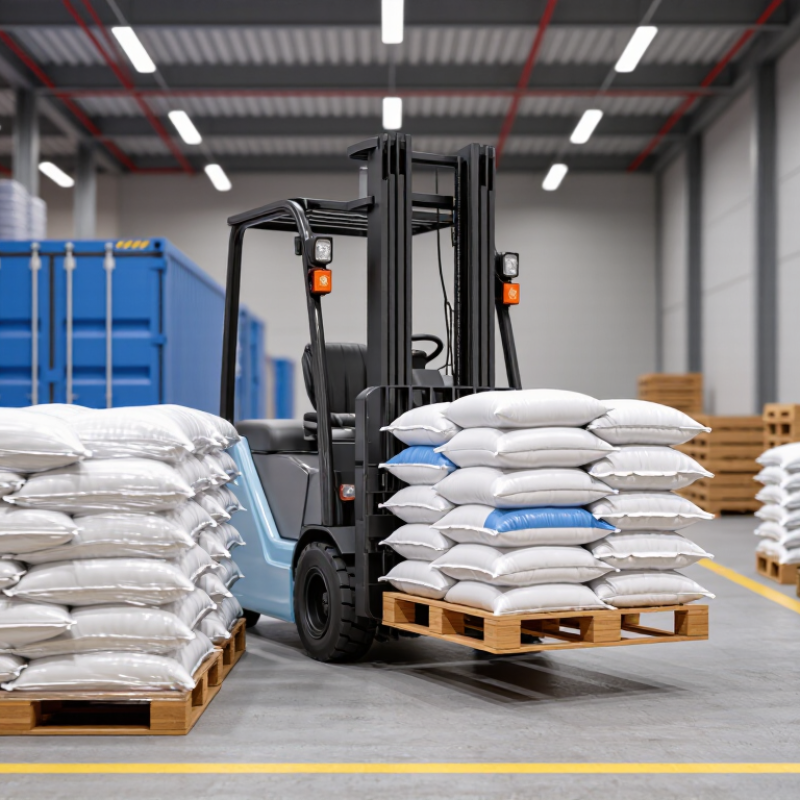
Packaging affects product quality during transport. Moisture-resistant inner liners, strong outer bags, secure stitching, and clean pallets help prevent caking and contamination. Common formats include 25-kilogram bags and larger bulk bags, but the best option depends on warehouse handling. Labels should show product name, net weight, batch number, origin, and storage guidance. Confirm the destination’s import and labeling requirements before production. Small details matter. A torn bag at a humid port can damage an otherwise acceptable shipment. Delivery records, safety data sheets, inspection reports, and responsive communication also reveal an exporter’s reliability. Some packaging choices still need review after real transport trials.

How to Verify an Exporter’s Compliance, Capacity, and Reliability

2026 Best Potassium Chloride Powder Exporter?

How to Verify an Exporter’s Compliance, Capacity, and Reliability

Choosing a potassium chloride powder exporter requires more than comparing prices. Request a current product specification, safety data sheet, and representative certificate of analysis. Check potassium content, moisture, particle size, impurities, packaging, and production date. The documents should match the actual batch, not a generic template. Confirm whether an independent laboratory can verify the results before shipment.

Compliance must fit the destination market. Ask for manufacturing licenses, export records, origin documents, and applicable customs information. Review the exporter’s quality system and batch traceability process. Can they identify the raw material source, production line, and final inspection record? A factory tour, live video inspection, or third-party audit can reveal more than polished files. Still, remote checks have limits.

Capacity needs practical evidence. Request recent shipment volumes, standard lead times, loading photos, warehouse conditions, and container-handling procedures. Ask how the supplier manages peak demand or equipment failure. Reliability appears in small details: prompt answers, consistent specifications, secure packaging, and clear claims procedures. Test a sample, but do not treat one successful batch as permanent proof. Markets change. Suppliers can change, too. A careful buyer should review performance after every shipment, even when the first delivery looks perfect.

A Practical Framework for Choosing the Right Export Partner

2026 Best Potassium Chloride Powder Exporter?

A Practical Framework for Choosing the Right Export Partner

Choosing the right potassium chloride powder exporter in 2026 requires more than comparing quoted prices. A practical framework starts with product identity, intended use, and measurable specifications. Ask for assay, moisture, particle-size distribution, and packaging details. Request a recent certificate of analysis from each production lot. Good exporters explain testing methods, not just numbers. They should also describe how samples are collected and retained. Small details matter.

Experience becomes visible during difficult questions. Can the exporter maintain consistent granulation across seasons? How are bags protected from humidity during container loading? Ask for photos of pallet wrapping, warehouse floors, and sealing procedures. Confirm production capacity with realistic monthly figures, not impressive annual claims. A video call with technical and logistics staff may reveal more than a polished brochure. I would also request references from comparable importers, while recognizing that references can be selective.

Reliability depends on traceable paperwork and disciplined communication. Check the legal company name, manufacturing site, export history, and destination-country requirements. Confirm the SDS, certificate of origin, commercial invoice, packing list, and inspection process before finalizing payment terms. Independent pre-shipment testing can reduce avoidable surprises. Still, no framework removes every risk. I once treated fast replies as proof of competence; that was a weak assumption. A slower supplier with clearer records may be safer. Define acceptance limits, complaint timelines, and replacement procedures in writing. Leave room for a small trial shipment.

2026 Best Potassium Chloride Powder Exporter? - A Practical Framework for Choosing the Right Export Partner

A neutral comparison framework for evaluating potassium chloride powder suppliers without relying on company names or unsupported promotional claims.

Evaluation Dimension Relevant Data or Practical Benchmark Documents or Checks to Request How to Interpret the Result
Chemical Identity Potassium chloride is KCl, with CAS Registry Number 7447-40-7. The product description should clearly state whether the material is fertilizer grade, industrial grade, feed grade, or another defined grade. Current specification sheet, Safety Data Sheet, Certificate of Analysis, and product labeling. Strong The grade, intended use, and chemical identity are consistent across all documents.
Assay and Purity Compare the guaranteed KCl content and impurity limits rather than using the phrase “high purity” alone. Fertilizer products are commonly marketed by potassium equivalent as K2O; approximately 63.1% K2O is the theoretical equivalent for pure KCl, while commercial specifications may be lower. Batch-specific assay results, test method, sampling date, and limits for sodium, magnesium, calcium, moisture, and insoluble matter. Strong The supplier provides measured values and test methods, not only a general purity statement.
Particle Size “Powder” is not a universal particle-size definition. A reliable offer should specify the requested sieve range, such as passing a defined mesh or reporting D10, D50, and D90 values. Particle-size distribution report, sieve-analysis method, representative sample, and confirmation that the result applies to the quoted grade. Strong Particle-size data are quantitative and match the buyer’s equipment and application.
Moisture and Caking Moisture limits should be stated as a maximum percentage. Hygroscopic behavior, storage humidity, and caking tendency can affect flowability and downstream processing. Moisture test result, storage recommendation, anti-caking declaration if applicable, and photos of packed material from a recent batch. Check Unclear moisture limits or unsupported “free-flowing” claims increase handling risk.
Color and Appearance Potassium chloride may appear white, off-white, or reddish depending on mineral source and processing. Color alone does not establish purity or suitability. Appearance specification, representative sample, product photographs, and a full impurity profile. Neutral Appearance is acceptable only when it meets the agreed specification and application requirements.
Solubility and Application Fit Solubility depends on temperature, concentration, particle size, and water quality. Fine powder may dissolve faster than coarse material, but the customer should define the required dissolution performance. Solubility or dissolution test conditions, application trial results, and a sample tested in the buyer’s process water where appropriate. Strong Performance is demonstrated under conditions similar to the intended use.
Quality Management A documented quality system should control incoming raw materials, production, laboratory testing, batch release, complaints, and corrective actions. Quality certificate, audit questionnaire, batch traceability procedure, calibration records, and sample Certificate of Analysis. Strong The supplier can trace a delivered lot from production records to final shipment.
Regulatory and Safety Documents The SDS should identify hazards, handling, storage, transport information, and emergency measures according to the destination-market requirements. The required documents vary by end use and jurisdiction. Current SDS, technical data sheet, labeling artwork, regulatory declarations, and destination-country import requirements. Strong Documents are current, internally consistent, and prepared for the destination market.
Packaging Options Common commercial formats include 25 kg bags, 500–600 kg big bags, and bulk shipments. The correct option depends on annual volume, warehouse equipment, moisture control, and unloading method. Packaging specification, bag material, liner details, pallet configuration, gross/net weight, and loading photographs. Fit-Based The best package is the one that minimizes contamination, loss, and handling cost in the buyer’s facility.
Export and Shipping Capability Compare Incoterms, port of loading, estimated production lead time, transit time, minimum order quantity, container utilization, and demurrage responsibilities. Written quotation, Incoterm version, pro forma invoice, packing list template, booking procedure, and shipment references with confidential details removed. Strong Commercial and logistics responsibilities are explicit before payment or production begins.
Price Comparability Compare the same grade, assay, particle size, packaging, quantity, Incoterm, payment terms, and validity period. A lower price may reflect lower specification or excluded logistics costs. Itemized quotation showing product price, packaging, inland transport, export charges, freight assumptions, insurance, and taxes where applicable. Check Reject price comparisons that do not use identical technical and delivery conditions.
Pre-Shipment Inspection Independent inspection can verify quantity, packaging, marking, appearance, and selected laboratory parameters before dispatch. It does not replace a complete quality agreement. Agreed inspection scope, sampling plan, laboratory method, inspection company details, and release criteria. Strong Inspection criteria are agreed in writing before manufacturing or loading.
Sample-to-Bulk Consistency The production lot should match the approved sample in color, particle size, moisture, packaging, and documented chemical parameters. Retained sample policy, approved reference sample, lot-specific CoA, and contractual remedy for non-conforming goods. Strong The purchase contract links acceptance to measurable specifications rather than sample appearance alone.
Payment and Risk Control Payment terms should match the level of supplier verification. Larger first orders generally justify staged payment, documentary control, or an independently verified release process. Signed sales contract, banking-name verification, pro forma invoice, refund terms, and clearly defined dispute-resolution provisions. Check Avoid payments to unrelated third parties or bank accounts that cannot be verified against the contracting entity.
Recommended Decision Method Score each shortlisted exporter from 1 to 5 across specification fit, documentation, quality control, logistics, landed cost, communication, and risk management. Weight the categories according to business priorities. Completed supplier questionnaire, quotation comparison sheet, sample-test results, inspection report, and internal approval record. Best Practice Select the partner with the strongest verified total value, not automatically the lowest quoted price.

Search our website