2026 Top Trends in Circuit Board Manufacturing You Should Know?
In the rapidly evolving world of circuit board manufacturing, staying ahead of trends is vital. According to Dr. Emily Tran, a leading expert in the field, “Understanding emerging technologies can reshape our production processes.” Her insights emphasize the importance of recognizing new developments.
As we approach 2026, several trends are critical for circuit board manufacturing. Sustainability is at the forefront. Many companies now prioritize eco-friendly materials and processes. This shift not only reduces waste but also meets consumer demand for greener products.
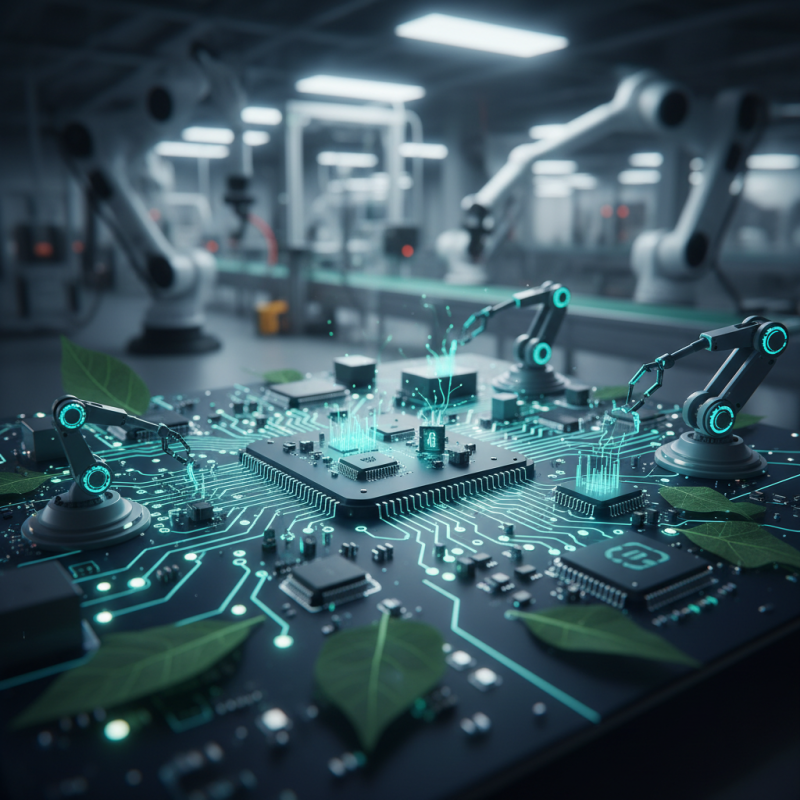
Automation is another significant trend. Advanced robotics and AI are transforming production lines. However, this can raise challenges. Not all businesses can adapt quickly. Moreover, the integration of new technologies requires thoughtful planning and training. It's a delicate balance that can lead to both success and setbacks in the industry.
2026 Forecast: Advancements in Automated Circuit Board Production Techniques
The automation of circuit board production is transforming the manufacturing landscape. As technology advances, the adoption of automated techniques increases. According to a recent industry report, automated solutions can enhance production efficiency by 30%. This shift is crucial as demand for faster turnaround times rises.
Modern automation relies on AI and machine learning. These technologies can identify defects in real-time. They provide data-driven insights for improving workflow. For instance, automated inspection systems reduce error rates significantly. However, the transition isn't without challenges. Skilled operators are still needed to oversee these systems. Companies must invest in training to adapt to this new paradigm.
New techniques in manufacturing are not just about speed. They also focus on sustainability. A report showed that automated systems can decrease waste by up to 20%. But, the initial investment can be daunting for many businesses. Balancing cost with technological advancement is essential. Automation has great potential, yet it demands careful implementation strategies.
Sustainable Materials: The Shift Towards Eco-Friendly Circuit Board Manufacturing
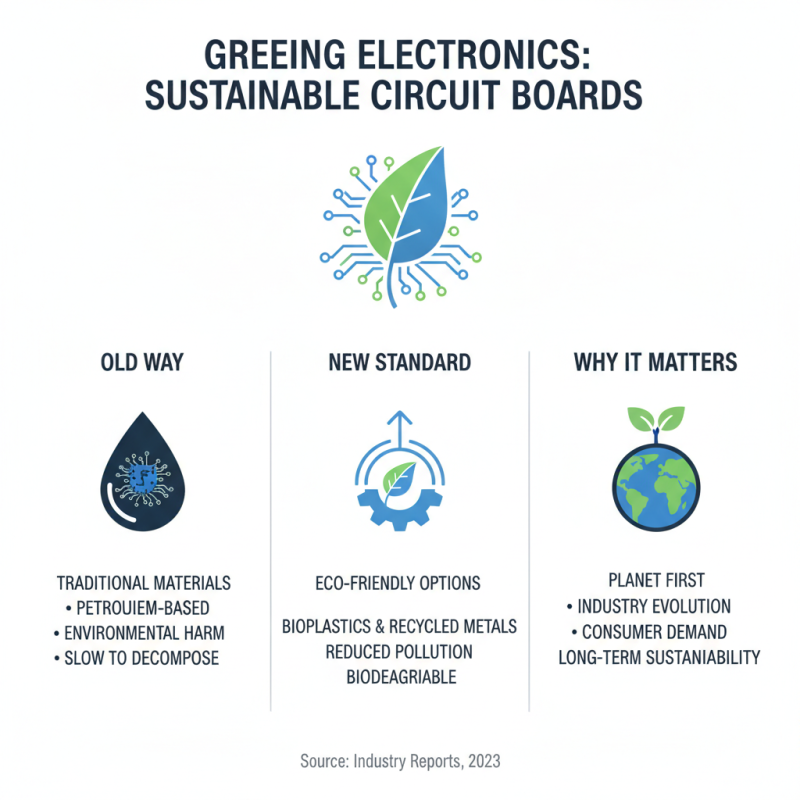
In recent years, the circuit board manufacturing industry has begun prioritizing sustainable materials. Eco-friendly options are not just a trend; they are rapidly becoming essential. Traditional materials, often petroleum-based, are long overdue for a reevaluation. They leave a lasting negative impact on our environment.
Switching to biodegradable materials or recycled components can reduce waste massively. These materials can cut down on harmful emissions during production. However, challenges remain. The performance of eco-friendly alternatives must meet the standards set by traditional methods. Finding this balance is not always straightforward. Manufacturers often face difficulties in sourcing these sustainable materials.
Additionally, the cost of implementing greener practices can be high. Some businesses find it hard to justify the investment when profit margins are tight. This shift requires a mindset change, not just technology. Many manufacturers must rethink their entire production process, which can be daunting. Despite these hurdles, the move toward sustainability is crucial for the future of circuit board manufacturing.
Industry 4.0: Integrating IoT in Circuit Board Manufacturing Processes
The integration of IoT technology in circuit board manufacturing is transforming the industry. This shift brings about incredible opportunities, yet it poses significant challenges. By embedding sensors in manufacturing processes, companies can gather real-time data. This data can optimize production efficiency and reduce errors. However, interpreting this vast amount of information can be overwhelming. Many manufacturers struggle to analyze and utilize it effectively.
Implementing Industry 4.0 principles requires careful planning. Teams must train employees to understand IoT technologies fully. Communication between devices and systems must be seamless. Unfortunately, many firms overlook these aspects, leading to potential failures. Connectivity issues can hinder production and delay timelines. Manufacturers must invest in robust infrastructure to support this evolution.
While IoT can streamline processes, security remains a significant concern. Cyber threats target connected devices, making every manufacturer vulnerable. Protecting data and systems from breaches is not easy. Many organizations underestimate these risks, focusing solely on production efficiency. This oversight could lead to dire consequences in the long run. Balancing innovation with security is essential for success in modern circuit board manufacturing.
Growing Demand for Flexible Circuits: Insights into Market Trends
The flexible circuit market is rapidly evolving. Recent data indicates that the global flexible circuit market will reach approximately $30 billion by 2026. This surge is driven by innovations in electronics and increasing demand across various sectors, particularly in consumer electronics and automotive industries.
In 2023, flexible circuit production accounted for over 20% of the total circuit board manufacturing market. This trend reflects a shift toward miniaturization and lightweight products. As devices become smaller, flexible circuits provide essential advantages. They can be bent, folded, or twisted without compromising performance. However, quality control remains a concern. Manufacturers often face challenges in maintaining consistency.
The rise in wearable technology is also a significant factor in this market trend. Flexible circuits fit seamlessly into compact spaces, enabling enhanced functionality. Yet, sustainability is an area needing reflection. Many companies struggle to balance innovation with environmentally-friendly practices. As the industry grows, addressing these issues will be crucial for long-term success.
2026 Top Trends in Circuit Board Manufacturing
| Trend |
Impact on Industry |
Projected Growth Rate |
Key Applications |
| Flexible Circuits |
Increased adaptability in various electronics |
15% CAGR |
Wearable technology, smartphones |
| Miniaturization |
Enhanced performance in compact designs |
10% CAGR |
IoT devices, medical instruments |
| 3D Printing |
Reduction in manufacturing costs |
20% CAGR |
Prototyping, custom circuits |
| Sustainability Initiatives |
Focus on eco-friendly materials |
8% CAGR |
Consumer electronics, automotive |
| Artificial Intelligence Integration |
Automation in design and manufacturing |
12% CAGR |
Smart devices, robotics |
Impact of AI and Machine Learning on Circuit Board Design and Testing
Artificial Intelligence (AI) and Machine Learning (ML) are transforming circuit board design and testing. Designers can now leverage these technologies to enhance accuracy and efficiency. AI helps in predicting potential failures before they occur. This predictive capability can save time and resources in the long run.
During the design phase, AI algorithms analyze vast datasets. They identify patterns that humans might overlook. For instance, they can suggest design adjustments based on previous iterations. However, the reliance on AI also poses risks. Sometimes, AI may generate unnatural design choices. These choices may not align with practical usability. Engineers must continuously validate AI suggestions.
Machine learning plays a crucial role in testing processes. It automates the detection of defects in circuit boards. Traditional testing methods can be slow and labor-intensive. Yet, ML algorithms can process data at a remarkable speed. They learn from previous tests to improve future performance. Still, there’s a need for human oversight. Not every anomaly detected by ML is significant. Engineers must discern which issues warrant attention. Balancing AI capabilities and human intuition is essential for optimal outcomes.