What Are the Best Practices for Circuit Board Manufacturing?
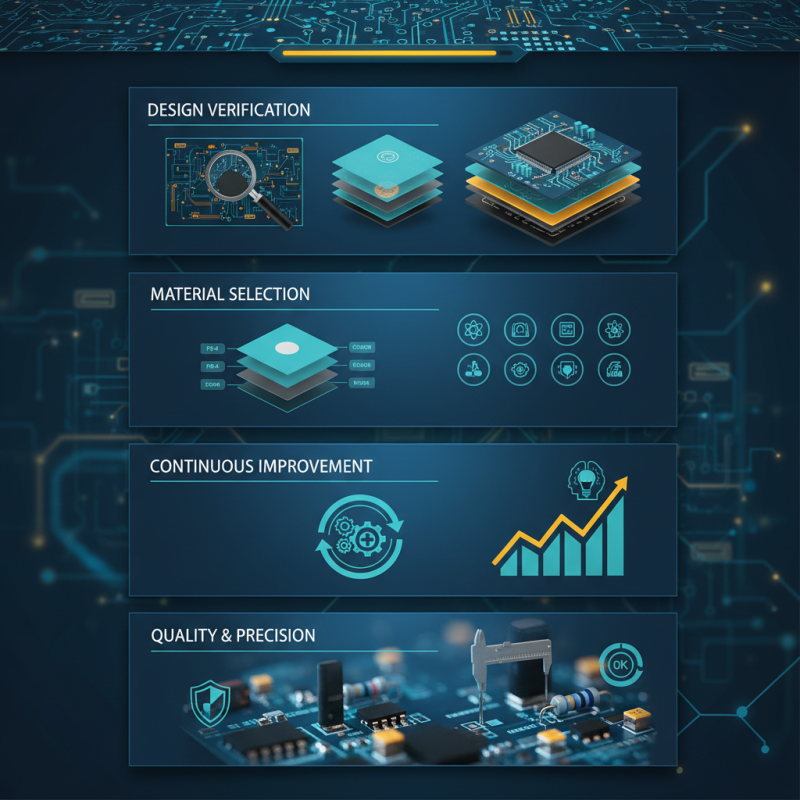
Circuit board manufacturing is a critical industry driving technological advancements worldwide. Expert John Smith, a leading engineer in this field, once stated, “Quality and precision are paramount in circuit board manufacturing.” His insight reflects the need for best practices that ensure efficiency and reliability in the production process.
In an industry where every detail matters, the importance of adhering to rigorous standards cannot be overstated. Practices such as thorough design verification and material selection impact both performance and longevity. Neglecting these aspects can lead to failures in electronic devices, resulting in high costs and delays. It's crucial for manufacturers to recognize that even a small oversight can have significant consequences.
Organizations must also embrace continuous improvement. Learning from past mistakes and refining processes can enhance overall quality. While many strive for perfection, acknowledging areas that require enhancement is vital for long-term success in circuit board manufacturing. The path to excellence is ongoing, demanding both dedication and adaptability from industry professionals.
Best Materials for Circuit Board Production
When it comes to circuit board production, the choice of materials is critical.
High-quality materials ensure durability and performance.
Copper, typically used for traces, provides excellent conductivity. According to the IPC (Institute for Printed Circuits), copper's conductivity is around 58 MS/m. This makes it a top choice for various applications.
For the substrate, FR-4 is widely favored due to its balance of electrical insulation and thermal stability. Its dielectric constant of about 4.5 makes it reliable under different environmental conditions. However, it does have limitations. In high-frequency applications, alternate materials such as Rogers or polyimide may be preferred, as they offer better performance. Reports suggest that as much as 30% of boards fail due to material choice.
Moreover, surface finishes play a vital role in production. Manufacturers often use ENIG or HASL options to protect copper traces. Each finish has unique properties, influencing solderability and shelf life. While ENIG is more expensive, its benefits surpass the costs for many manufacturers.
Consistency in material choice is key for optimal performance and reliability in circuit board manufacturing.
Design Considerations for Effective Circuit Board Layout
Effective circuit board layout is crucial for both functionality and manufacturability. When designing a PCB, pay attention to the placement of components. Ensure that components are strategically positioned. This minimizes interference and optimizes signal integrity. A compact design may save space, but it can lead to issues in heating and signal degradation.
Moreover, consider the routing of traces. Keep high-frequency signals short and direct to reduce noise. Wider traces can carry more current, but can also increase capacitance. Balance is key here. Layer stacking should also be approached with care. Excessive layers can complicate the process and introduce difficulties in debugging.
It's important to anticipate future revisions in your designs. Adaptability can enhance a PCB’s utility and longevity. Document your design choices meticulously, as this helps future engineers understand your thought process.
Testing prototypes is often overlooked but essential. A design can look ideal on paper but fail during real-world testing. Be ready to revise your design based on performance data. This iterative process can seem burdensome, yet it’s where true innovation often arises.
Quality Control Measures in Circuit Board Manufacturing
Quality control is paramount in circuit board manufacturing. According to industry reports, up to 30% of defects arise during the production process. To combat this, manufacturers implement robust inspection protocols at multiple stages.
Automated optical inspection (AOI) tech identifies defects early. This reduces rework and cuts costs, providing a more efficient production flow.
Additionally, the importance of continuous testing cannot be overstated. Random sampling during production ensures that even small batches meet quality standards. However, relying solely on these measures can lead to complacency. Regular audits and third-party evaluations help ensure accountability. These practices build trust not only within teams but also with customers.
Documentation and traceability are also crucial components of quality control. Maintaining detailed records allows for easier identification of recurring issues. However, some companies overlook this, leading to gaps in quality assurance. Transparency in processes fosters a culture of continuous improvement in circuit board manufacturing.
Sustainability Practices in Circuit Board Fabrication
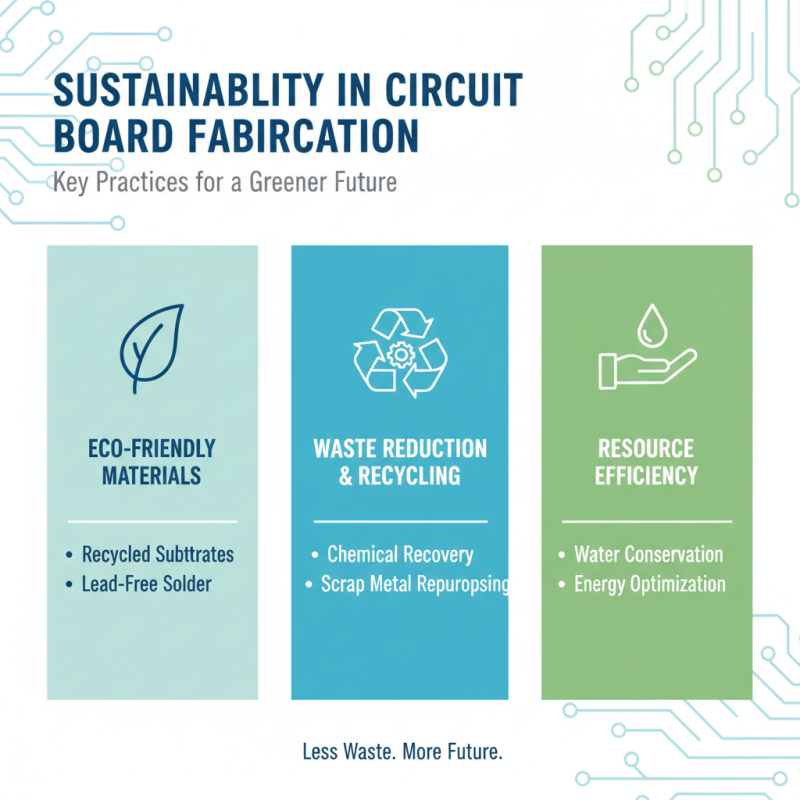
Sustainability practices in circuit board fabrication are becoming essential. As environmental concerns rise, manufacturers are shifting towards greener methods. Effective waste management is a key area. Proper disposal of chemicals used in the process reduces harmful impacts.
Tips for sustainable manufacturing include sourcing materials locally. This reduces transportation emissions and supports local economies. Investing in energy-efficient machinery also plays a vital role. Such machines consume less power, leading to cost savings in the long run.
Another important practice is regular maintenance. Well-maintained equipment runs effectively, minimizing waste. However, some companies overlook this, leading to increased energy use. It’s a simple yet often neglected step. Reducing water usage is critical as well. Exploring alternative cooling methods can significantly lower water consumption in the fabrication process.
Advancements in Technology for Circuit Board Production
Advancements in technology have significantly transformed circuit board production. Innovative techniques, like additive manufacturing, allow for greater design flexibility. This method changes how components are layered and assembled. It opens doors for complex circuitry in smaller spaces. However, this technology is not without challenges. Ensuring consistent quality across different production runs can be difficult.
Another breakthrough is the use of automation in assembling circuit boards. Robots streamline the placement of components, reducing labor costs and human error. This acceleration benefits companies aiming for quicker turnaround times. Nevertheless, it raises questions about reliance on machines. Over-reliance could lead to vulnerabilities if systems malfunction.
Artificial intelligence is also making its mark. AI algorithms enhance quality control by predicting potential defects during production. This proactive approach can save time and resources. Yet, there could be pitfalls. The balance between human oversight and AI intervention requires careful consideration. Each advancement prompts new questions about safety, reliability, and precision. The path forward is about embracing technology while reflecting on its implications.