Choosing a printed circuit board manufacturer can shape a product’s cost, reliability, and time to market. In 2026, buyers face a crowded field of regional specialists and global suppliers. A polished website is not proof of consistent production. Ask for evidence.
This guide introduces manufacturers worth evaluating and the capabilities that distinguish them. It looks at prototype speed, production capacity, material options, and engineering support. It also considers practical details: controlled impedance, stack-up planning, surface finishes, inspection methods, and documented quality processes. These factors matter when a board must fit a tight enclosure or carry high-speed signals without costly redesigns.
No single supplier is best for every project. A startup ordering a small prototype run may value fast feedback, while a medical or industrial team may need traceability and stable repeat production. Request sample documentation, clarify minimum order quantities, and compare quoted lead times with realistic schedules. Small details count.
Even a careful comparison has limits. Capabilities change, and a strong sales conversation cannot replace a technical review. Treat this overview as a starting point, then confirm current certifications, process limits, and support directly with each manufacturer. Look closely. Ask better questions. The right choice is the partner whose verified capabilities match your design, volume, and risk—not simply the lowest price.
Assessing the best PCB manufacturers in 2026 means checking production evidence, not polished sales claims. Request sample inspection records, electrical-test results, and traceability from bare board to finished lot. IPC-6012 sets qualification and performance requirements for rigid printed boards, while IPC-A-600 describes visual acceptability criteria. Ask how a supplier applies these standards to your board’s layer count, materials, and tolerances. A certificate alone is not proof of consistent results.
Look closely at engineering support. Can the team review your Gerber files, flag tight annular rings, and explain impedance-control limits before tooling begins? Ask for actual lead times, defect trends, and corrective-action examples. A low quote can still be expensive. One useful test is a small pilot order: compare measured thickness, solder-mask alignment, and delivery dates against the written specification. I would leave room for judgment here; one late sample may reveal a process issue, or simply a bad week.
Environmental controls and material records deserve attention, too. The Global E-waste Monitor 2024 reported 62 million tonnes of electronic waste worldwide in 2022, with only 22.3% documented as formally collected and recycled. That figure does not measure PCB-factory waste directly, but it makes material stewardship worth checking. Ask how the manufacturer tracks copper, laminate, and process chemicals, and whether it can provide relevant waste and sourcing records. Look for clear answers, not vague promises.
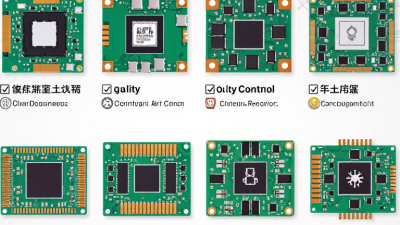
Choosing a PCB manufacturer in 2026 means looking beyond the headline layer count. A simple one- or two-layer board may need tight spacing, controlled impedance, or unusual materials. At the other end, a 40-plus-layer stack-up demands careful planning for thickness, copper balance, and signal integrity. More layers do not automatically mean better performance.
HDI designs add another kind of challenge. Fine-pitch components may require microvias, thin dielectric layers, and sequential lamination. Ask how the manufacturer verifies via reliability and tracks impedance across production runs. Cross-section samples and clear design-for-manufacturing feedback can reveal more than a capability chart. Details matter. A chart can look impressive while leaving process limits unclear.
Flex and rigid-flex boards bring mechanical behavior into the design. Check the proposed bend radius, copper construction, and whether the flex area moves repeatedly or stays folded in place. These details affect material choices and layout. The transition between rigid and flexible sections deserves close review, too. It is easy to over-specify a board before testing a prototype; I would revisit that assumption. A useful supplier should explain trade-offs, flag risks early, and show how prototypes can move into repeatable production.
Choosing a printed circuit board manufacturer in 2026 means looking beyond a certificate on the wall. IPC-6012 Class 2 and Class 3 define acceptance requirements for rigid boards, but the selected class must match the product’s use and procurement documents. Class 3 generally sets tighter expectations for high-reliability applications. It is not automatically the right choice for every design.
Check the evidence. Ask for inspection records, microsection reports, and plating-thickness results from relevant production lots. On a sample board, details such as copper coverage, hole plating, and annular rings can reveal how consistently a supplier controls the process. ISO 9001 supports a structured quality management system, but certification alone does not prove that every board will meet specification. Review its current scope and the manufacturing site covered.
For automotive supply, IATF 16949 adds sector-specific quality requirements and stronger expectations for traceability and process control. Confirm that the certificate applies to the actual facility and relevant activities. Then compare documented controls with what operators do on the production floor. Paperwork can look tidy while a process drifts; that possibility deserves attention. Ask how nonconforming boards are contained, investigated, and prevented from recurring. A capable manufacturer should answer with records and specific examples, not just broad assurances.
A timeline of when three widely used PCB quality benchmarks were first published or issued.
ISO 9001 began in 1987, IPC-6012 was first issued in 1992, and IATF 16949 was published in 2016. These dates describe the standards’ histories, not manufacturer performance or rankings. When evaluating a supplier, confirm the applicable current revision, IPC-6012 class, and certification scope.
When comparing printed circuit board manufacturers in 2026, look beyond a headline copper weight. A 35 μm copper callout should specify whether it describes starting foil or finished copper. Plating and etching can change the final thickness. Ask for the measurement method and a cross-section report from a representative production panel. Numbers need context.
Trace tolerance also needs a clear definition. A supplier might quote a width range, yet the measurement location and inspection method matter. Request actual tolerances for the copper weight, layer, and trace geometry in your design. Yield figures deserve the same scrutiny: ask whether they represent first-pass yield or boards accepted after rework. That distinction changes the comparison. A low quoted defect rate is not useful without a consistent denominator.
Lead time should separate engineering review, tooling, fabrication, and shipping. For example, a schedule may look short until impedance approval or a material substitution adds days. Ask for recent delivery performance on comparable layer counts and quantities, not only the best-case estimate. A spreadsheet can still hide uncertainty. I would treat unusually precise promises cautiously and confirm how delays are reported. A clear metric, backed by a defined method, is more useful than a polished number.
Automotive and medical applications place very different demands on a circuit board. The IEA’s Global EV Outlook 2024 reports nearly 14 million electric cars sold in 2023, about 18% of global car sales. Boards near inverters and battery packs must handle heat, vibration, and high current. Ask manufacturers about thermal cycling, copper weight, high-voltage spacing, and traceability—not price alone. Medical devices need controlled process records, cleanliness controls, and documented change management. Patient monitors and imaging systems depend on stable signals. Small defects matter.
Telecom boards often require low-loss materials, consistent impedance, and repeatable multilayer registration. GSMA’s 2024 Mobile Economy report counted 1.6 billion 5G connections at the end of 2023, and projects 5.5 billion by 2030. AI servers add pressure for dense interconnects, fine-pitch routing, and careful thermal design. IDC’s 2024 spending guide projects worldwide AI spending will reach $632 billion by 2028. That figure is not a PCB-market forecast. It is a demand signal.
Match the manufacturer’s process strengths to the application: automotive-grade testing for vehicle electronics, tight documentation for medical boards, and signal-integrity expertise for telecom and AI. Review sample cross-sections, test reports, and engineering responses before committing. I would not choose by layer count alone. A polished capability sheet can still leave practical questions unanswered, so discuss your stack-up and test plan with the production team.
Compare manufacturers by the capabilities your application requires. The ranges below are common design and manufacturing examples, not universal limits or certifications; confirm suitability against the final design, operating environment, and applicable requirements.
| Application | Common PCB formats | Typical design considerations | Manufacturing capabilities to assess | Quality and standards to discuss | Questions for supplier evaluation |
|---|---|---|---|---|---|
| Automotive | Multilayer rigid boards; HDI boards; rigid-flex for selected applications | Temperature cycling, vibration, moisture exposure, long product lifecycles, and traceability. Requirements vary by vehicle system and installation location. | Consistent lamination and plating; controlled impedance where needed; documented process controls; inspection and lot traceability; experience with the specified copper, laminate, and board construction. | Ask about the supplier’s quality-management scope, customer-specific requirements, and applicable IPC-6012 requirements or addenda. IATF 16949 is an automotive quality-management-system standard; confirm whether certification is required for the project and applies to the manufacturing site. | Can the supplier provide material and process traceability, change control, reliability-test data, and support for the required production lifecycle? |
| Medical | Rigid multilayer; HDI; flex and rigid-flex for compact or wearable equipment | Electrical safety, cleanliness, miniaturization, reliability, and controlled handling may be important, depending on the device and its intended use. | Fine-feature fabrication when required; controlled dielectric and copper construction; documented inspection; material and revision control; support for design verification builds and repeatable production. | Discuss ISO 13485 quality-management-system scope where relevant. IEC 60601 applies to medical electrical equipment and is not, by itself, a PCB-fabrication certification. Agree on the applicable IPC class and acceptance criteria for the board. | Does the supplier support the device’s documentation, change-control, cleanliness, and traceability needs? Which tests and acceptance criteria are included in the quotation? |
| Telecommunications | High-layer-count rigid boards; high-frequency boards; mixed-material or hybrid constructions | Signal loss, impedance control, crosstalk, thermal management, and long-term operation can be key factors, especially in radio-frequency and high-speed equipment. | Controlled-impedance production; suitable low-loss laminate processing; reliable multilayer registration; backdrilling or specialized via structures when specified; test coupons and measurement reports. | Specify the required IPC-6012 performance class, impedance tolerances, test method, and acceptance criteria. Confirm material data and any regulatory or environmental requirements for the finished equipment. | Can the supplier demonstrate repeatable impedance results on comparable stackups and explain how it controls material lots, registration, and high-frequency process variation? |
| AI and high-performance computing | Dense multilayer rigid boards; HDI; large, high-speed server and accelerator boards | High data rates, dense routing, power delivery, heat removal, low signal loss, and dimensional stability. Actual layer count and materials depend on the system design. | Fine-line imaging; sequential lamination where needed; advanced via and backdrill options; low-loss material processing; large-panel capability; thermal and warpage controls; impedance testing. | Define the stackup, material, copper weight, via structure, impedance limits, and IPC acceptance criteria with the supplier. Validate manufacturability and test coverage against the final design files. | Has the supplier built comparable high-speed boards at the required panel size and volume? Can it provide stackup review, signal-integrity-related fabrication data, and production-yield evidence? |
Selection note: A manufacturer is a strong match when its verified process capability, quality system, materials, testing, and production scale meet the project’s documented requirements. Request current certifications, capability data, sample reports, and a design-for-manufacturing review before making a final selection.