How to Choose the Right Battery Connector for Your Needs?
Choosing the right Battery Connector is crucial for ensuring optimal performance in electronic devices. Whether you're working on a DIY project or engineering a sophisticated system, understanding battery connectors is key. These components come in various shapes, sizes, and specifications, which can greatly impact your project's success.
Selecting the appropriate battery connector requires careful consideration of current ratings, voltage levels, and environmental factors. Not all connectors are created equal. A mismatch can lead to overheating or device failure. It is also essential to consider the ease of connection and disconnection. Some connectors are designed for quick swaps, while others prioritize durability in rugged environments.
Before making a decision, assess your specific needs. Research options available on the market. Seek expert advice if needed. Reflecting on previous experiences with battery connectors can help identify potential pitfalls. Every choice has its pros and cons. Finding the right connector can enhance performance, but choosing poorly can hinder your project. Always weigh your options wisely.
Understanding Battery Connector Types and Their Applications
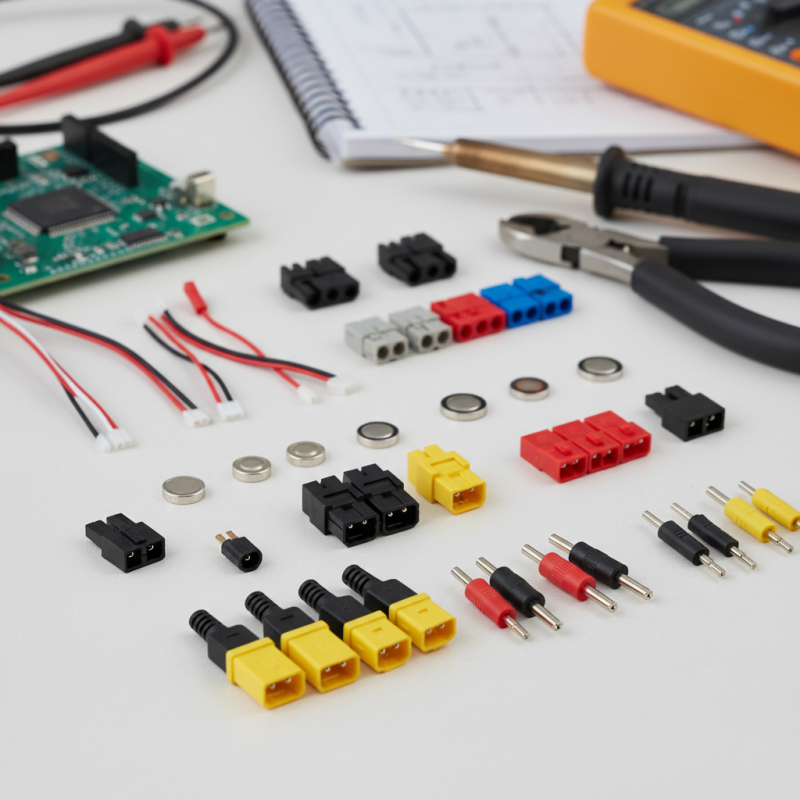
Battery connectors play a crucial role in various applications, from automotive to renewable energy systems. Understanding the different types can help you make an informed choice. Common types include Anderson, XT60, and Molex connectors. Each type serves specific functions and environments. For instance, Anderson connectors are popular in high-current applications due to their robustness.
When selecting a battery connector, consider the current rating, voltage needs, and environmental factors. High-temperature settings may require specialized connectors for durability. Improper choices can lead to performance issues. It's essential to examine compatibility with existing systems. Sometimes, connectors seem perfect but can cause problems over time.
Testing and evaluation are vital. Prototypes allow you to identify any shortcomings. Feedback from users can guide improvements. Ultimately, aim for reliability over popularity. A well-informed decision can lead to long-lasting performance. Be sure to weigh the pros and cons of each option. Factors like ease of installation and maintenance should not be overlooked.
Identifying the Key Factors for Choosing Battery Connectors
Choosing the right battery connector involves various key factors. One crucial aspect is the connector's current rating. This determines how much power it can handle safely. Exceeding this rating can cause overheating or failure. It's essential to review database specifications carefully. Different applications require different ratings. For instance, a high-drain application demands connectors designed for significant currents.
Another important factor is the connector's mechanical design. A secure fit ensures stability in connections. Consider environments that may expose connectors to vibrations or movements. Locking mechanisms can enhance reliability. However, they may complicate disconnections. Weighing the pros and cons is necessary.
Material selection also deserves attention. Common options include plastic and metal. Each material affects durability and conductivity. For example, while metal connectors might corrode over time, they often provide better conductivity. A balanced decision between performance and longevity is key. In the end, reflecting on long-term needs can guide you in this selection process.
How to Choose the Right Battery Connector for Your Needs?
| Connector Type | Voltage Rating (V) | Current Rating (A) | Temperature Range (°C) | Material |
| Anderson Powerpole | 600 | 45 | -20 to 105 | Plastic/Brass |
| XT60 | 60 | 60 | -20 to 80 | Nylon/Copper |
| Tamiya Connector | 12 | 20 | -20 to 70 | Plastic/Copper |
| Deans Connector (T-Plug) | 20 | 60 | -20 to 80 | Plastic/Copper |
| Molex Connector | 600 | 20 | -40 to 105 | Plastic/Brass |
Assessing Voltage and Current Ratings for Connectors
When selecting battery connectors, voltage and current ratings are crucial. A connector must handle the voltage of the electrical system. Inappropriate ratings can lead to overheating or even failure. According to a recent industry report, using connectors with ratings exceeding the application needs can reduce reliability.
Tip: Always verify the voltage requirements before purchasing connectors. Consider both continuous and peak voltage ratings.
Current ratings indicate how much current a connector can safely handle. For example, a connector rated at 15A should not be continuously loaded beyond this limit. Operating close to or above the rated current can cause damage over time. A study highlighted that connectors degrade faster when used at high loads frequently.
Tip: Keep the load well below the connector's current rating. This practice enhances longevity and performance.
Ensure to check connectors for derating conditions. Factors like temperature and installation method can impact performance. A quality connector ensures safety and reliability in your projects. Ignoring these parameters may lead to unexpected issues.
Evaluating Environmental and Durability Requirements
When selecting a battery connector, understanding environmental and durability requirements is crucial. Different applications demand various levels of resistance to harsh conditions. For example, outdoor equipment may face moisture, dust, and temperature fluctuations. In contrast, connectors for indoor electronic devices might only need basic protection.
Consider connectors made from high-quality materials. These can withstand heat and corrosion better than cheaper alternatives. Also, look for connectors that incorporate sealing techniques. This enhances their lifespan in challenging environments. The right choice can prevent premature failure, saving you time and money in the long run.
Tips: Always check the specifications. Make sure the connector matches your project’s needs. Test connectors under realistic conditions to gauge their performance. Sometimes, it’s wise to consult with experts about specific applications. Engaging with professionals can provide insights that may not be evident initially. Be open to learning from past decisions—this can lead to better choices in future projects.
Battery Connector Durability Evaluation
Comparing Connector Materials for Optimal Performance
When selecting a battery connector, material choice is crucial. Connector materials significantly impact electrical conductivity, thermal performance, and overall reliability. Copper and aluminum are common choices, with copper often outperforming aluminum in conductivity. According to a 2022 industry report, copper connectors exhibit nearly 70% better conductivity than aluminum counterparts. This directly influences energy efficiency in battery systems.
Corrosion resistance is another key factor. Copper connectors, when properly coated, resist corrosion effectively. However, they may require more maintenance than aluminum options. A study from Electrical Contacts Review highlighted that aluminum connectors are better for applications exposed to harsh environments, but they can suffer from oxidation issues over time. This trade-off necessitates careful consideration based on specific usage conditions.
Weight and size play a vital role too. Aluminum connectors are lightweight, making them favorable for portable applications. Nevertheless, their bulkiness compared to copper can hinder design flexibility. Many engineers face the dilemma of optimizing performance while balancing weight constraints. Achieving the right choice requires evaluating specific project needs, ensuring that connector selection aligns with performance expectations.