How to Choose Capacitor In AC Applications for Best Performance?
Choosing the right Capacitor In Ac applications is crucial for optimal performance. Capacitors play a vital role in managing power quality, filtering noise, and improving efficiency. However, selecting the best capacitor in AC can be challenging. It requires a deep understanding of the specific application, voltage requirements, and frequency characteristics.
Incorporating capacitors into AC circuits significantly affects overall system reliability. Different types of capacitors offer varying benefits, from electrolytic to ceramic options. Each type has its pros and cons. Understanding these differences is imperative. A misunderstanding could lead to poor performance or even failure in critical systems. The trade-offs in cost, size, and efficiency must be carefully considered.
Effective decision-making is essential when choosing a capacitor in AC applications. Manufacturers provide specifications and guidelines, but much depends on real-world conditions. It's vital to analyze the environment where the capacitor will operate. Factors like temperature and humidity can influence performance. Reflecting on previous experiences can also guide better choices. Moreover, it's important to stay updated with new technologies. Balancing these elements can lead to enhanced performance and longevity of your AC systems.
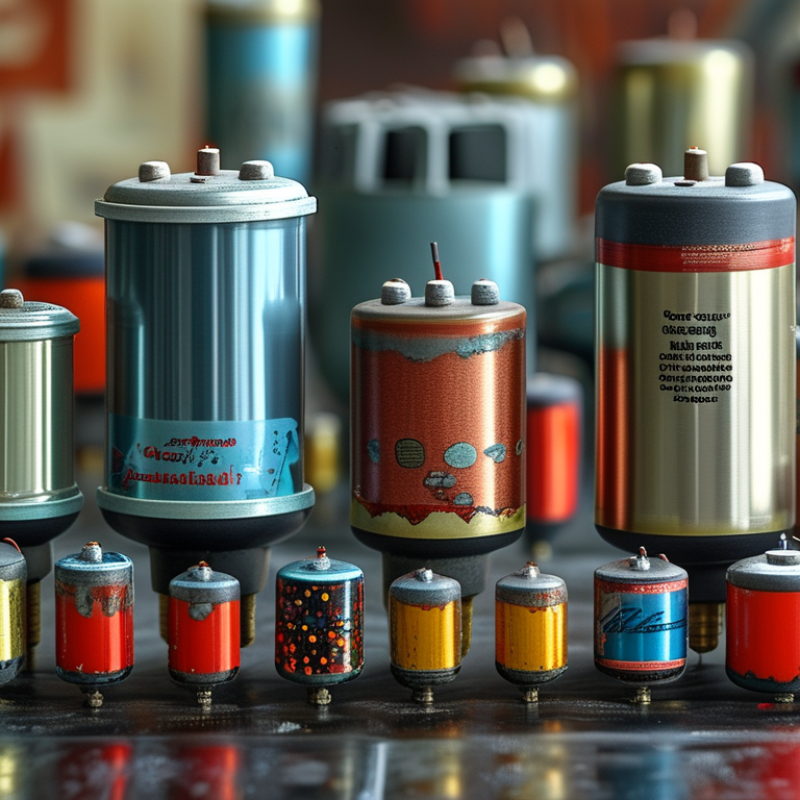
Understanding the Role of Capacitors in AC Applications
In AC applications, capacitors play a critical role in enhancing performance. They help regulate voltage levels and improve energy efficiency. Capacitors store and release energy, reducing ripple voltage in circuits. This stabilizes the operation of various electrical devices.
According to a report by the International Electrotechnical Commission, the correct choice of capacitor can increase system efficiency by up to 35%. Proper capacitor selection depends on characteristics like capacitance, voltage rating, and equivalent series resistance (ESR). Interestingly, many engineers overlook the impact of temperature and frequency on capacitor behavior.
Selecting the wrong type can lead to heat build-up and failure. A study by IEEE highlights cases of capacitor failures leading to costly downtime. These insights emphasize the necessity for regular testing and replacement of capacitors to maintain optimal performance. Understanding their crucial role can prevent issues and enhance the longevity of electrical systems.
How to Choose Capacitor In AC Applications for Best Performance?
| Capacitor Type | Voltage Rating (V) | Capacitance (µF) | Frequency Range (Hz) | Applications |
| Film Capacitor | 250 | 1.0 | 50 - 1000 | Power Factor Correction |
| Electrolytic Capacitor | 350 | 1000 | 50 - 60 | Smoothing and Filtering |
| Ceramic Capacitor | 100 | 10 | DC to 100000 | Coupling and Decoupling |
| Tantalum Capacitor | 150 | 47 | 10 - 100 | Timing Circuits |
Key Types of Capacitors Used in AC Circuits and Their Characteristics
When choosing capacitors for AC applications, understanding the key types available can enhance performance. Ceramic capacitors are often used for their stability and reliability. They perform well in high-frequency applications and have low losses. However, they can be sensitive to voltage and temperature variations.
Electrolytic capacitors are another common choice. They provide high capacitance values but should be used where polarity is well defined. These capacitors are not suitable for high-frequency use due to increased losses. Film capacitors stand out for their excellent performance across various frequencies. They also have better lifespan, but typically come in lower capacitance values.
**Tips:** Always consider the operating environment of your circuit. Capacitors can age and lose performance over time. It’s crucial to verify specifications before use. Check temperature ratings and tolerances carefully. Small changes can significantly impact your circuit’s behavior.
Utilizing the correct capacitor type ensures efficiency. Improper selection can lead to failures or poor performance. Balance between capacitance value and application needs is essential for reliability. As designs evolve, continual learning about these components can lead to better choices.
Capacitor Types and Their Characteristics in AC Applications
Factors Influencing Capacitor Performance in AC Systems
When choosing capacitors for AC applications, several factors influence their performance. These include voltage rating, capacitance value, and frequency response. The voltage rating must exceed the maximum voltage present in the AC system. Underrating can lead to catastrophic failure. A good rule of thumb is to choose a capacitor with a voltage rating at least 20% higher than the peak voltage.
Capacitance value plays a significant role in tuning the circuit. It should be selected based on the desired reactance at the operational frequency. Too small a capacitance results in reduced energy storage, while too large can cause a loss in efficiency. The working temperature also impacts performance. Capacitors typically decrease in efficiency at higher temperatures. Ensure the chosen component aligns with environmental conditions.
Another essential factor is the dielectric material used in the capacitor. Different materials react uniquely in AC conditions. Some may exhibit significant losses, affecting the overall performance. Additionally, the capacitor's equivalent series resistance (ESR) should be considered. Low ESR generally translates to better efficiency, yet achieving this comes with a cost. Balancing these factors can be challenging, often resulting in a compromise that needs thoughtful reflection.
Calculating the Required Capacitance for Optimal AC Performance
When selecting capacitors for AC applications, calculating the required capacitance is essential for optimal performance. The capacitance value impacts the reactive power in the circuit. This choice affects everything from power factor to load stability. Too small a capacitor can lead to slow response times. Conversely, too large a capacitor may create harmonics that disrupt system performance.
To calculate the necessary capacitance, you need to know the frequency of the AC signal and the reactive power required by your load. The formula is C = Q / (2πfV²). Here, C is the capacitance, Q is the reactive power in VARs, f is the frequency in Hz, and V is the voltage. This relationship shows how various factors interact. Understanding these variables ensures your capacitor delivers reliable performance.
Consider real-world challenges. External factors like temperature and humidity can affect the capacitor's behavior. Moreover, the aging process can alter its capacitance over time. Reflecting on these nuances is vital. Systems often operate under less than ideal conditions. Balancing ideal calculations with real-world variables enhances overall reliability in AC applications.
Best Practices for Installing and Maintaining Capacitors in AC Applications
When installing capacitors in AC applications, attention to detail is crucial. Proper installation can lead to enhanced performance. Statistics indicate that up to 30% of capacitor failures arise from improper mounting and environmental factors. Ensuring that the installation area is clean and free from contaminants is essential for longevity. Capacitors should be placed in well-ventilated areas to avoid overheating, as excessive heat can lead to a rapid decline in performance.
Regular maintenance is equally important. Periodic inspections can help identify signs of wear or damage. A study from the Institute of Electrical and Electronics Engineers (IEEE) reported that 50% of capacitor failures could be prevented through routine checks. During these inspections, checking connection tightness and inspecting insulation is critical. If any irregularities are found, addressing them promptly can prevent more significant issues down the line.
Moreover, consider the load cycling that the capacitor will experience. Capacitors rated for higher voltages experience less stress under fluctuating loads. However, aligning the voltage ratings precisely with your application accordingly can be tricky. This misalignment can lead to premature failure. Awareness and understanding of these factors are vital in achieving optimal performance in AC applications.