How to Choose the Right DC Motor Drive?
Choosing the right Dc Motor Drive is not simply a matter of matching voltage and horsepower. The drive must suit the motor, load profile, operating environment, and control objectives. A conveyor moving heavy cartons behaves differently from a medical pump requiring quiet, precise speed control. Small details matter, including starting torque, duty cycle, braking method, enclosure rating, and feedback accuracy.
The International Energy Agency has reported that electric motor systems account for roughly half of global electricity consumption. The U.S. Department of Energy also identifies motor-driven equipment as a major industrial energy user. These findings make drive selection an operational decision, not merely a purchasing task. A properly sized Dc Motor Drive can reduce wasted energy, limit mechanical stress, and improve process stability. However, efficiency claims should be checked against real operating conditions. A high-rated drive may still perform poorly when the motor runs continuously below its efficient load range.
Standards provide a useful technical reference. IEC 61800 addresses adjustable-speed electrical power drive systems, including performance and safety considerations. Engineers should also review overload capacity, current limiting, electromagnetic compatibility, regenerative energy, and maintenance access. Field experience shows that many failures begin with incomplete load data. That is an uncomfortable but important point. If acceleration time, peak torque, ambient temperature, or cable length is guessed, the final selection may be wrong.
This guide explains how to compare drive types, interpret specifications, and avoid common sizing mistakes. It focuses on practical decisions that remain reliable after installation, not just attractive numbers on a datasheet.
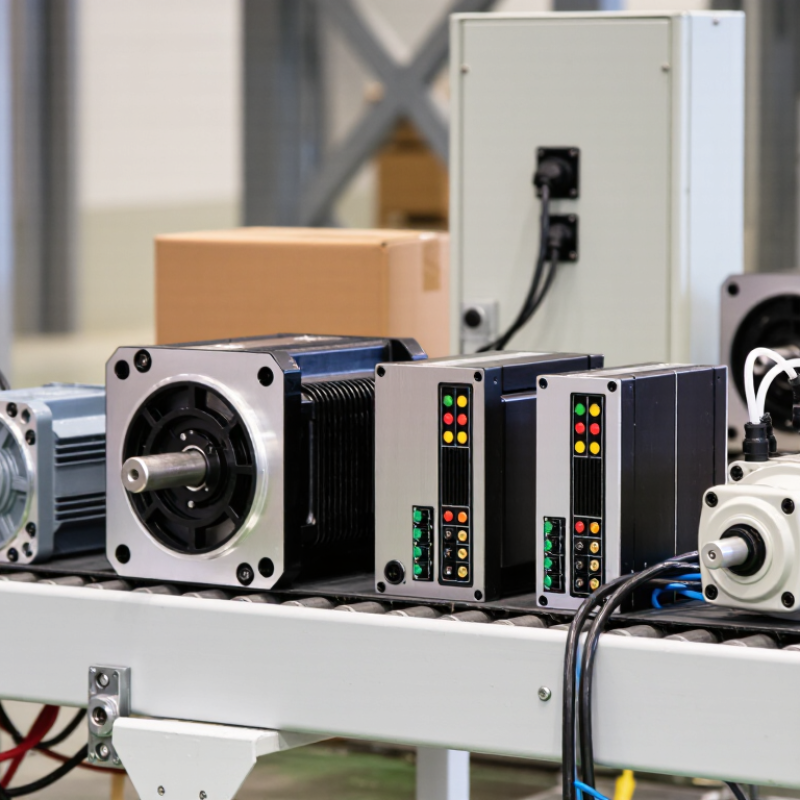
Understanding the Role and Functions of a DC Motor Drive
How to Choose the Right DC Motor Drive?
Understanding the Role and Functions of a DC Motor Drive
A DC motor drive controls how electrical energy becomes mechanical motion. It regulates speed, torque, direction, and acceleration. In practical testing, this control affects both machine output and motor life. A drive can limit starting current, preventing sudden stress on gears and couplings. It can also reverse rotation without requiring manual rewiring. Small details matter.
The drive receives a command from a switch, controller, or automation system. It then adjusts voltage or current according to the motor’s needs. Voltage mainly influences speed, while current strongly affects torque. Feedback devices can improve accuracy when the load changes suddenly. Without feedback, speed may fall when a conveyor becomes heavier. That behavior is sometimes acceptable. Sometimes it is not.
Choosing a suitable drive requires checking motor voltage, rated current, peak current, and braking requirements. The load’s starting torque deserves special attention. A motor may run normally but fail during startup. I have seen calculations overlook short acceleration periods. That mistake can cause overheating or nuisance trips. The installation environment also matters. Dust, heat, moisture, and limited ventilation can reduce reliability. Protection features such as overcurrent, overvoltage, and thermal monitoring provide useful safeguards. Still, they cannot correct an incorrectly sized system. A careful review of operating cycles, wiring, and cooling conditions usually reveals the better match.
Identifying Motor, Load, and Operating Requirements
How to Choose the Right DC Motor Drive?
Identifying Motor, Load, and Operating Requirements
Choosing a DC motor drive starts with the motor, not the catalog. Record its nominal voltage, rated current, speed, and allowable peak current. Peak current matters during starting, acceleration, and sudden load changes. Do not size the drive from the motor’s average current alone. For a brushed motor, check armature voltage and current limits. Also confirm whether speed feedback uses an encoder, tachometer, or no sensor. These details determine the drive’s control method and protection settings. Small mistakes here can overheat windings or trigger nuisance faults.
Then describe the load in physical terms. Measure required torque, target speed, acceleration time, and stopping time. Include friction, gearbox losses, vertical movement, and repeated shock loads. A conveyor carrying boxes behaves differently from a fan with a smooth torque curve. Estimate reflected inertia, especially when a gearbox connects the motor to a large roller. Operating duty is equally important. Note cycle length, rest periods, ambient temperature, altitude, dust, and available cooling. A drive that works for ten seconds may fail after eight hours. That practical mismatch is easy to miss.
During selection, compare continuous current with peak current, then check voltage headroom. Allow margin, but avoid excessive oversizing. An oversized drive may control poorly at low speed and cost more. Verify braking energy, reversing frequency, fuses, emergency stopping, and fault recovery. Consider the whole electrical path, including cable length and supply drop. I would test the worst realistic cycle, not an ideal bench condition. Still, calculations can be wrong. Temperature, alignment, and aging often expose assumptions that looked reasonable. Record actual current and temperature during commissioning, then revise the selection if needed.
Comparing Drive Types and Essential Control Features
Choosing the right DC motor drive starts with comparing drive types against the machine’s real working conditions. A basic analog drive can suit simple conveyor duty. It offers quick adjustment and straightforward servicing. Digital drives provide better tuning, fault records, and programmable speed profiles. They also require more setup knowledge.
PWM drives usually improve efficiency and produce smoother speed control at lower speeds. SCR drives remain useful for high-power systems, especially where rugged construction matters. Regenerative or four-quadrant drives support controlled braking and reverse rotation. This matters for elevators, winders, and test benches. A single-quadrant drive may cost less, but it cannot manage every motion safely. I have seen specifications focus on peak current while ignoring continuous thermal loading. That mistake can shorten motor life.
Tips: Check the motor’s continuous and peak current ratings. Confirm the required speed range and feedback method. Look for current limiting, overload protection, and adjustable acceleration. Encoder feedback improves speed accuracy, but it adds wiring and maintenance. A tachogenerator may be less precise. Sometimes, it is easier to troubleshoot. Consider braking energy, cabinet ventilation, and emergency stopping behavior. Communication features are helpful, but they should not replace local controls. Test the drive with the actual load, not only an unloaded motor. The final choice may involve compromise. That is often where careful engineering begins.
Evaluating Voltage, Current, Speed, and Protection Ratings
Choosing a DC motor drive begins with the motor’s real operating conditions, not only its label. Check the motor’s nominal voltage, startup demand, and expected voltage spikes. A drive rated for 24 V may tolerate little margin above that value. I prefer measuring the supply at the drive terminals under load. Cable resistance can create surprises.
Current rating needs two numbers: continuous current and short-term peak current. A motor may draw several times its running current during startup, acceleration, or a jam. Select a drive whose peak limit can handle that event without overheating. However, excessive current limiting can make the motor stall repeatedly. That behavior is easy to miss during a brief bench test. Allow thermal headroom, especially inside a sealed enclosure.
Speed control depends on PWM frequency, load torque, and back EMF. The highest advertised speed is rarely the practical speed. Verify the usable speed range at the required voltage and load, then test acceleration and braking. Protection ratings deserve equal attention. Look for overcurrent, short-circuit, undervoltage, overvoltage, and thermal shutdown functions. An IP enclosure rating protects against surroundings, but it does not replace electrical protection. Review fault recovery carefully. Some drives restart automatically, while others require a reset. That choice affects machine safety and maintenance. I also check whether current sensing remains accurate at low loads; this is often overlooked.
Selecting, Installing, and Testing the Appropriate Drive
How to Choose the Right DC Motor Drive?
Selecting, Installing, and Testing the Appropriate Drive
Selecting a DC motor drive starts with the motor’s rated voltage, current, speed, and duty cycle. Match the drive to continuous current, not only peak current. A conveyor may start lightly but run heavily for hours. That heat changes the decision. Check acceleration, braking, reversing, and speed regulation requirements before choosing a control method. A drive with feedback can provide steadier speed under changing loads. However, feedback adds wiring, adjustment, and another possible failure point.
Installation quality matters as much as the specification sheet. Mount the drive in a dry enclosure with enough airflow around its heat sink. Keep motor cables away from sensitive signal wires. Use correctly rated fuses, secure terminals, and a verified protective earth connection. Measure twice. A loose terminal can create heat, noise, or intermittent trips. The manual may permit a mounting position that looks practical, yet poor ventilation can still shorten service life.
Testing should happen in stages. Begin with a visual inspection and confirm polarity before applying power. Test the motor without load, then increase the load gradually while recording current, speed, vibration, and temperature. Check stopping behavior and fault indications. Test cold. Then repeat after the system reaches operating temperature. A first successful run can be misleading. Real machines change with dust, friction, and production demand. Keep notes, question unusual readings, and adjust ramp settings carefully rather than hiding an unstable result.