7 Tips for Choosing the Right DIN Rail Connector Block
A control cabinet can look orderly and still hide a weak connection. A Din Rail Connector Block must match the conductor, current, voltage, environment, and installation method—not just the available rail space. A wire that feels secure during assembly may loosen under vibration or repeated temperature changes. Small part. Big consequence.
The wider electrical context makes careful selection more important. The International Energy Agency’s Renewables 2024 report says global renewable capacity additions reached about 510 GW in 2023, nearly 50% above 2022. Its Electricity 2024 report projects average global electricity-demand growth of 3.4% annually from 2024 to 2026. These figures do not measure connector-block demand directly. They do show why dependable electrical infrastructure deserves attention. IEC 60947-7-1 also provides a technical reference for terminal blocks used with copper conductors.
This guide presents seven practical checks, from conductor size and current rating to terminal style, labeling, and environmental protection. Compare the manufacturer’s specifications with the actual operating conditions, including cabinet heat and available wiring space. Look closely at the details. A checklist helps, but it cannot replace the product datasheet or a qualified engineering review. Selection can still involve trade-offs; a compact block, for example, may leave less room for neat wiring and future maintenance.
Understanding DIN Rail Connector Blocks and Their Applications
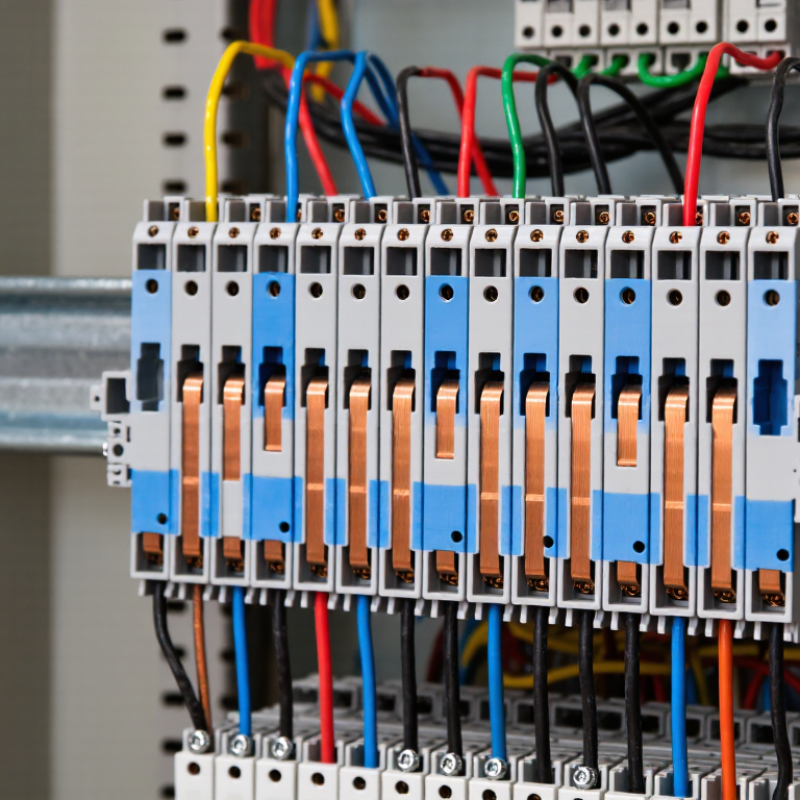
DIN rail connector blocks join and distribute conductors inside control panels, machinery cabinets, and building systems. They mount onto a standard rail, helping keep wiring organized and accessible. Some blocks connect one circuit; others support grounding, fused circuits, or multiple conductors. The right type depends on the job, not just its size.
Start with the electrical load. Check the system’s voltage and expected current, then compare them with the block’s ratings. Confirm that the terminal accepts the conductor material and wire size. A wire that is too large may not seat properly. Too small, and the connection may loosen under vibration. Small details matter.
Think about the installation environment, too. A warm cabinet, frequent vibration, or limited space can affect block selection and layout. Leave room for safe wire bends and clear labels. In a crowded panel, testing and future repairs become harder. I’ve seen tidy layouts become confusing after just a few unmarked changes. It’s easy to overlook. Check how the blocks attach to the rail, whether end stops are needed, and whether neighboring circuits require separation. A careful fit check before wiring can reveal problems that a parts list won’t.
Assessing Electrical Ratings and Circuit Requirements
Assess the circuit before comparing DIN rail connector blocks. Record its maximum continuous current, operating voltage, conductor material and wire cross-section. The block’s marked ratings must cover the real installation, not just the nominal load. Check whether the published current rating applies to the conductor size you plan to use. A rating for one wire size may not apply to another. Leave margin for elevated cabinet temperatures and tightly grouped terminals, which can impede heat dissipation. Small details matter.
The IEA’s Electricity 2024 report projected global electricity demand growth averaging 3.4% annually from 2024 to 2026, underscoring the need for dependable distribution as electrical systems expand. For a specific panel, however, broad demand figures cannot determine the correct connector rating. Verify the relevant product documentation and IEC 60947-7-1 requirements, then check voltage, current, conductor capacity, and short-circuit protection together. Also confirm compatibility with the circuit’s protective device and the installation’s fault-current level. Do not assume a higher current rating alone makes a block suitable. I would recheck the temperature assumptions; they are easy to overlook.
Choosing a DIN Rail Connector Block: Assess Electrical Ratings and Circuit Requirements
Example currents are calculated as power ÷ voltage. The planning values add an illustrative 25% margin; this is not a universal sizing rule. Select connector blocks using the actual load, conductor size, ambient conditions, applicable standards, and the block’s rated voltage and current.
Choosing the Right Block Type and Wiring Method
Choosing the right DIN rail connector block begins with its job. Feed-through blocks join conductors, while grounding, fuse, and disconnect blocks serve specific circuit functions. Check conductor size, current, voltage, and available rail space before selecting a type. Then compare wiring methods: screw-clamp terminals allow straightforward tightening, while spring-clamp and push-in designs can simplify installation. Follow the block’s rated wire range and tightening instructions. Small details matter.
Wiring choice should reflect the panel’s conditions and maintenance needs. Vibration, heat, conductor flexibility, and access for testing can affect which connection style is practical. The International Energy Agency’s 2011 report, Energy-Efficiency Policy Opportunities for Electric Motor-Driven Systems, estimates motor-driven systems use about 70% of industrial electricity. That figure describes energy use, not connector failures, but it underscores why dependable machine wiring deserves careful attention. A tidy layout helps. Still, a neat drawing can hide cramped access.
Tip: Match each block to its circuit function, then verify ratings against the actual conductor and load. Use consistent labeling and leave room for a meter probe or screwdriver. For screw terminals, apply the specified torque; for spring or push-in terminals, prepare the conductor as instructed. Space gets tight. Don’t assume every wire fits. A quick sample assembly can reveal awkward bends or hard-to-read labels before the full panel is wired.
Evaluating Materials, Safety, and Operating Conditions
DIN rail connector blocks must match the panel’s materials, load, and environment. Copper-alloy terminals conduct current well, while suitable plating can help resist corrosion. The insulating housing also matters: heat, oils, dust, and vibration can weaken unsuitable materials over time. The U.S. Bureau of Labor Statistics’ 2022 Census of Fatal Occupational Injuries recorded 145 fatal work injuries involving exposure to electricity. That figure is not specific to terminal blocks, but it underscores the need for careful electrical design.
Tip 1: Check the rated current, voltage, wire range, and temperature limits against the actual circuit. IEC 60947-7-1 sets requirements for terminal blocks used in copper conductors; verify that the selected block is tested to the relevant standard. Don’t assume a listed rating applies under every condition. Ambient heat and tightly packed terminals can require derating.
Tip 2: Match materials and protection to the site. A damp cabinet may need corrosion-resistant contacts and an enclosure suited to moisture exposure.
Tip 3: Confirm conductor compatibility and tightening torque; a loose connection can heat locally, even when the wire looks secure.
Small details matter.
NFPA’s Electrical Fires report estimated 24,200 U.S. home fires annually involving electrical distribution or lighting equipment from 2015 to 2019. This broad figure does not isolate connector failures, but it is a useful reminder to inspect connections and operating conditions rather than choosing by price alone.
Checking Compatibility, Standards, and Maintenance Needs
Compatibility starts with the circuit, not the rail. Confirm rated voltage and current, conductor size, copper or aluminum material, and short-circuit conditions at the installation point. Check the rail profile: IEC 60715 defines common mounting dimensions, while IEC 60947-7-1 covers terminal blocks for copper conductors. Read the fine print. Ambient temperature, vibration, end-stop clearance, and adjacent wiring can affect performance in a crowded cabinet. For machinery, compare the assembly with IEC 60204-1 and the machine’s documentation.
Maintenance deserves equal weight. The U.S. Department of Energy’s Operations & Maintenance Best Practices guide reports that predictive maintenance can save 8–12% over preventive maintenance. That figure is not a promise for every panel, but it supports choosing blocks that allow inspection, retightening, and replacement without disturbing neighboring conductors. Look for visible markings, accessible test points, and specified torque values; record the installed torque and inspection date. Heat discoloration, loose strands, or a warm connection under normal load are practical warning signs. Small details matter. A clear maintenance plan may be less elegant than a compact layout, and compactness is not always the better choice.
