7 Essential Tips for Choosing Spray Drying Equipment?

Selecting Spray Drying Equipment is not simply a price comparison. It is a process-design decision affecting moisture, particle size, energy use, cleaning, and product quality.

Market reports show strong demand, although their estimates differ. MarketsandMarkets valued the global spray drying equipment market at approximately USD 5.1 billion in 2023. It projects about USD 6.9 billion by 2028. Grand View Research reports different boundaries and growth assumptions. This difference deserves attention. Market definitions can change the apparent opportunity.

Industry authority Arthur W. Masters described spray drying as “the transformation of feed from a fluid state into a dried particulate form.” That definition remains practical. A liquid feed enters the chamber, meets heated air, and leaves as powder within seconds. The equipment must control that transformation precisely.

This guide examines seven purchasing essentials. They include feed properties, evaporation capacity, atomizer selection, airflow design, thermal efficiency, hygiene, and after-sales support. Each factor can alter production results. A nozzle may create fine particles, but it can also clog. A larger chamber may increase throughput, but it may raise energy consumption. Stainless steel construction looks reassuring, yet weld quality and cleanability matter more.

Real experience often exposes the overlooked details. Ask for verified trial data, not attractive brochures. Check powder recovery, outlet temperature, solvent controls, and cleaning time. Request references from facilities processing similar materials. No single machine suits every formulation.

The best choice balances laboratory evidence, operating risk, future capacity, and total ownership cost. It also leaves room for uncertainty. Product behavior can change after scale-up. Careful testing remains essential.
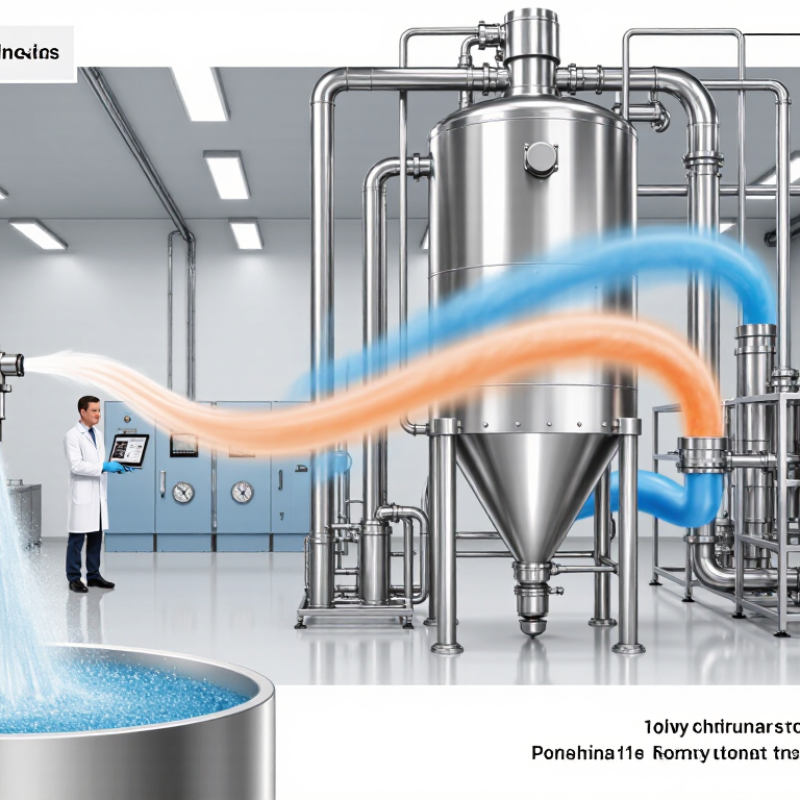
7 Essential Tips for Choosing Spray Drying Equipment?

Define the Product and Drying Requirements

7 Essential Tips for Choosing Spray Drying Equipment

Define the Product and Drying Requirements

Equipment selection starts with the product, not the machine catalogue. Record feed viscosity, solids content, heat sensitivity, particle size, and target moisture. A liquid with 20% solids behaves differently from one with 55% solids. Laboratory testing should measure these differences before scale-up.

The target outlet temperature matters greatly. It affects residual moisture, bulk density, solubility, and product color. The European Food Safety Authority has repeatedly emphasized moisture control and validated processing for powdered foods. Meanwhile, the 2024 MarketsandMarkets report estimates continued growth in spray drying equipment demand, driven by food, pharmaceutical, and chemical applications. Growth does not remove the need for product-specific testing.

Define the feed rate and acceptable yield range. Then identify whether the powder must be free-flowing, instantized, porous, or highly soluble. Particle size distribution should be measured, not guessed. A narrow distribution may require different atomization settings than a wide one. In pilot trials, small changes in inlet temperature can alter wall deposition and recovery. That detail is easy to underestimate.

Avoid choosing capacity from theoretical evaporation alone. Real feeds may foam, clog, or absorb moisture during collection. This is where early assumptions become expensive. Test cleaning time, filter loading, and powder recovery under realistic conditions. The best specification may look less efficient on paper, yet perform more reliably every day.

7 Essential Tips for Choosing Spray Drying Equipment: Define the Product and Drying Requirements

Product composition and feed concentration strongly influence spray dryer sizing, atomization, heat demand, and powder quality. The chart shows representative feed-solids levels commonly used for different spray-dried product categories. Actual values depend on formulation, viscosity, thermal sensitivity, and the required final moisture content.

Typical design references: higher feed-solids content can reduce evaporation load, while low-solids or heat-sensitive products may require gentler drying conditions and multi-stage powder handling.

Match Equipment Capacity to Production Goals

7 Essential Tips for Choosing Spray Drying Equipment?
Match Equipment Capacity to Production Goals

Choosing spray drying equipment should begin with production targets, not catalog specifications. Define the required powder output per hour, expected operating days, and acceptable downtime. Then calculate the liquid feed rate using solids content and moisture removal. A machine rated for peak capacity may perform poorly during normal operation. Oversizing can also increase energy use and reduce process control.

Measure the feed. Record viscosity, density, temperature, and seasonal variation. These details affect atomization, drying-air demand, and chamber dimensions. For example, a feed containing 30% solids may require a very different system from one containing 10%. Pilot testing can reveal wall buildup, poor powder flow, or excessive heat exposure before full-scale investment. Small errors here become expensive later.

Match the dryer to realistic growth, not optimistic forecasts. Leave practical capacity for maintenance, cleaning, and changes in formulation. A useful design may run at 70–85% of its maximum rate, allowing operators to respond to demand without constant overload. I have seen planning focus too heavily on hourly output while ignoring shift patterns and packaging delays. That approach looks efficient on paper, but it can create bottlenecks around the dryer. Recheck the mass balance with measured data. Estimates are useful, but they are rarely perfect.

Evaluate Spray Dryer Design and Operating Controls

7 Essential Tips for Choosing Spray Drying Equipment

Evaluate Spray Dryer Design and Operating Controls

When choosing spray drying equipment, examine the chamber geometry, atomizer, air distributor, and powder recovery path. A compact chamber may look efficient, yet poor airflow can increase wall deposits. Inspect the atomizer closely. Nozzle systems suit many formulations, while rotary systems can handle wider feed variations. The choice depends on viscosity, particle size, and product sensitivity.

Operating controls should connect feed rate, inlet temperature, outlet temperature, airflow, and chamber pressure. Outlet temperature often guides moisture control, but it does not explain every quality change. Ask whether sensors respond quickly during feed interruptions. Check if the control system records trends, alarms, and batch adjustments. Clear data supports reliable decisions during scale-up and troubleshooting.

Test the dryer with a representative feed, not only clean water. Observe deposits, powder flow, startup behavior, and shutdown losses. Small details matter. I once underestimated cleaning access, and maintenance took longer than expected. Inspect seals, inspection ports, filters, and hard-to-reach surfaces. Hygienic design should reduce residue without depending on perfect operator technique. Confirm that the equipment can be adjusted safely when humidity, feed solids, or viscosity changes. A polished specification can still hide practical weaknesses.

Compare Energy Use, Maintenance, and Total Cost

7 Essential Tips for Choosing Spray Drying Equipment
Compare Energy Use, Maintenance, and Total Cost

Choosing spray drying equipment starts with the product, not the brochure. Define feed viscosity, moisture targets, inlet temperature, and required output. A small laboratory trial can reveal problems that specifications miss. Ask for energy data under conditions close to your process. Heating air often consumes the most power, but fans, pumps, compressed air, and cooling systems also affect operating costs.

Compare kilowatt-hours per kilogram of finished powder. Request results at partial load, because real production rarely stays perfectly full. Inspect cleaning access, filter replacement time, nozzle wear, and inspection points. Maintenance should not require dismantling half the system. It sounds obvious, yet many buyers overlook labor hours. Check whether common spare parts are available locally and whether technicians can solve faults remotely.

Calculate total cost over five years, including installation, utilities, waste, repairs, training, and downtime. A cheaper unit may become expensive after frequent nozzle changes or unstable drying. Review control functions carefully. Stable temperature control can protect quality and reduce rejected batches. Ask for trial samples and documented performance data. Be cautious with optimistic energy promises; actual results depend on feed solids, humidity, and operator habits. One mistake remains common: choosing maximum capacity instead of suitable capacity. Leave room for future growth, but avoid paying to heat empty space.

7 Essential Tips for Choosing Spray Drying Equipment? - Compare Energy Use, Maintenance, and Total Cost

Tip What to Compare Typical Engineering Benchmark Why It Matters Recommended Selection Check
1. Match the dryer to the actual moisture load Evaporation capacity, feed solids, inlet moisture, outlet moisture, and operating hours Size the unit for the required kg of water evaporated per hour, rather than only for feed throughput. A 10% increase in feed moisture can substantially increase the required evaporation duty. An undersized dryer causes production bottlenecks; an oversized dryer increases capital cost, heat loss, and part-load inefficiency. Request performance data at minimum, normal, and maximum feed rates, including product moisture and bulk-density limits.
2. Compare thermal and electrical energy use Specific energy consumption per kilogram of water evaporated A practical spray-drying system commonly requires about 1.2–2.0 kWh of thermal energy per kg of water evaporated, plus approximately 0.04–0.15 kWh of electricity per kg of water evaporated. Actual values depend on inlet air temperature, exhaust temperature, heat losses, and product properties. Energy is often the largest operating-cost item, especially for high-throughput systems running continuously. Compare tested energy figures under the same feed rate, inlet temperature, outlet temperature, ambient conditions, and product moisture specification.
3. Evaluate heat recovery and air-management options Air recirculation, exhaust-air heat recovery, insulation, fan efficiency, and variable-speed drives Well-designed heat recovery or controlled air recirculation can reduce fuel or steam demand by approximately 10–25%, depending on hygiene requirements, product sensitivity, and exhaust-air conditions. Lower thermal demand reduces long-term operating cost, but additional heat exchangers and controls increase upfront cost and cleaning requirements. Check the payback period using local fuel, steam, and electricity prices. Confirm that recirculation is suitable for the product and contamination-control plan.
4. Prioritize powder recovery and product yield Cyclone efficiency, bag-filter performance, fines recovery, and powder discharge losses A cyclone or bag-filter recovery system may achieve approximately 95–99.5% powder recovery, depending on particle size, density, stickiness, airflow, and equipment configuration. Recovering an additional 1% of product can be financially significant when the powder has a high selling price or high raw-material cost. Ask for recovery results using the actual formulation, including particle-size distribution, bulk density, and expected fines content.
5. Design for cleaning and changeover Clean-in-place capability, inspection access, surface finish, dead-leg control, and changeover time Automated or semi-automated cleaning can reduce manual cleaning labor and improve repeatability. Actual cleaning time commonly ranges from 1–4 hours, depending on dryer size, product stickiness, and sanitation requirements. Shorter changeovers increase annual production availability and reduce labor, water, detergent, and wastewater costs. Measure total changeover time from shutdown to release for production, not only the active wash-cycle time.
6. Estimate maintenance and replacement costs Wear parts, filters, atomizer components, seals, bearings, fans, burners, instruments, and service access Annual maintenance is often budgeted at approximately 2–5% of installed equipment cost. High-wear atomizer parts and filtration components may require more frequent inspection or replacement. A lower purchase price can result in a higher total cost if spare parts are expensive, lead times are long, or access for maintenance is difficult. Obtain a five-year spare-parts list, recommended inspection intervals, labor requirements, and estimated downtime for planned maintenance.
7. Compare five-year total cost of ownership Purchase price, installation, utilities, labor, maintenance, consumables, downtime, and product loss Five-year TCO = capital cost + installation + energy + maintenance + consumables + cleaning + downtime cost − residual value. Energy and maintenance should be calculated from the expected annual operating hours rather than from nameplate capacity. The equipment with the lowest purchase price is not necessarily the lowest-cost option over its operating life. Create low, expected, and high-cost scenarios using local utility prices, labor rates, production volume, and product value.

Note: The numerical ranges are indicative engineering benchmarks for preliminary comparison only. Final performance depends on feed composition, solids concentration, particle-size distribution, inlet and outlet temperatures, humidity, required powder moisture, cleaning standards, and operating schedule. Supplier test data should be verified with the actual product and process conditions.

Verify Safety Standards, Supplier Support, and Future Expansion

Choosing spray drying equipment requires more than comparing evaporation rates and purchase prices. Safety documentation should be examined before any technical promise. Ask for certificates, risk assessments, pressure-relief details, and records showing how temperature limits are controlled. Check emergency stops, grounding points, interlocks, and cleaning access on the actual equipment layout.

Powder behavior matters greatly. Fine particles can create difficult operating conditions, especially when deposits collect near filters or ducts. Request trials using a representative feed, not only laboratory samples. Review inlet and outlet temperature stability, moisture variation, filter performance, and cleaning time. A supplier should explain test methods clearly and identify assumptions. Some specifications look precise but hide uncomfortable gaps.

Support continues after installation. Confirm commissioning responsibilities, operator training, spare-part availability, and technical response times in writing. Ask whether factory acceptance testing and site acceptance testing are included. Expansion also deserves attention early. Leave room for larger pumps, additional drying capacity, stronger utilities, and improved automation. Modular ducting can reduce future disruption. Yet planned expansion often exceeds the original budget. A realistic utility review may reveal limits in steam, compressed air, cooling, or floor loading. That detail is easy to overlook. Suppliers who welcome difficult questions usually provide more reliable guidance than those offering only attractive capacity figures.

Search our website