What is Flex PCB Assembly and How Does it Work?
Flex PCB assembly plays a crucial role in modern electronics. It combines flexibility with circuit functionality. This unique technology allows manufacturers to create compact and lightweight electronic devices.
The process involves several steps. First, engineers design flexible circuits tailored to specific requirements. Then, these circuits are manufactured on flexible substrates. This creates the foundation for various applications. Devices such as smartphones and wearables rely on Flex PCB assembly for their intricate designs.
Despite its advantages, challenges exist. For instance, aligning components accurately can be tricky. Improper assembly may lead to failure in devices. This emphasizes the importance of precision. The growing demand for compact devices pushes engineers to innovate further in flex PCB assembly. The journey is exciting, yet it requires constant reflection on improvements.
What is Flex PCB Assembly?
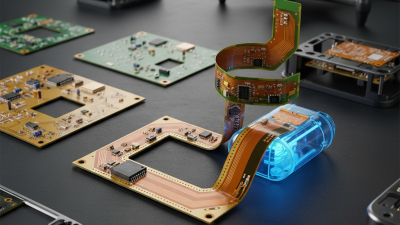
Flex PCB assembly refers to the process of assembling flexible printed circuit boards. These circuits are distinct due to their ability to bend and twist, fitting into compact spaces. They find applications in various fields, especially in consumer electronics, medical devices, and automotive sectors. According to a report by Technavio, the global flexible PCB market is expected to grow by over 6% annually through 2025.
The technology behind flex PCB assembly involves several intricate steps. First, materials like polyimide and polyester are used, which provide flexibility and durability. Then, the components are mounted on these flexible substrates using soldering techniques. It is important to maintain precision during this phase, as misalignment can lead to significant issues later. Industry reports highlight that about 30% of PCB failures are attributed to assembly defects, indicating the need for meticulous processes.
Certain challenges arise in flex PCB assembly, primarily related to manufacturing difficulties. The flexibility of the materials often complicates handling and processing. Some manufacturers face difficulties in ensuring adhesion during layer lamination. These issues can lead to higher production costs and longer lead times. Companies must continually refine their methods to enhance yield rates, as flexibility also poses risks during end-use product integration.
Key Components of Flex PCB Assembly Process
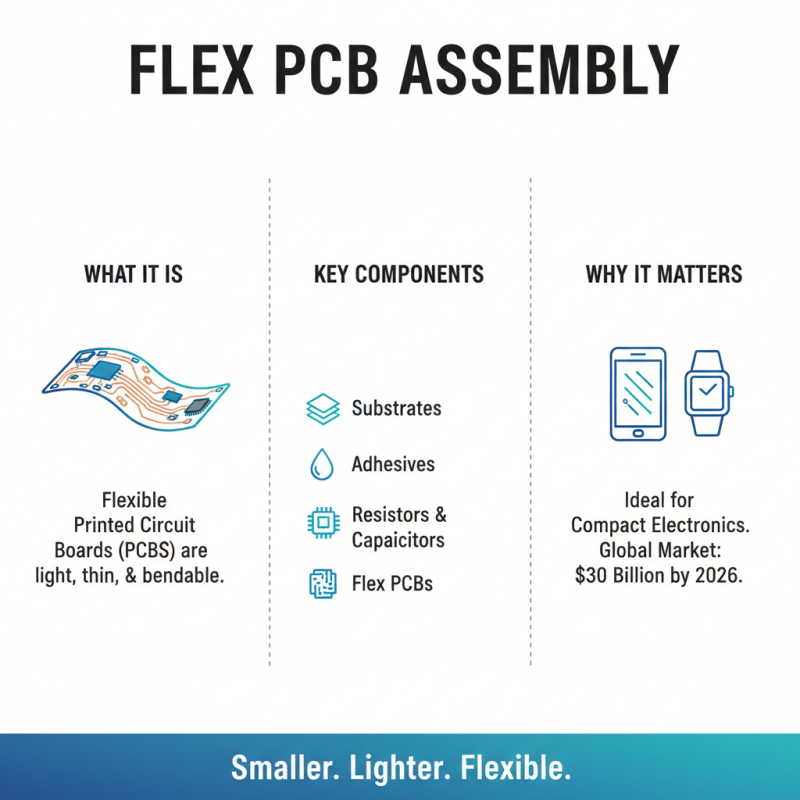
Flex PCB assembly is a specialized process that involves multiple key components. These components include flexible printed circuit boards, substrates, adhesives, and components like resistors and capacitors. Flex PCBs are lighter and thinner than traditional rigid boards. This makes them ideal for compact electronic devices. In fact, the global market for flex PCBs is projected to reach $30 billion by 2026, indicating strong demand.
One of the crucial elements in flex PCB assembly is the substrate material. Polyimide is commonly used due to its excellent thermal stability. This material can withstand high temperatures during assembly and operation. Adhesives are also vital in ensuring the components stick to the substrate. Yet, selecting the right adhesive can be challenging. The wrong choice may lead to delamination or poor conductivity.
Proper equipment is necessary for effective assembly. Automated pick and place machines are often utilized. These machines help position components accurately and efficiently. However, human oversight is still important. Errors in alignment can affect the overall performance of the PCB. The assembly process lacks uniformity and may require adjustments based on specific designs. Continuous testing and feedback play a major role in improving quality and reliability.
Advantages of Using Flex PCBs in Electronics
Flex PCBs, or flexible printed circuit boards, are a game-changer in the electronics industry. They offer unique advantages compared to traditional rigid boards. One major benefit is their flexibility. This allows devices to be lighter and more compact. Designers can easily fit them into tight spaces. Additionally, flex PCBs can bend and twist, adapting to different shapes without damaging the circuits.
Another advantage is their durability. These boards are less susceptible to damage from vibration and shock. They can withstand harsh conditions, making them ideal for automotive and medical devices. The manufacturing process allows for thinner profiles, which can save space. However, this can lead to challenges in production. Precision is key, and mistakes can be costly. Designers must consider the trade-offs carefully.
Cost-effectiveness is another point worth mentioning. Although the initial investment may be higher, the long-term savings can be significant. Fewer components are needed, reducing assembly time. Yet, the complexity of the design may complicate production. This requires skilled personnel and active management throughout the process. Balancing these factors is crucial for success in flex PCB assembly.
Step-by-Step Process of Flex PCB Assembly
Flex PCB assembly is a precise and intricate process. It involves multiple steps to ensure optimal performance and reliability. The assembly begins with the design of the flexible circuit. Engineers use specialized software to create layouts that fit into compact spaces. These designs must consider material types and thicknesses carefully.
Next, the manufacturing of Flex PCBs begins. The process includes printing circuit patterns on a flexible substrate. After this, components are selected based on the design requirements. This selection involves considering factors like size and function. Solder paste is applied accurately to positions on the board. It’s crucial to avoid excess paste, which can lead to connectivity issues.
Once the components are placed, heat is applied to form connections. This step needs precision; too much heat can damage the flex material. After cooling, testing is essential. Functional tests check for potential failures or short circuits. Reflection on this process is key. Even small errors can lead to significant malfunctions later. Continuous improvement in each step is vital for achieving successful outcomes.
Applications and Industries Utilizing Flex PCBs
Flex PCBs are gaining traction across various industries due to their adaptability and performance. They are commonly found in consumer electronics, automotive, and medical devices. Reports indicate that the global flex PCB market is projected to reach $32 billion by 2026, driven by increased demand in these sectors.
In the automotive industry, flex PCBs support advanced technologies like driver-assistance systems. They enable compact designs, reducing weight and enhancing reliability. For medical devices, flexibility allows for seamless integration into wearables, improving patient monitoring. Statistics show that 40% of medical device manufacturers consider flex PCBs crucial for innovative product designs.
**Tips:** When working on Flex PCB projects, consider the stack-up design carefully. A well-planned design enhances performance and minimizes manufacturing defects. Additionally, although the cost may be higher, investing in quality materials pays off in the long run.
However, flex PCBs come with challenges. The manufacturing process can be complicated. If alignment issues occur, it may lead to functionality problems. Engineers must be meticulous during design and prototyping phases. Continuous reflection on design choices can prevent costly mistakes. Remember, precision in early stages is key to success.
Applications of Flex PCB Assembly Across Various Industries