Top Flexible PCB Fabrication Techniques for Global Buyers?
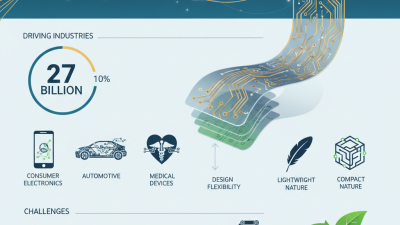
In today's rapidly evolving electronics market, flexible PCB fabrication has become a cornerstone of innovation. As per the latest industry reports, the global flexible PCB market is projected to reach USD 30 billion by 2026, highlighting its growing significance. These advancements cater to various sectors, including automotive, consumer electronics, and medical devices. The need for lightweight, compact, and adaptable solutions has driven manufacturers to adopt flexible PCB technologies.
Flexibility in design and function is vital for modern applications. However, challenges persist in achieving the perfect balance between performance and manufacturability. Some manufacturers struggle with yield rates and material costs, which need careful evaluation. The industry demands that companies refine their processes to enhance reliability without compromising quality. Innovative techniques are making headway, yet many firms remain hesitant to invest in advanced machinery.
An awareness of these challenges is essential for global buyers. They must consider the operational capabilities of suppliers when sourcing flexible PCB fabrication services. By understanding the intricate dynamics of the market, buyers can make informed decisions that may mitigate risks. Taking time to analyze supplier expertise and past performance can lead to better outcomes in an increasingly competitive landscape.

Overview of Flexible PCB Fabrication Techniques
Flexible printed circuit boards (PCBs) have become essential in modern electronics. Various fabrication techniques cater to different needs. Key methods include additive, subtractive, and hybrid processes. Each technique has unique advantages and limitations.
Additive manufacturing focuses on building up layers. This approach allows for finer details and reduced waste. However, it can be more costly. Subtractive processes, on the other hand, involve removing material to create circuits. This technique is widely used but may face challenges with intricate designs. Hybrid methods combine both techniques, offering flexibility but also increased complexity in production.
The materials used are crucial to fabrication. Polymers, foil, and adhesives play significant roles. Choosing the right materials affects durability and performance. As designs advance, manufacturers must adapt. Feedback from previous projects helps refine techniques. The need for quality assurance remains evident across methods. Balancing production efficiency and design accuracy is a continuous challenge.
Material Selection for Flexible PCBs: Key Considerations
When selecting materials for flexible printed circuit boards (PCBs), several key considerations emerge. One important factor is the substrate material. Polyimides are popular due to their excellent thermal and chemical resistance. However, they can be expensive and require precise handling. Alternatives like polyester also exist but may not provide the same durability.
Another consideration is the conductor material. Copper is the most commonly used material for traces. Its flexibility makes it suitable for dynamic applications. Thinner copper traces allow for greater flexibility. However, this can raise concerns about signal integrity and current carrying capacity. Balancing thickness with performance is a delicate task.
Adhesives are equally important in flexible PCB fabrication. The choice of adhesive affects both bond strength and thermal performance. Some solutions may degrade over time, especially under stress. Ensuring longevity while maintaining performance can be challenging. Each material selection requires careful evaluation against the specific needs of the project.
Top Flexible PCB Fabrication Techniques for Global Buyers
This bar chart illustrates the importance level of various key considerations in the fabrication of flexible PCBs, primarily focusing on material selection, manufacturing processes, testing techniques, design flexibility, and cost efficiency. Each aspect is evaluated on a scale from 1 to 10, highlighting their significance for global buyers in the flexible PCB market.
Common Methods for Flexible PCB Manufacturing
Flexible PCB manufacturing involves several key techniques.
These methods enable the production of PCBs that can bend and fit into various applications.
One common technique is the use of polyimide substrates.
This material is known for its excellent thermal stability and mechanical properties.
It allows the finished product to withstand high temperatures during soldering.
Another important method is the application of
screen printing for conductive traces.
This technique offers precision in pattern creation. It also helps in achieving a uniform thickness of the conductive layer.
However, achieving the right balance in thickness can be challenging.
Inconsistent printing can lead to defects, which may compromise performance.
Additionally, laser cutting is becoming popular in flexible PCB production.
This method provides high accuracy in cutting complex shapes.
It reduces waste material significantly as well.
On the downside,
the initial costs can be high, especially for small batches.
Not every manufacturer has access to high-quality laser technology, which may limit production capabilities.
Overall, each technique has its strengths and weaknesses, making careful selection vital for effective manufacturing.
Quality Control Measures in Flexible PCB Production
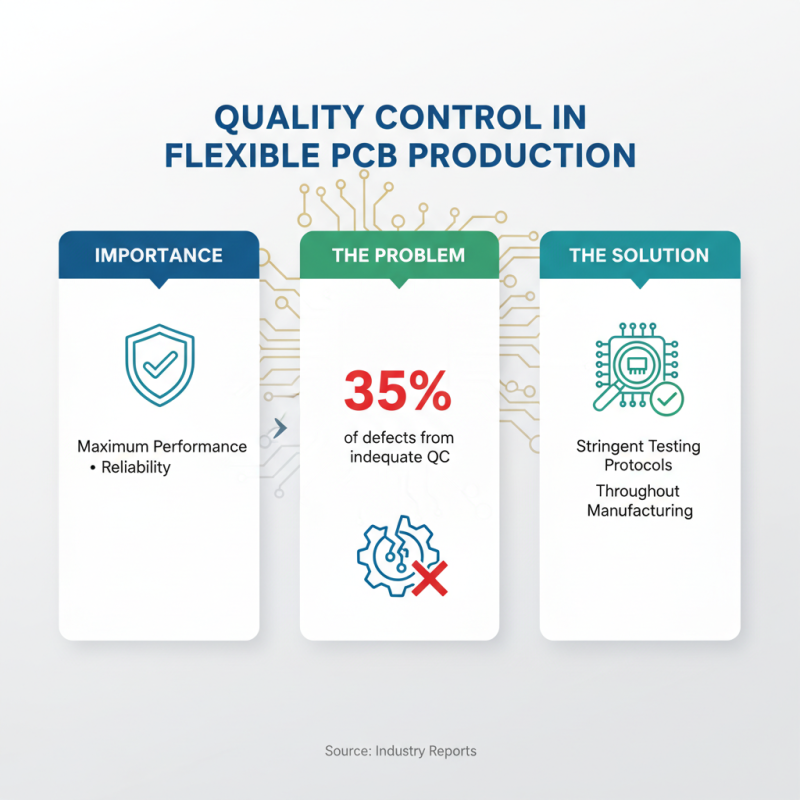
Quality control is crucial in flexible PCB production. This ensures maximum performance and reliability. According to industry reports, over 35% of defects arise from inadequate quality control measures. This statistic highlights the need for stringent testing protocols throughout the manufacturing process.
One effective approach is to implement automated optical inspection (AOI). This technology identifies defects early, preventing costly errors. In a recent study, companies using AOI reported a 20% reduction in defects. Regular audits and process evaluations are essential. They help identify areas needing improvement. This proactive approach builds a culture of quality in manufacturing.
Tips for buyers include verifying suppliers’ quality control certifications. A reputable producer should have ISO 9001 or IPC standards. Furthermore, ask for samples before bulk orders. This allows for real-world testing of materials. Quality should never be compromised, as it directly impacts product performance and customer satisfaction.
Emerging Trends in Flexible PCB Fabrication Technologies
Flexible PCB fabrication is evolving rapidly, driven by technological advances and market demands. New methodologies are emerging, focusing on efficiency and miniaturization. The integration of automation in PCB manufacturing processes enhances precision and reduces waste. Designers are now looking for innovative techniques like multi-layering and selective laser sintering. These trends aim to meet the rising demand for lighter and thinner electronics.
Tips: When choosing a fabrication technique, consider material compatibility and the intended application. This can prevent costly errors later. Additionally, staying updated on industry trends can provide insights into new methods your suppliers might adopt.
Another notable trend is the move towards sustainable materials. Manufacturers are exploring eco-friendly options to minimize environmental impact. These materials often provide equivalent performance while being less harmful. However, the effectiveness of these materials can vary. Testing and validation are crucial to ensuring reliability in final products.
Tips: Always ask for samples before finalizing material choices. This will help you assess their performance in real-world applications. Think about long-term impacts, not just immediate costs.
Top Flexible PCB Fabrication Techniques for Global Buyers
| Technique |
Description |
Applications |
Advantages |
| Laser Direct Imaging (LDI) |
Utilizes lasers to accurately image the circuit patterns on flexible substrates. |
Consumer electronics, medical devices, automotive. |
High precision, reduced waste, faster production times. |
| Printed Electronics |
Printing conductive inks on flexible substrates to create circuits. |
Wearable technology, RFID tags, sensors. |
Cost-effective, lightweight, and customizable. |
| Photoengraving |
Involves exposing a photosensitive material to a UV light source to develop circuit boards. |
Environmental sensors, medical equipment, flexible displays. |
High resolution, suitable for complex designs, effective for low to medium production volumes. |
| Roll-to-Roll Processing |
Continuous processing of flexible materials in a roll format. |
Commercial printing, large-scale production of sensors. |
High throughput, efficient material use, reduced labor costs. |