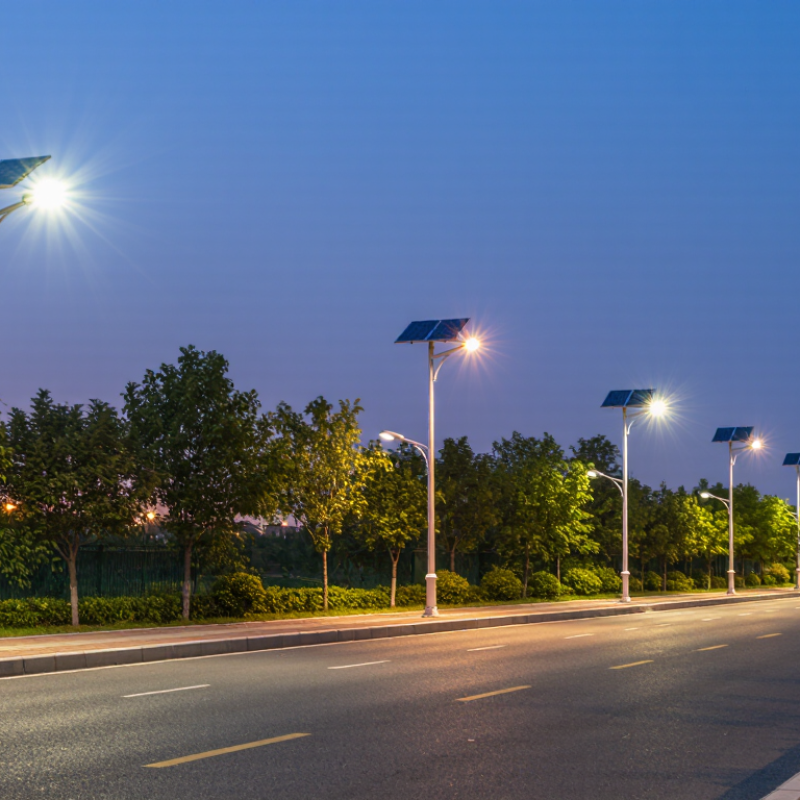
How to Choose a Solar Energy Light Pole in 2026?

Choosing a solar energy light pole in 2026 requires more than comparing prices and panel sizes. It demands practical judgment. A pole may shine brightly in a showroom, yet fail after several cloudy nights. The real test begins outdoors.

Dr. Harish Hande, a pioneer in decentralized solar energy, has said, “Energy access is a fundamental right.” His statement gives this decision a human focus. A reliable solar energy light pole should improve safety, visibility, and daily mobility. It should also match the location, not merely follow a fashionable specification.

Start with the site. Measure nighttime darkness, road width, mounting height, and nearby trees. Check the winter sun angle. Inspect drainage around the foundation. A 60-watt LED may suit a narrow pathway, while a wider road may need stronger optics or multiple poles. Battery chemistry matters too. Lithium batteries often offer compact storage, but temperature, cycle life, and replacement access still require attention.

Look beyond the panel.

Ask for tested lighting data, battery protection details, and warranty conditions. Confirm whether the controller prevents overcharging and deep discharge. Review performance records from similar climates. A supplier’s beautiful rendering is useful, but it is not field evidence.

There is no perfect specification. A larger panel can increase cost and wind exposure. A cheaper battery can shorten service life. Even careful calculations may miss dust, shade, or poor maintenance. We should admit that uncertainty. The best choice balances illumination, durability, service support, local weather, and total ownership cost. That balance makes a solar energy light pole dependable after the sales conversation ends.

How to Choose a Solar Energy Light Pole in 2026?

Defining Solar Light Pole Requirements for Your Site

How to Choose a Solar Energy Light Pole in 2026?

Defining Solar Light Pole Requirements for Your Site

Start with the site, not the pole. Measure the road width, mounting height, and required lighting level. A narrow walkway may need fewer lumens than a vehicle entrance. Record shadows from buildings, trees, and nearby structures during winter. One shaded panel can reduce daily charging more than expected.

Check the local solar resource using reliable weather data and a conservative winter estimate. Size the panel and battery for cloudy periods, not perfect summer days. Determine the required operating time, such as twelve hours nightly. Add reserve capacity for several low-sun days. This is where many early designs become too optimistic.

Ground conditions matter. Test soil stability before selecting the foundation and pole height. Review local wind-load rules, flood risks, drainage, and corrosion exposure. Coastal air, dust, and freezing temperatures require different enclosure and material choices. Set a practical maintenance plan, including battery access and periodic panel cleaning. A remote site may justify longer autonomy, even with higher initial costs.

Keep the lighting layout realistic. Compare pole spacing with actual lux measurements after installation, not only computer predictions. Uniform light is usually more useful than a bright spot beneath each pole. Leave room for adjustment; site conditions often differ from the survey. A careful specification should state performance targets, testing methods, warranty terms, and replacement responsibilities clearly. Avoid choosing the smallest system simply because the quotation looks attractive.

How to Choose a Solar Energy Light Pole in 2026?

Typical planning ranges for solar lighting applications. Select pole height and spacing according to road classification, mounting height, required illuminance, solar resource, and local lighting standards.

Planning reference: pedestrian paths commonly use 4–5 m poles, parking areas 5–7 m, local roads 7–9 m, and major roads 9–12 m. Typical spacing is approximately 4–5 times mounting height, but final values must be verified through a photometric design and site-specific solar assessment.

Comparing Pole Designs, Solar Panels, and Battery Systems

How to Choose a Solar Energy Light Pole in 2026?

Comparing Pole Designs, Solar Panels, and Battery Systems

Solar pole design affects safety, maintenance, and energy yield. Tapered steel poles usually resist wind better than thin straight poles, but they can cost more. Octagonal sections simplify fabrication and improve torsional strength. Check local wind loads, foundation depth, and access for battery replacement. A beautiful pole can still fail through poor drainage.

Panel selection requires more than peak wattage. Monocrystalline modules offer strong output in limited spaces. Bifacial panels may help near reflective ground, but vertical lighting poles rarely provide ideal rear-side conditions. IRENA reported 1,865 gigawatts of global solar capacity by the end of 2024. That growth proves technology maturity, not automatic suitability for every street. Tilt, shading, dust, and winter sunlight still control daily production.

Battery systems deserve careful comparison. Lithium iron phosphate batteries generally provide longer cycle life and safer thermal behavior than conventional lead-acid units. However, low temperatures can reduce charging performance. NREL’s 2024 Annual Technology Baseline uses approximately 85% round-trip efficiency for many lithium-ion storage assumptions. Size the battery around local dark-hour demand, cloudy-day autonomy, and lamp dimming schedules. Oversizing wastes money and adds weight. Undersizing causes early nighttime failures. I would not trust a single sunny-day test; three months of measured operation reveals more.

Evaluating Lighting Performance, Controls, and Weather Resistance

How to Choose a Solar Energy Light Pole in 2026?

Evaluating Lighting Performance, Controls, and Weather Resistance

Selecting a solar energy light pole in 2026 requires more than comparing lumen numbers. Lighting performance should match the road, pathway, or parking area. Ask for photometric files, tested illuminance, uniformity, color temperature, and glare data. A bright fixture can still create dark patches. Battery autonomy matters during several cloudy nights, not only under laboratory conditions. Review panel output, battery chemistry, charge controls, and expected capacity after aging. Motion sensors and adaptive dimming can reduce energy use. However, aggressive dimming may reduce visibility near crossings or security zones. Set practical schedules, and test them after installation.

Controls should be easy to inspect and adjust. Photocells need accurate thresholds, while remote monitoring should report faults, low voltage, and battery health. Manual override is useful during maintenance. Do not assume wireless communication will work through every cabinet or dense tree line. That assumption can become an expensive surprise. Choose equipment with documented IP protection, impact resistance, and wind-load calculations. Coastal sites need corrosion-resistant hardware and sealed connectors. Cold regions require batteries rated for low temperatures. Hot climates need thermal protection.

Inspect drainage, cable glands, pole foundations, and fasteners before approving the design. Independent laboratory reports are more useful than vague durability claims. Check compliance with local electrical and structural requirements. Ask how replacement parts will be sourced after several years. Weather resistance is not permanent. Dust, salt, ice, and ultraviolet exposure gradually weaken seals and coatings. Even a careful selection can miss site-specific problems. Pilot one pole first, then review nighttime performance before expanding.

Checking Installation Conditions, Maintenance, and Safety Standards

Choosing a solar energy light pole in 2026 starts with the installation site, not the panel size.

Check daily shading, soil stability, drainage, wind exposure, and cable routes. A nearby tree can reduce winter charging for weeks.

The IEA’s Renewables 2024 report recorded about 510 gigawatts of renewable capacity added in 2023, with solar providing most growth. This expansion makes site discipline more important, not less.

Verify the pole’s foundation against local wind-load requirements. Confirm battery capacity using the site’s winter solar resource, not an optimistic summer estimate.

Use photometric calculations based on CIE 115 guidance, especially for roads, pathways, and pedestrian zones. Electrical components should match relevant IEC 60598-1 requirements.

Check enclosure protection under IEC 60529, such as suitable IP ratings for dust and rain. Photobiological safety under IEC 62471 also deserves attention near homes and schools.

Standards are not decoration.

Tips:

Request a shade survey at different times. Leave access for battery replacement and panel cleaning. Inspect fasteners after severe weather.

Keep records of nighttime runtime, charging voltage, and fault alerts. A maintenance plan should include seasonal cleaning and corrosion checks.

Do not trust a single laboratory runtime figure. Real conditions are messier.

A slightly oversized battery may improve reliability, but excessive capacity can raise cost and replacement waste.

Review the design with a qualified local engineer before installation.

Estimating Total Cost, Lifespan, and Long-Term Energy Value

How to Choose a Solar Energy Light Pole in 2026?

A reliable comparison starts with total ownership cost, not the purchase price. Include the pole, foundation, transport, installation, controls, battery replacements, cleaning, and disposal. A quotation may exclude soil reinforcement or lifting equipment. That can distort the budget. IRENA’s Renewable Power Generation Costs in 2023 reported a global weighted-average solar PV electricity cost of about $0.044 per kilowatt-hour. However, a solar light pole avoids trenching and grid connection costs, so its value depends on the site. Record annual sunlight, required lighting hours, local electricity prices, and backup expectations before ordering.

Lifespan needs separate estimates for each component. NREL commonly models photovoltaic degradation near 0.5% annually, while LED outdoor luminaires often provide 50,000 hours or more under suitable thermal conditions. Batteries remain the weak point. Many require replacement after five to twelve years, depending on chemistry, temperature, depth of discharge, and cycling. Check the battery warranty carefully. Ask for autonomy testing after several cloudy nights. A practical calculation is lifetime energy value minus maintenance and replacement costs, discounted over time. For example, a pole producing 400 useful kilowatt-hours yearly offsets energy at the local tariff, but not every rated watt-hour reaches the ground. Dust matters. Shade matters more. My estimate would remain conservative because weather, vandalism, and battery aging are difficult to predict. The cheapest proposal may become expensive after one neglected failure.

How to Choose a Solar Energy Light Pole in 2026? — Estimating Total Cost, Lifespan, and Long-Term Energy Value
Application Profile Typical LED Load PV Module Size Battery Storage Pole Height Recommended Autonomy Estimated Initial Cost
(USD per pole)
Expected Service Life 20-Year Replacement & Maintenance Cost 20-Year Total Cost
(USD per pole)
Estimated Solar Electricity Delivered
(20 years)
Indicative Avoided Grid-Electricity Value Best-Fit Use
Basic pathway 20 W LED
Approximately 240–300 lm/W system efficacy
120 Wp monocrystalline PV 1.28 kWh LiFePO₄ 5–6 m 2 nights without useful solar charging $1,800–$2,800 PV module: 20–25 years
LiFePO₄ battery: 8–12 years
LED system: 12–15 years
Galvanized steel pole: 20–30 years
$650–$1,150 $2,450–$3,950 Approximately 1,752 kWh
Based on 12 operating hours per night at rated load
$315–$420
Based on $0.18–$0.24 per kWh
Walkways, parks, cycle paths, residential footpaths, and low-traffic areas
40 W LED
Suitable for moderate roadway illumination
240 Wp monocrystalline PV 2.56 kWh LiFePO₄ 7–8 m 3 nights without useful solar charging $3,200–$5,200 PV module: 20–25 years
LiFePO₄ battery: 8–12 years
LED system: 12–15 years
Galvanized steel pole: 20–30 years
$950–$1,650 $4,150–$6,850 Approximately 3,504 kWh
Based on 12 operating hours per night at rated load
$631–$841
Based on $0.18–$0.24 per kWh
Local roads, parking areas, public housing, campuses, and municipal streets
High-output roadway 60 W LED
Designed for wider spacing or higher illumination requirements
360 Wp monocrystalline PV 3.84 kWh LiFePO₄ 8–10 m 3 nights without useful solar charging $4,400–$7,000 PV module: 20–25 years
LiFePO₄ battery: 8–12 years
LED system: 12–15 years
Galvanized steel pole: 20–30 years
$1,250–$2,100 $5,650–$9,100 Approximately 5,256 kWh
Based on 12 operating hours per night at rated load
$946–$1,261
Based on $0.18–$0.24 per kWh
Main roads, intersections, industrial access roads, and larger public spaces
Cold-climate or low-sunlight design 30 W LED
Configured with conservative seasonal energy margins
300 Wp monocrystalline PV 3.84 kWh LiFePO₄ with battery heating protection 6–8 m 4–5 nights without useful solar charging $4,000–$6,800 PV module: 20–25 years
LiFePO₄ battery: 8–12 years
LED system: 12–15 years
Galvanized steel pole: 20–30 years
$1,300–$2,300 $5,300–$9,100 Approximately 2,628 kWh
Based on 12 operating hours per night at rated load
$473–$631
Based on $0.18–$0.24 per kWh
Snow-prone regions, higher latitudes, cloudy climates, and remote facilities
Smart-networked solar pole 40 W LED with dimming and motion-based controls 240 Wp monocrystalline PV 2.56 kWh LiFePO₄ 7–8 m 3 nights without useful solar charging $3,900–$6,400 PV module: 20–25 years
LiFePO₄ battery: 8–12 years
LED system: 12–15 years
Controller and communications: 5–10 years
Galvanized steel pole: 20–30 years
$1,200–$2,100 $5,100–$8,500 Approximately 2,453 kWh
Assumes a 30% energy reduction from dimming and occupancy control
$442–$589
Based on $0.18–$0.24 per kWh
Smart cities, campuses, security zones, and locations requiring remote monitoring
Planning assumptions: Costs are indicative 2026 planning ranges in U.S. dollars for one complete pole, including the pole, LED luminaire, PV module, battery, charge controller, foundation hardware, and standard installation. They exclude land preparation, unusual foundations, taxes, import duties, trenching, civil works, and major distribution upgrades. Energy estimates use 12 hours of nightly operation, 365 nights per year, and the stated rated LED load. Actual output depends on solar resource, shading, temperature, tilt, battery efficiency, snow cover, and dimming schedules. Avoided grid-electricity value uses an illustrative electricity price of $0.18–$0.24/kWh and does not represent a guaranteed financial return.
Selection rule: Choose the lowest-cost configuration that satisfies required illumination, local wind and snow-load standards, battery autonomy, seasonal solar availability, maintenance access, and the expected 20-year operating plan. In most ordinary roadway projects, the standard roadway configuration provides the best balance between upfront cost, resilience, and long-term energy value.

Article Source:

Search our website