2026 How to Choose the Right PCB Board for Your Project?
Choosing the right PCB board for your project can be challenging. Many factors come into play when making this decision. Understanding your project's specific needs is crucial.
A PCB board serves as the backbone of any electronic device. It connects various components and ensures they work harmoniously. Consider the size, material, and layer count of the PCB board before making a choice. Not all projects require the same specifications. A simpler project may not need a multi-layer board, while complex designs might require it.
Sometimes, the choice is not straightforward. You may find yourself torn between options. This decision can impact performance and cost. Reflecting on the project requirements can help clarify your thoughts. Each PCB board has its pros and cons, making it essential to weigh them carefully. Think through every detail to avoid costly mistakes later. Choosing the right PCB board is an art that requires both knowledge and intuition.

Factors to Consider When Selecting a PCB Board for Your Project
Choosing the right PCB board for your project is crucial. There are several factors to consider. The design complexity of your circuit plays a significant role. According to industry research, over 70% of design failures stem from inadequate PCB specifications. Understanding the electrical requirements is vital. High-frequency applications may need specialized materials like Rogers or Teflon.
Material choice is another essential aspect. Standard FR-4 is common, but for high-performance needs, you might explore alternatives. Data from IPC show that the right material can improve thermal performance by up to 30%. Additionally, consider the board thickness and layer count. Thicker boards handle more complex designs but can be costlier. Surrounding components and space constraints should also influence your decision.
Manufacturing capabilities can be a limiting factor. Not all manufacturers can handle advanced processes. This discrepancy can lead to delays. According to a study, 40% of project delays are related to PCB manufacturing issues. Ultimately, reflect on your project’s unique goals. Keep flexibility in mind, as sometimes traditional choices might not fit your evolving needs.
Understanding Different PCB Types and Their Applications
When selecting a PCB for your project, understanding the various types is essential. There are several kinds, each suited for specific applications.
Standard PCBs are versatile and widely used in consumer electronics. They offer a good balance of cost and functionality.
On the other hand, flexible PCBs are ideal for devices with limited space. These can bend and fit into tight areas, but their manufacturing process can be more complicated.
Rigid PCBs provide stability and reliability. They are durable and perfect for applications that require solid support. However, they lack the flexibility that some designs may demand.
Multi-layer PCBs come into play for complex projects. They allow for more components in a smaller space but can be harder to design.
Each PCB type has its trade-offs; some choices may lead to technical challenges later on. Make sure to evaluate your project's specific needs before deciding. This careful analysis can save time and resources down the line.
Material Choices: FR-4 vs. Flexible Materials in PCB Design
When selecting a PCB board, material choices can greatly influence the performance. FR-4, a widely used fiberglass material, offers good mechanical strength and insulation properties. It is reliable and often cost-effective, making it a go-to for many projects. However, FR-4 has limitations, especially in flexibility. If your design is complex or requires flexibility, it may not be ideal.
On the other hand, flexible materials open new avenues. They can bend, twist, and fit into tight spaces, ideal for wearable technology. This flexibility can enhance design but may raise costs. Manufacturing processes are different and sometimes more complicated. It’s crucial to assess whether the benefits outweigh the challenges in your specific case.
Consider the environment as well. Is your PCB subjected to heat or humidity? Will it experience physical stress? These factors could make flexible materials a better fit. However, it's necessary to evaluate if you can execute the design correctly without compromising quality. Reflecting on these points will guide you toward making the right choice for your PCB project.
2026 How to Choose the Right PCB Board for Your Project? - Material Choices: FR-4 vs. Flexible Materials in PCB Design
| Material Type |
Flexibility |
Thermal Conductivity (W/m·K) |
Dielectric Constant |
Cost (per m²) |
| FR-4 |
Rigid |
0.3 - 0.4 |
4.5 - 5.0 |
$3 - $5 |
| Polyimide |
Flexible |
0.12 - 0.25 |
3.0 - 3.4 |
$10 - $15 |
| PET |
Flexible |
0.15 - 0.3 |
2.5 - 3.0 |
$8 - $12 |
| FR-4 with Teflon |
Rigid |
0.25 - 0.35 |
2.0 - 3.0 |
$18 - $25 |
| Rogers |
Rigid |
0.30 - 0.45 |
3.5 - 4.0 |
$20 - $30 |
Key Specifications: Layer Count, Thickness, and Copper Weight
When selecting a PCB board, key specifications play a vital role. The layer count determines the complexity of your design. Single-layer boards are suitable for simple projects. However, multi-layer boards offer greater functionality and space for intricate designs. Think about your needs carefully. Too many layers can complicate production and add costs.
Thickness is another crucial factor. Standard thickness ranges from 0.8mm to 1.6mm. For high-power applications, consider thicker boards. They can handle more heat and reduce signal loss. Yet, thicker does not always mean better. It may affect flexibility and fitting in tight spaces.
Copper weight impacts the current-carrying capacity. Typical copper weights swing between 1oz and 2oz. For high-performance applications, heavier copper is often necessary. However, it might increase the board’s weight. Light-weight projects might benefit from thinner layers of copper. Always align your choices with your project requirements. Balancing these factors is essential for a successful design.
2026 How to Choose the Right PCB Board for Your Project?
This chart illustrates the popularity of different PCB layer counts based on various project needs. As demonstrated, the 2-layer PCB remains the most widely used choice, with a significant number of projects opting for it due to its balance between cost and complexity.
Cost Analysis: Balancing Quality and Budget in PCB Manufacturing
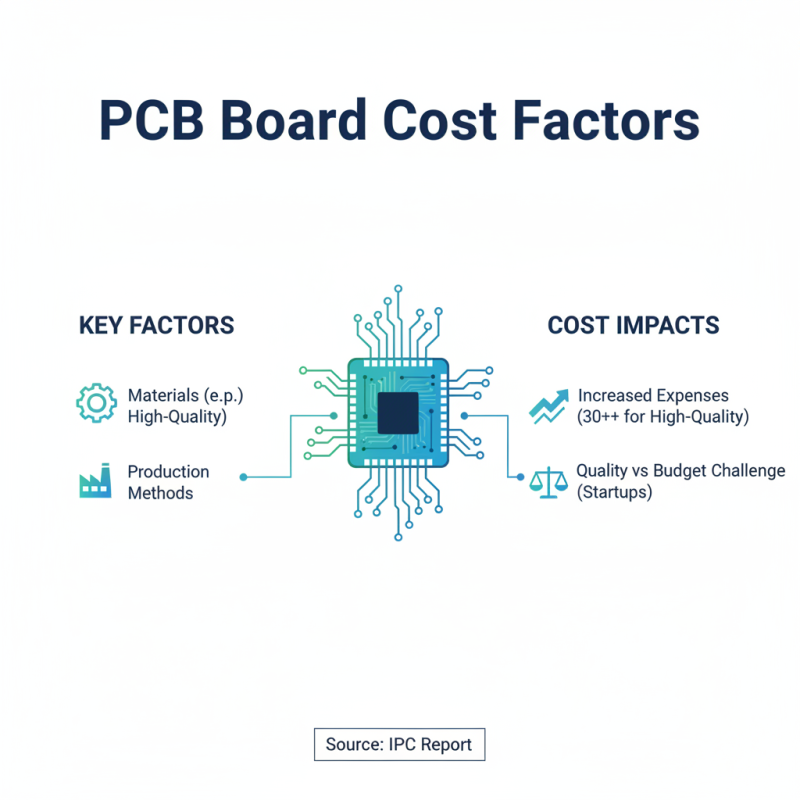
When selecting a PCB board, cost plays a significant role. A report from IPC predicts that PCB costs can vary widely, influenced by materials and production methods. For instance, high-quality materials may increase expenses by 30% or more. Balancing quality with budget can be challenging, particularly for startups.
Sticking to budget constraints often leads to compromises. Lower-cost boards may use subpar materials, affecting longevity and performance. Research shows that 48% of electronic failures stem from poor PCB quality. This highlights the importance of upfront investment. A well-made board can prevent costly redesigns later.
Many manufacturers offer bulk pricing discounts. Orders above certain quantities can reduce per-unit costs. However, minimum order quantities can be a pitfall for small projects. Many might find themselves overpaying for unused boards. In this landscape, understanding the trade-offs between budget and quality is crucial for project success.