
China Top 10 Phase Lack Chrome Rectifier Manufacturers

China’s Phase Lack Chrome Rectifier market serves electroplating plants that demand stable current, accurate voltage control, and dependable protection against phase failure. This introduction examines ten Chinese manufacturers associated with chrome-plating rectifiers and related industrial power systems. The comparison considers rated capacity, output ripple, cooling design, control interfaces, phase-loss protection, customization, testing records, and after-sales support.

A rectifier may look like a steel cabinet, but its performance appears in practical details. Operators notice unstable chrome deposits, overheated busbars, noisy fans, or uneven coating thickness. Reliable suppliers normally provide factory testing, wiring diagrams, maintenance guidance, and measurable efficiency data. Certification matters, yet certificates alone cannot prove long-term field performance. Buyers should request load-test reports, reference projects, spare-parts policies, and clear warranty terms.

Power-electronics author Muhammad H. Rashid states, “Power electronics is the technology associated with efficient conversion, control, and conditioning of electric power.” His observation applies directly to every Phase Lack Chrome Rectifier used in demanding plating environments. Efficient conversion reduces wasted energy, while precise control supports consistent coating quality. However, this ranking should not be treated as an absolute verdict. Market data changes, product lines differ, and a strong factory may still lack experience with a specific bath chemistry or production scale. The most useful evaluation combines published specifications with factory audits, customer feedback, and trial operation. Small details can expose large weaknesses.
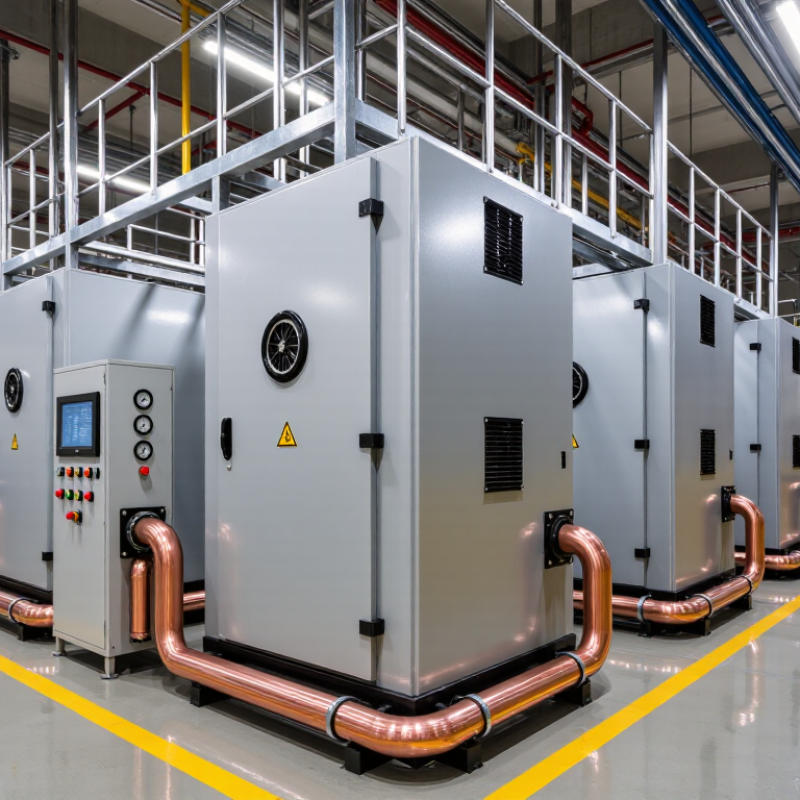
China Top 10 Phase Lack Chrome Rectifier Manufacturers

Definition and Role of Three-Phase Chrome Rectifiers

Three-phase chrome rectifiers convert incoming AC power into controlled direct current for hard-chrome and decorative-chrome baths. Their main role is maintaining stable current density across the workpiece. A six-pulse design is common, although twelve-pulse systems can reduce ripple and electrical distortion. The waveform matters. Lower ripple helps produce a more uniform deposit, especially on long shafts, molds, and recessed surfaces.

According to the International Energy Agency, industry represented about 37% of global final energy consumption in 2022. This makes rectifier efficiency a practical purchasing concern, not a technical luxury. Modern industrial units often achieve approximately 85% to 95% electrical efficiency, depending on load, cooling, and control design. Technical reviews from the electroplating sector also associate precise current control with better thickness consistency and fewer rejected parts. In field inspections, loose busbar connections and undersized cables remain surprisingly common. Small errors compound.

A reliable three-phase chrome rectifier should provide adjustable voltage, stable current feedback, overload protection, and clear fault records. Digital controls can support repeatable production, but operators still need bath analysis and thickness testing. One report may emphasize energy savings; another may prioritize production speed. Both can be correct. Manufacturers in the top tier usually differ less in basic conversion theory than in thermal design, ripple management, service response, and long-term calibration stability. Yet no rectifier can correct poor pretreatment, contaminated electrolyte, or careless fixture placement.

Key Technologies Used in Chrome Plating Rectifier Design

In chrome plating, a phase-lack rectifier must deliver stable current under demanding conditions. Its design begins with phase monitoring, fast detection, and controlled shutdown. A missing phase can increase ripple, overheat components, and damage the plated surface. Reliable systems use voltage sensing, current transformers, and independent protection circuits. Operators should also verify alarm timing during commissioning, not only trust factory settings.

Constant-current control is central to consistent chrome thickness. Digital feedback compares the target current with real-time measurements many times per second. Silicon-controlled rectifiers suit heavy industrial loads, while high-frequency switching designs can reduce size and improve response. Six-pulse or twelve-pulse configurations help manage ripple and harmonics. However, their performance depends on transformer quality, filtering, and site power conditions. Small details matter.

Cooling technology deserves equal attention. Water-cooled busbars, forced-air cabinets, and temperature sensors protect the power stage during long plating cycles. Proper cable sizing limits voltage loss between the rectifier and tank. Engineers should record ripple, output temperature, and current stability under actual production loads. A design may look efficient in a test room, yet behave differently beside a hot plating line. No design is perfect. Periodic inspection still matters.

Selection Criteria for China’s Top Chrome Rectifier Manufacturers

China Top 10 Phase Lack Chrome Rectifier Manufacturers

When selecting China’s top chrome rectifier manufacturers, verify protection performance before comparing prices. A reliable supplier should provide phase-loss, over-temperature, over-voltage, and short-circuit protection. IEC 60146-1-1 offers a useful reference for power semiconductor converter safety and performance. Ask for test records, not attractive claims.

Industrial electricity use remains significant. The IEA’s Energy Efficiency 2023 report states that industry consumes about 40% of global final energy. Rectifier efficiency therefore affects both operating cost and bath stability. Check efficiency at 25%, 50%, and 100% load. Request ripple data, output accuracy, cooling design, and harmonic measurements. A factory audit should include copper busbars, insulation distances, calibration tools, and a real load-bank test. A clean cabinet is reassuring, but it proves little alone.

Tips: Confirm phase-loss recovery behavior under an actual plating load. Review three years of failure records. Ask whether spare diodes, fans, and control boards remain available. ISO 9001 certification supports process control, but it cannot replace independent testing. Some suppliers provide perfect samples and weak documentation. That deserves reflection. Also inspect welding quality, cable labeling, and alarm history. Small details often reveal manufacturing discipline better than brochures.

Profiles of the Top 10 Three-Phase Chrome Rectifier Manufacturers

China’s top ten three-phase chrome rectifier manufacturers reflect a market shaped by energy costs, automation, and stricter process control. Their equipment typically serves decorative chrome, hard chrome, automotive, and industrial finishing lines. According to Grand View Research, the global electroplating market was valued at more than USD 20 billion in 2023, with steady growth expected through 2030. That expansion increases demand for stable DC output.

The leading ten profiles differ in practical strengths. One focuses on high-current systems for large shafts. Another specializes in pulse-current control. A third supplies compact units for laboratory lines.

Other manufacturers emphasize water cooling, air cooling, remote monitoring, modular cabinets, or rapid maintenance access. Several provide three-phase input with digital voltage and current regulation. Experienced plant engineers usually inspect ripple, overload response, thermal protection, and duty-cycle performance before comparing price. Small details matter.

The International Energy Agency reports that industry consumes about 37% of global final energy, making rectifier efficiency commercially important. Yet published efficiency figures are not always tested under identical loads. This is a weakness worth questioning.

Buyers should request test conditions, harmonic data, insulation ratings, and continuous-load records. Field experience also shows that a clean control panel and accessible busbars can reduce downtime. Not glamorous, but useful. Profiles should therefore assess engineering support, spare-part availability, customization skill, and documented factory testing, not only rated amperage.

Applications, Safety Standards, and Purchasing Considerations

China Top 10 Phase Lack Chrome Rectifier Manufacturers

Chrome rectifiers convert alternating current into controlled direct current for decorative plating, hard chrome, and selected industrial coating processes. Phase-loss protection helps prevent unstable output when one input phase fails. This matters during long production cycles. Operators may see uneven deposits, overheated cables, or damaged power modules without fast protection.

In real workshops, safety begins with correct installation. Check insulation, grounding, emergency isolation, cooling airflow, and enclosure protection before energizing the unit. IEC 60146 and IEC 62477-1 can provide useful technical references, while local electrical and environmental rules still apply. Chrome-plating chemicals require controlled storage, ventilation, protective equipment, and compliant wastewater treatment. A standard alone cannot replace trained supervision.

Purchasers should compare rated voltage, current stability, ripple percentage, overload response, and duty cycle. Ask for factory test records, wiring diagrams, calibration data, and phase-loss alarm verification. Water-cooled units need flow sensors and clean circulation systems. Air-cooled models require clear vents and regular dust removal. Check service response and spare-part availability, not only the purchase price. Small details matter. Some buyers overlook harmonic distortion or cable sizing. I have seen specifications look impressive while the cooling design remained poorly matched to the workshop. Request a sample load test when possible, and verify performance under your actual bath temperature and operating schedule.

China Top 10 Phase Lack Chrome Rectifier Manufacturers - Applications, Safety Standards, and Purchasing Considerations

No. Manufacturer Evaluation Area Typical Application Typical Output Configuration Relevant Safety or EMC Standard Key Purchasing Consideration Recommended Verification
1 Industrial chromium-plating rectifier capability Decorative and hard-chrome electroplating lines Three-phase AC input with controlled DC output; voltage and current depend on bath size IEC 60146-1-1 for semiconductor power converters Confirm continuous-duty rating, current ripple, overload behavior, and duty cycle Request a witnessed load test at the required voltage and current
2 High-current busbar and terminal design Large tanks, continuous plating, and multiple cathode connections Low-voltage, high-current DC system with copper or tinned-copper conductors IEC 60204-1 for electrical equipment of machinery Check temperature rise, insulation clearance, connection torque, and corrosion resistance Review thermal test records and photographs of internal power connections
3 Cooling-system suitability Production environments requiring stable output over long shifts Air-cooled or water-cooled power section, selected according to heat loss IEC 60529 for enclosure ingress-protection ratings Verify ambient temperature, water quality requirements, fan or pump redundancy, and alarms Compare thermal derating curves and conduct a full-load temperature test
4 Current and voltage regulation Processes where coating thickness and surface finish must be consistent Closed-loop constant-current or constant-voltage control with digital adjustment IEC 60146-1-1; measurement accuracy should be stated by the supplier Ask for regulation accuracy, display resolution, response time, and calibration method Validate output against a calibrated external meter under changing load
5 Ripple and waveform performance Hard chrome, precision components, and applications sensitive to surface defects Six-pulse or higher-pulse thyristor/IGBT topology, depending on design and cost IEC 60146-1-1; harmonic limits may also be specified by the installation Require ripple measurement conditions, filtering details, and performance at rated load Request oscilloscope waveforms and a written ripple specification
6 Protection and safety functions Factories operating around conductive liquids and high-current DC equipment Overcurrent, overvoltage, overtemperature, short-circuit, phase-loss, and emergency-stop functions IEC 62477-1 for safety requirements of power electronic converter systems Confirm alarm latching, fault reset logic, interlocks, and safe discharge of stored energy Perform documented fault-injection and emergency-stop tests before acceptance
7 Input power quality and phase-loss response Sites with variable grid conditions or long supply cables Three-phase input with phase-sequence detection and phase-loss protection IEC 61000-6-2 and IEC 61000-6-4, where applicable to the industrial installation Check input voltage tolerance, power factor, inrush current, and harmonic-current data Test operation with controlled phase interruption and supply-voltage variation
8 Control, communication, and automation Automated plating lines and recipe-based production systems Local HMI with analog I/O, digital I/O, or industrial communication interface IEC 60204-1 for machine-control integration and electrical safety Clarify protocol, data mapping, remote-stop behavior, password control, and event logging Complete an interface test using the intended PLC or line-control system
9 Environmental and materials compliance Export projects and installations requiring restricted-substance documentation Industrial enclosure with materials selected for heat, dust, moisture, and chemical exposure EU RoHS Directive 2011/65/EU and REACH requirements, when applicable Request declarations, material information, enclosure rating, and corrosion-protection details Review compliance documents and inspect the proposed enclosure construction
10 After-sales support and lifecycle cost Critical production lines requiring minimal downtime Modular power assemblies with replaceable control, cooling, and protection components Applicable national installation, electrical-safety, and machinery requirements Compare spare-parts availability, warranty terms, service response, manuals, and training Include service-level agreements, spare-parts lists, and acceptance criteria in the contract

Note: Output ratings, ripple values, enclosure ratings, certifications, and compliance requirements are application- and configuration-dependent. Final selection should be based on the approved technical specification, local regulations, and documented factory testing.

Search our website