What Is a Variable Frequency Converter Used For?
A Variable Frequency Converter controls the speed of an AC motor by adjusting the frequency and, where needed, the voltage of its electrical supply. In practical terms, it can help a pump match changing water demand, or let a fan run more slowly when a room needs less airflow. It is also used with compressors, conveyors, mixers, and other motor-driven equipment. Less speed. More control.
The benefits depend on the application. A converter may reduce energy use when a motor can operate below full speed, especially in suitable pump and fan systems. It can also provide controlled acceleration and deceleration, which may reduce mechanical stress during starts and stops. But it is not an automatic efficiency upgrade. Motor characteristics, load behavior, cable length, cooling, and control settings all matter. A poorly matched unit can introduce problems such as excess heat or electrical interference.
This guide explains what a Variable Frequency Converter is used for, how it works, and where it can be useful. It also considers practical limits and selection factors, including motor power, operating range, and the demands of the driven equipment. The details are easy to overlook. Safe installation and parameter setup should follow the manufacturer’s instructions and be handled by appropriately qualified personnel. No single converter suits every machine, and that is worth keeping in mind.
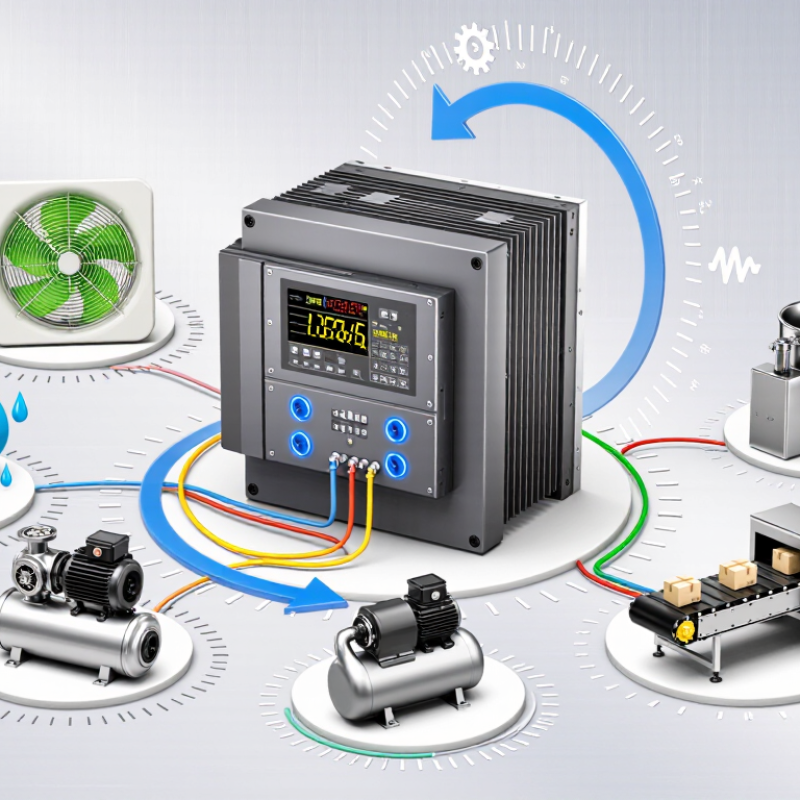
What a Variable Frequency Converter Is
A variable frequency converter is an electronic device that changes the frequency of electrical power supplied to an AC motor. It typically converts incoming AC power into DC, then creates AC output at a selected frequency. Changing that frequency changes the motor’s operating speed. The output voltage is often adjusted too, helping maintain suitable motor performance as speed changes.
Inside the converter, a rectifier handles the incoming power, a DC bus smooths and stores energy briefly, and an inverter produces the adjustable output. Settings let an operator ramp a motor up gradually or slow it down without abrupt starts and stops. Think of a ventilation fan turning steadily at a lower speed instead of running full tilt. Not magic. The converter controls electrical output; it does not make every motor or process efficient by itself.
These devices are used with equipment such as pumps, fans, conveyors, and machine tools when adjustable speed is useful. A pump may need less flow during quiet hours, while a conveyor may require controlled movement near a loading point. Energy savings can occur when a variable-speed motor serves a changing load, but results depend on the system and its setup. The terminology can be a little confusing: “converter” and “drive” are sometimes used differently across industries. Checking the motor’s ratings, wiring, and cooling needs matters before choosing or configuring one.
What Is a Variable Frequency Converter Used For? — What a Variable Frequency Converter Is
| Application | What the Converter Controls | Typical Use | Practical Benefit |
| Pumps | Motor speed, adjusted to match the required flow or pressure. | Water supply, circulation systems, and process pumping. | Can reduce energy use when demand varies, compared with running a pump at full speed and restricting flow with a valve. |
| Fans and blowers | Motor speed to regulate airflow. | Heating, ventilation, air conditioning, and industrial ventilation. | Matches airflow to system demand and can reduce unnecessary motor operation at full speed. |
| Conveyors | Starting, stopping, and running speed. | Material handling and production lines. | Allows controlled acceleration and speed adjustment for different operating requirements. |
| Compressors | Motor speed in compatible compressor systems. | Applications with changing compressed-air or process demand. | Can help match output to demand; suitability depends on compressor design and system conditions. |
| Mixers and agitators | Motor speed and, indirectly, mixing intensity. | Food processing, chemical production, and wastewater treatment. | Provides adjustable operation for different materials or process stages. |
| Machine tools | Speed of compatible AC motors. | Equipment such as lathes, drills, and grinders. | Enables speed selection to suit the task, within the motor and machine’s rated limits. |
| Hoists and material-handling equipment | Motor speed and acceleration or deceleration. | Selected lifting and handling systems designed for drive control. | Can provide smoother motion and adjustable operating speed when correctly engineered for the load and safety requirements. |
| General AC motor control | Electrical frequency and voltage supplied to a compatible motor. | Applications requiring variable motor speed rather than fixed-speed operation. | Offers speed control and may reduce starting current and mechanical stress, depending on the application and system design. |
How It Controls Motor Speed and Torque
A variable frequency converter controls an AC motor by changing the frequency and voltage supplied to it. Motor speed follows electrical frequency: a four-pole motor running at 60 Hz reaches about 1,800 rpm before slip. Lowering the frequency slows the motor. A pump may deliver less water, while a conveyor moves more gently. The converter also adjusts voltage to maintain a suitable magnetic field. Vector-control systems can regulate torque more precisely during acceleration or changing loads. Small changes matter.
Torque control is practical, not abstract. A loaded belt can start without a sharp mechanical jolt, and a fan can ramp up instead of roaring immediately. The U.S. Department of Energy’s 2014 report, Improving Motor and Drive System Performance: A Sourcebook for Industry, describes potential energy savings of 20–50% when adjustable-speed drives replace throttling in suitable fan and pump applications. It depends. That range is not a guarantee. Poor sizing, frequent low-speed operation, or an unsuitable pump curve can reduce savings. I would check measured flow, pressure, and motor current before claiming success. Speed control helps, but it cannot fix a badly designed process.
How a Variable Frequency Converter Controls Motor Speed and Torque
A variable frequency drive changes the AC supply frequency to control motor speed. For a four-pole motor, synchronous speed is 1,800 rpm at 60 Hz and varies in proportion to frequency. Below the base frequency, a properly configured drive can provide approximately constant rated torque. Actual induction-motor speed is slightly lower than synchronous speed because of slip.
Equipment and Systems It Can Operate
A variable frequency converter controls the speed of AC motors by changing the frequency and voltage supplied to them. It can operate pumps, fans, conveyors, mixers, and many machine tools. On a centrifugal pump, reducing motor speed can help regulate flow without relying only on a throttling valve. A ventilation fan can adjust airflow as room demand changes. On a conveyor, a controlled start can reduce sudden jolts to belts and carried products.
Not every motor. The motor, converter, and driven load need to be checked as a system. A pump or fan often needs less torque at lower speeds, while a loaded conveyor may require strong starting torque. That matters. Incorrect sizing or settings can cause overheating, nuisance trips, or poor speed control. Before installation, check the motor’s nameplate, cooling method, required speed range, and duty cycle. A motor’s own cooling fan may provide less airflow when the motor runs slowly. Long motor cables can also affect electrical performance, so cable length and installation conditions deserve attention. In practical use, operators should monitor motor temperature, vibration, and current after changing speed settings.
Common Industrial and Commercial Applications
A variable frequency converter controls an AC motor’s speed by adjusting the electrical frequency supplied to it. In factories, this helps pumps match changing water demand and lets fans respond to ventilation needs. A conveyor can also run more slowly during loading, reducing sudden starts that jolt products or strain belts. Small changes matter.
Commercial buildings use converters in heating, ventilation, and air-conditioning systems. For example, a chilled-water pump may slow down when fewer rooms need cooling. In workshops, converters can help machinery maintain a suitable operating speed for different tasks. The fit is not automatic, though. Motor type, load behavior, wiring, and operating conditions all matter, and poor setup can cause overheating or unreliable performance.
Tips: Check the motor’s rated speed and current before selecting a converter. Match its capacity to the application, not just the motor’s power rating. Keep the unit clear of dust and heat, and review settings after installation. Energy savings are possible, but they depend on the equipment and how it is used.
Benefits and Key Operating Considerations
A variable frequency converter adjusts the frequency and voltage supplied to an AC motor, allowing its speed to match the job. It is commonly used with pumps, fans, conveyors, and compressors. For example, a pump may run slower when water demand drops instead of repeatedly starting and stopping. This can reduce energy use and mechanical stress, though savings depend on the equipment and workload. A converter also enables controlled acceleration and braking. Less jolting. It is not a universal fix: an oversized motor or poorly chosen settings can erase expected benefits.
Operating details matter. Check that the motor is suitable for inverter operation, and set its rated voltage, current, and frequency accurately. At low speeds, some motors cool less effectively because their built-in fan turns slowly. Long motor cables can also create electrical stress, so installation conditions should be reviewed by a qualified technician. One easy mistake is treating default settings as correct. They may not be.
Tips: Record the motor nameplate values before setup. Test speed changes under the real load, and listen for unusual noise or vibration. Keep an eye on motor temperature during extended low-speed operation. If performance seems odd, pause and investigate rather than simply increasing the frequency.
