
Why Choose Police LED Lightbars for Emergency Vehicles?

Choosing the right Police Led Lightbar affects visibility, response confidence, and the safety of everyone near an emergency vehicle. It is not simply a brighter lamp on the roof. A well-designed lightbar combines focused optics, durable housing, reliable controls, and clear warning patterns. Drivers should notice the vehicle quickly, even through rain, glare, dust, or a crowded intersection.

Emergency-lighting consultant Michael R. Hayes states, “A lightbar earns its value when visibility remains dependable under pressure, not when it looks impressive in a showroom.” This practical view matters. Quality LEDs can provide consistent output while using less power than older lighting systems. Efficient power use may reduce battery strain during extended roadside operations. Strong housings also help protect internal components from vibration, moisture, and temperature changes. Small details matter.

Look closely at the beam angles. Check the flash patterns. Test the controls with gloves.

A suitable Police Led Lightbar should match the vehicle’s size, roof design, electrical capacity, and operating environment. Front, rear, and side visibility deserve equal attention. A poorly positioned unit can create blind areas or excessive glare. That possibility is easy to overlook. Buyers should also review installation instructions, maintenance access, warranty terms, and applicable local safety standards before purchase. No product is perfect. Even an advanced bar needs correct mounting, regular inspection, and responsible operation. The best choice supports clear communication on the road without creating unnecessary distraction. That balance is the real reason professionals choose carefully.
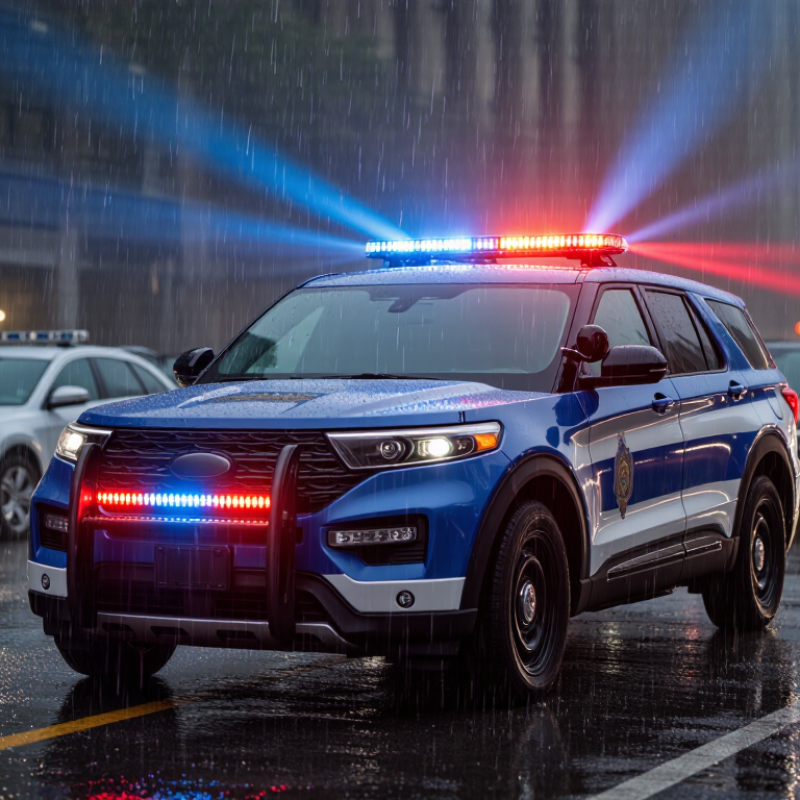
Why Choose Police LED Lightbars for Emergency Vehicles?

What Police LED Lightbars Are and How They Function

Why Choose Police LED Lightbars for Emergency Vehicles?

What Police LED Lightbars Are and How They Function

Police LED lightbars are roof-mounted warning systems that use light-emitting diodes. Multiple LED modules sit behind clear lenses and reflectors. Each module produces focused flashes in red, blue, amber, or white. A control unit manages flash patterns, brightness, synchronization, and operating modes. Some systems include front, rear, and side-facing sections for wider visibility.

Unlike older bulbs, LEDs switch on almost instantly and consume less electrical power. Their compact design also allows better heat control and easier maintenance. During practical inspections, technicians usually check lens clarity, wiring condition, mounting security, and controller response. A weak connection can create an intermittent warning, even when the lightbar looks normal. That detail is easy to miss.

The lightbar works with the vehicle’s electrical system through protected circuits and suitable fuses. Drivers can select patterns for different roadside conditions, while automatic dimming may reduce glare at night. However, brighter is not always safer. Excessive intensity can distract nearby drivers and reduce useful information. Design quality, correct installation, and regular testing matter more than appearance.

Tips:

Keep lenses clean and inspect them after harsh weather. Test every section, including side modules. Follow the vehicle manufacturer’s wiring guidance. Avoid changing settings without documenting the original configuration. A simple maintenance log can reveal repeated faults before they become serious. Check visibility from several angles, not only directly ahead.

Key Safety Benefits of LED Lightbars for Emergency Response

Emergency vehicles must remain visible when traffic is dense, weather changes, or daylight fades. LED lightbars provide bright, wide-angle warning signals with less power consumption than older lighting systems. Their quick activation helps drivers notice a response vehicle sooner, especially at intersections and road shoulders.

Visibility is the main safety advantage. Flash patterns can attract attention from several directions, while side-facing LEDs improve awareness for vehicles approaching from adjacent lanes. In rain, fog, or snow, clear light placement matters. A well-designed lightbar can reduce visual confusion by separating warning colors and maintaining consistent intensity. It also supports safer decisions by giving nearby drivers more time to slow down or move carefully.

Durability matters during demanding work. LED modules usually resist vibration and frequent switching, which suits vehicles that operate across uneven roads. Lower heat output can also reduce stress on surrounding components. Still, brighter is not always better. Excessive intensity or poor positioning may distract drivers or create glare. That detail is easy to overlook. Regular inspections should check lens clarity, wiring, mounting stability, and flash performance. Technicians should also adjust the system for the vehicle’s size, operating environment, and local safety requirements. Small installation errors can weaken an otherwise reliable warning system.

Visibility, Warning Patterns, and Traffic Communication

Police LED lightbars help emergency vehicles communicate presence before drivers identify the vehicle. Their value depends on more than brightness. Placement, flash timing, and color selection shape how quickly a warning is understood. A lightbar mounted high remains visible through traffic, while poor installation can create glare on nearby mirrors. Test visibility from several angles, including a wet road at dusk. Small details matter.

Warning patterns should match the traffic situation, not simply run at maximum intensity. A steady or slower pattern may support roadside positioning, while alternating flashes can attract attention during movement. Patterns should remain predictable for drivers and clear to nearby responders. Too many changes can confuse people, especially at intersections or in heavy rain. Operators should practice selecting patterns without looking away from traffic. That skill takes repetition.

Traffic communication also depends on sound, vehicle position, and human behavior. Use the lightbar to reinforce a clear maneuver, such as slowing before a lane change or creating space around a stopped scene. Drivers may notice a flash but misunderstand the intended path. Clear positioning helps fill that gap. Follow local equipment rules and service schedules, because dim LEDs or damaged lenses reduce trust. No setup is perfect. A useful review asks whether an ordinary driver can understand the signal quickly. The answer may expose weaknesses in a setup that looked impressive in the workshop.

Durability, Energy Efficiency, and Maintenance Requirements

Why Choose Police LED Lightbars for Emergency Vehicles?

Durability, energy efficiency, and maintenance shape a lightbar’s real operating cost. LED modules resist vibration better than many traditional lamps because they have no fragile filaments. However, durability depends on more than LEDs. SAE J575 environmental testing addresses vibration, moisture, temperature, and corrosion exposure. A sealed housing, protected connectors, and effective heat dissipation remain essential. A lightbar can be bright and still age poorly.

Energy use also matters during long patrol shifts. The U.S. Department of Energy reports that LED lighting generally uses at least 75% less energy and lasts up to 25 times longer than incandescent lighting. This benchmark does not represent every emergency lightbar. Flash patterns, optics, controller settings, and vehicle voltage change actual consumption. Still, lower electrical demand can reduce alternator load during extended idling. That benefit is practical.

Maintenance should be measurable. Technicians can inspect lenses for clouding, check gaskets after severe weather, and clean dust from cooling surfaces. Corroded terminals deserve immediate attention. SAE J845 provides performance guidance for warning lamps, while IEC 60529 classifies enclosure protection against dust and water. These standards support consistent evaluation, not a promise of zero failures. I would also record brightness checks and current draw during fleet inspections. Field experience shows small wiring defects can mimic LED failure. That detail is easy to miss.

Why Choose Police LED Lightbars for Emergency Vehicles? — Durability, Energy Efficiency, and Maintenance Requirements
Evaluation Dimension Typical LED Lightbar Characteristics Common Legacy Technology Comparison Operational Relevance for Emergency Vehicles
Light Source Service Life LED modules are commonly rated for approximately 30,000–100,000 operating hours, depending on thermal management, drive current, and operating conditions. Halogen bulbs often require replacement after roughly 1,000–2,000 hours. Xenon strobe tubes generally have a shorter service life than LED modules and may require periodic replacement. Longer light-source life reduces unplanned downtime and the need to access roof-mounted equipment.
Power Consumption A complete lightbar commonly operates within an approximate range of 40–200 watts, depending on length, number of modules, flash pattern, and auxiliary functions. Comparable halogen or older high-intensity systems may use approximately 100–300 watts or more under full operation. Lower electrical demand can reduce alternator loading and preserve capacity for radios, computers, cameras, and other onboard equipment.
Illustrative Annual Energy Use Example: a 120-watt lightbar operated for 8 hours per day over 300 days uses about 288 kWh per year. At the same duty cycle, a 240-watt system would use about 576 kWh per year. The illustrative difference is approximately 288 kWh annually. Actual savings depend on duty cycle, flash pattern, idling time, and vehicle electrical settings.
Vibration and Shock Resistance Solid-state LED modules have no filaments or glass strobe tubes and are generally better suited to vibration and repeated shock when properly mounted. Filament bulbs and glass discharge tubes are more susceptible to mechanical damage, especially under severe vibration or impact. Improved resistance supports reliable operation on rough roads and during rapid vehicle movements.
Weather Protection Outdoor lightbars are commonly designed with sealed housings and may use ingress-protection ratings such as IP65, IP66, or IP67, depending on the product design. Older or poorly sealed assemblies may be more vulnerable to water intrusion, dust, corrosion, and condensation. Sealed construction helps protect electronics during rain, washing, snow, and dusty operating conditions. The specific IP rating should be verified before purchase.
Operating Temperature Many emergency lightbars are engineered for a broad automotive temperature range, often around −40°C to +65°C, although the specified limits vary by design. Legacy systems may experience longer warm-up times, reduced output, or greater component stress in extreme temperatures. A broad rated temperature range supports dependable response in winter conditions, hot climates, and prolonged operation.
Start-Up and Flash Response LEDs reach full output electronically with virtually no warm-up delay and can support precise flash timing and multiple patterns. Halogen lamps require filament heating, while discharge systems may require electronic ignition and stabilization. Immediate illumination improves warning visibility when the vehicle is activated or repositioned quickly.
Routine Maintenance Typical tasks include cleaning lenses, checking mounting hardware, inspecting wiring and connectors, and confirming flash patterns during scheduled vehicle inspections. In addition to those tasks, legacy systems may require more frequent bulb, tube, reflector, or ballast replacement. Routine preventive inspections remain necessary, but replaceable light-source components are usually needed less often.
Repair Approach Many LED lightbars use modular boards or sealed assemblies. Depending on the construction, an individual module, controller, or complete section may be replaceable. Older systems may allow bulb or tube replacement but can require more frequent component-level servicing. Modular replacement can reduce repair time, but fleet operators should confirm parts availability, service procedures, and warranty coverage.
Electrical System Compatibility Most vehicle lightbars are designed for nominal 12-volt or 24-volt automotive systems and include electronic protection against conditions such as voltage fluctuation or reverse polarity. Older systems may place greater continuous demand on wiring, switches, relays, and alternators. Correct voltage matching, fuse sizing, grounding, and cable installation are essential for safe and reliable operation.
Electromagnetic Compatibility Quality automotive warning equipment is designed to limit electromagnetic emissions and maintain operation alongside radios and other vehicle electronics. Poorly designed or incorrectly installed systems may produce electrical interference or be more sensitive to voltage disturbances. Compliance testing and proper installation help reduce interference with communications, control units, and onboard electronics.
Visibility and Heat Output LEDs convert a high proportion of input power into light, but the electronics and heat sink still require adequate thermal management. Halogen sources typically produce substantial radiant and housing heat while consuming more electrical power. Lower heat generation can reduce thermal stress on lenses and nearby components, provided the lightbar has effective heat dissipation.
Data note: The figures shown are representative engineering ranges and an illustrative duty-cycle calculation, not universal specifications. Actual performance depends on lightbar size, LED drive current, ambient temperature, mounting, flash pattern, vehicle voltage, installation quality, and the manufacturer’s tested ratings.

How to Select the Right Lightbar for a Police Vehicle

Choosing the right police lightbar begins with the vehicle, not the brightest specification.

Measure the roof width, mounting points, and available clearance around antennas. A lightbar should sit securely without blocking vents, sensors, or emergency equipment. Check the vehicle’s electrical capacity before installation. Excessive power demand can strain wiring and shorten battery life.

Optical coverage matters during day and night operations. Look for balanced forward, side, and rear visibility, especially near intersections or narrow streets. Select lighting patterns that remain clear in rain, fog, and reflective urban areas. Review applicable vehicle standards and department procedures before purchase. Controls should be easy to reach, clearly marked, and usable without distracting the driver. A complicated control panel may look capable, but it can slow response during stressful moments.

Tips:
Compare the lightbar’s dimensions with a roof template first. Confirm voltage, current draw, sealing, and temperature ratings. Ask an experienced installer to inspect cable routing and mounting strength. Test visibility from several angles, not only directly ahead. Keep a written maintenance schedule for lenses, fasteners, wiring, and controls. I have found that small installation details often matter more than impressive feature lists. Still, no selection is perfect; a powerful bar may create unwanted glare, while a compact model may leave coverage gaps. Recheck performance after installation, especially following seasonal weather changes.

Search our website