Why Choose Gravity Conveyor Manufacturers?

Choosing Gravity Conveyor Manufacturers is a practical decision about flow, not just equipment price. A well-designed gravity conveyor can move cartons across a packing area without motors, controls, or extra power connections. The right supplier will ask about carton dimensions, product weight, daily volume, and the distance between workstations. Details matter. A roller that suits a rigid box may not support a soft package evenly.

Look for a manufacturer that can explain roller spacing, frame capacity, incline, and transfer points in plain language. Ask how the design handles your heaviest load and what happens where one conveyor meets another. A useful layout should keep cartons moving at a controlled pace, with clear access for workers and routine cleaning. It should also fit the room you have—not an idealized floor plan. Measure the narrow turns. Check the low doorway.

Lean manufacturing pioneer Taiichi Ohno is often credited with saying, “Without standards, there can be no improvement.” Applied to conveyor selection, that principle points to measurable requirements rather than vague promises. Gravity Conveyor Manufacturers should provide specifications that let buyers compare options and verify performance. A sample test with your actual cartons can reveal problems a drawing misses, though testing every operating condition may not be practical. That limitation deserves attention. Compare service support, spare-part availability, and documented load ratings alongside the initial quote. A low price can look appealing. The better choice is the supplier that explains trade-offs clearly and helps you build a dependable material flow.
Why Choose Gravity Conveyor Manufacturers?

What Gravity Conveyors Are and How They Move Materials

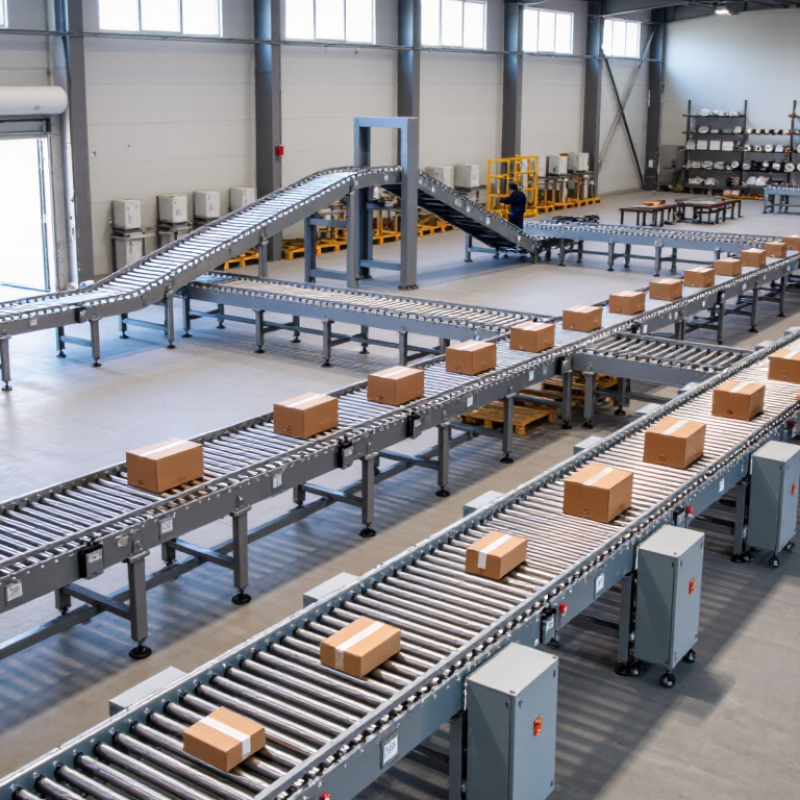
A gravity conveyor moves cartons or other suitable loads without a powered drive. Its rollers or wheels turn as an item travels down a slight incline, using gravity to create forward motion. On level lines, workers may push items by hand. No motor is needed. The system is simple, but not every product rolls well: soft-bottomed packages, unstable loads, and items with uneven bases can snag or drift. A carton should rest across several rollers, not balance on just two.

Roller spacing, conveyor width, frame strength, and slope all affect how materials move. For example, a heavy box may need closely spaced rollers, while a narrow tote needs enough width to stay centered. Stops, side guides, and sections of accumulation can control flow at transfer points. Too much slope may make cartons collide; too little can leave them stuck. That detail is easy to underestimate. When comparing gravity conveyor manufacturers, share actual load dimensions, weights, and operating conditions. A useful recommendation should reflect those measurements, not just a general product description. Even then, a short on-site test may reveal problems that drawings miss.

How Manufacturers Design Conveyors for Different Loads

Gravity conveyor design starts with the load, not the frame. Manufacturers assess each item's weight, length, width, and base shape. A flat-bottom carton rolls differently from a tote with narrow ribs. Roller spacing must support the load without letting its edges dip between rollers. Heavy or concentrated loads may need closer spacing and stronger shafts. Small details matter. The incline is tested against the product surface and expected speed. Too much slope can cause hard impacts at the discharge end; too little may stall movement.

Frame width, roller diameter, and side guides are matched to the products and route. Designers may add stops or gentle transitions where workers need controlled accumulation. With mixed loads, they may size for the heaviest item. They also check whether lighter packages accelerate or wander. Dust, moisture, and temperature can change friction or affect components. Trial runs with representative loads can reveal issues that drawings miss. Still, uneven packaging or worn cartons may behave unexpectedly. That deserves another look. Clear load limits and regular maintenance checks help keep operation predictable.

Which Materials and Components Shape Conveyor Performance

Why Choose Gravity Conveyor Manufacturers?

Which Materials and Components Shape Conveyor Performance

A gravity conveyor looks simple, but its materials and dimensions determine how reliably cartons move. Steel frames handle demanding loads and frequent use, while aluminum can reduce system weight and simplify repositioning. Stainless steel suits washdown areas, though it may cost more than a dry warehouse needs. The right choice depends on load, cleaning routines, and the surrounding environment.

Roller diameter, spacing, and bearing quality affect movement directly. Rollers should support the smallest package without letting it tip between gaps. A useful rule is to keep several rollers beneath each item during travel, then confirm the setup with actual cartons. Smooth bearings reduce resistance, but they cannot fix poor alignment. Small details matter.

Side guides help keep packages on track, while end stops prevent items from rolling off the conveyor. Adjustable supports can accommodate uneven floors or changes in line height. For fragile goods, a steep incline may create unwanted speed and impact; a gentler slope is often safer. More components are not always better. Extra rollers or heavy frames can add cost and weight without improving performance. A practical specification balances load capacity, package size, operating conditions, and maintenance access. Manufacturers can help check those details, but site measurements and real load tests remain essential.

How to Evaluate a Gravity Conveyor Manufacturer

When evaluating a gravity conveyor manufacturer, start with your actual load and route. Share package dimensions, weight range, throughput, and the space available. A sound recommendation should explain roller spacing, frame capacity, conveyor width, and any required incline. Ask how the design handles cartons with soft bottoms or uneven bases. These can stall where a sample box rolls smoothly. Small details matter.

Tips: Request a layout drawing and written load limits. Ask whether rollers, bearings, and frames can be replaced individually. If possible, test a representative package on a sample section. Keep the test simple and record where movement slows or stops.

Look for practical engineering evidence, not only broad claims. A capable manufacturer can describe material options, finishing, installation needs, and maintenance intervals in clear terms. Ask for examples of similar applications and what changed after installation. Check lead times, spare-part availability, and how technical questions are handled. Compare quotations line by line; a lower price may omit supports, guards, or installation guidance. No checklist predicts every site condition, and my first layout may still need adjustment after measuring the floor. That is worth acknowledging. Reliable evaluation means checking assumptions before production, then confirming the proposed conveyor fits the real operating space.

Why Choose Gravity Conveyor Manufacturers? — How to Evaluate a Gravity Conveyor Manufacturer
Evaluation Dimension What to Check Questions to Ask Useful Evidence Suggested Weight
Application and layout design Whether the proposed conveyor layout suits the product, route, transfer points, and available floor space. Can you review our layout, product dimensions, and operating flow before recommending a configuration? Layout drawing, equipment list, and documented assumptions about the application. 15%
Load and product compatibility Rated load per roller and per conveyor section, plus compatibility with package weight, base, and dimensions. What load limits apply to each roller and section, and how do you account for unevenly distributed loads? Written load ratings and a configuration matched to the stated products and operating conditions. 15%
Roller selection and spacing Roller material, diameter, bearing type, and spacing appropriate to the load and product contact surface. How is roller spacing selected for our smallest and least rigid packages? Roller specifications and an explanation of how the product is supported during travel. 12%
Frame, width, and adjustability Frame construction, conveyor width, leg design, connection method, and available height or incline adjustments. Can the system be configured to fit our site and adjusted or extended if the layout changes? Dimensioned drawings, material details, and available adjustment ranges. 10%
Incline, flow, and control Suitability of the proposed slope and any needed flow-control equipment, such as brakes, stops, or guides. How will you manage product speed, accumulation, and safe stopping on inclined sections? Design notes identifying slopes, transitions, and any required flow-control components. 12%
Safety and workplace fit Pinch-point awareness, stable support, access for operators, and suitability for the intended work area. What safety considerations should be addressed during installation and operation? Installation and operating guidance, relevant risk notes, and clearly stated equipment limitations. 10%
Quality and inspection Consistency of fabrication, component traceability where applicable, and checks before shipment. What inspections are performed on frames, rollers, joints, and completed sections? Inspection records or a written description of quality checks and acceptance criteria. 10%
Installation and integration Clarity of assembly instructions, connection details, site requirements, and coordination with adjacent equipment. What site preparation, tools, and installation support are needed? Assembly instructions, connection drawings, and a clear scope of installation responsibilities. 6%
Maintenance and spare parts Access to replaceable rollers and other service parts, along with practical maintenance guidance. Which parts are wear items, and how can replacements be identified and ordered? Parts list, maintenance instructions, and stated parts availability arrangements. 5%
Quotation and delivery clarity Completeness of the quotation, including configuration, exclusions, delivery scope, and stated lead time. Does the quotation specify quantities, dimensions, options, delivery terms, and items not included? Itemized quotation and written confirmation of the proposed scope and schedule. 5%

Where Manufacturer Expertise Supports Safety and Efficiency

Why Choose Gravity Conveyor Manufacturers?

Where Manufacturer Expertise Supports Safety and Efficiency

Gravity conveyors appear simple: rollers, a slight decline, and moving cartons. But a safe, efficient line depends on matching roller spacing, conveyor width, and slope to the actual load. Experienced manufacturers can review carton dimensions, weight variation, and transfer points before equipment is installed. That matters where packages could drift, snag, or reach a worker too quickly.

The MHI 2024 Annual Industry Report found that 55% of surveyed supply-chain professionals expected to increase investment in supply-chain technology and innovation over five years. This is a broad industry finding, not proof that gravity conveyors alone improve performance. Still, it highlights why equipment decisions should consider the whole workflow. A manufacturer who understands material flow can help identify bottlenecks and recommend practical changes, such as a controlled stop near a packing bench.

Details matter. Guarding, stable supports, accessible adjustments, and clear operating instructions help workers use a conveyor safely. A steep incline may save floor space, yet make cartons harder to control. There is no magic layout. Even a detailed design can miss a real-world wrinkle, so teams should review the conveyor after installation and report problems early. That feedback is useful.

Search our website