What are the Benefits of Rigid Flex Rigid PCBs for Buyers?
The demand for advanced electronics is on the rise, and rigid flex rigid PCBs are gaining attention. Notably, industry expert Dr. Emily Chen emphasizes their significance: "Rigid flex rigid PCBs offer unparalleled design flexibility." This statement captures the essence of why buyers are advocating for this technology.
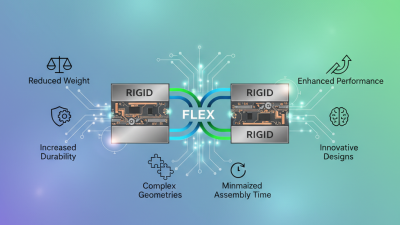
Rigid flex rigid PCBs combine the features of both rigid and flexible circuits. This technology enhances space efficiency in compact devices. As manufacturers aim for lighter and more reliable products, the benefits of these PCBs become clear. They reduce assembly time and errors, leading to cost savings. Additionally, they withstand environmental stresses better than traditional PCBs, making them ideal for various applications.
However, choosing the right rigid flex rigid PCB requires careful consideration. Not all manufacturers offer the same quality standards. Buyers must evaluate capabilities and track records. It’s essential to partner with reliable suppliers to reap the full benefits. While the advantages are significant, thorough research is necessary to navigate this evolving market effectively.
Benefits of Rigid Flex Rigid PCBs in Modern Electronics
Rigid flex rigid PCBs are increasingly vital in modern electronics. Their unique design merges the benefits of both rigid and flexible circuits. This integration allows for more compact devices, enhancing functionality without compromising space. According to industry reports, the global market for flexible PCBs alone is projected to reach $39 billion by 2028, highlighting the growing demand for innovative circuit solutions.
These PCBs enhance durability in a variety of applications. Their resistance to flex and fatigue makes them ideal for wearable technology and medical devices. Rigid flex circuits also improve signal integrity and reduce assembly time. However, the initial manufacturing cost may be higher compared to traditional PCBs, which could be a concern for budget-conscious buyers.
When choosing rigid flex rigid PCBs, consider long-term benefits. Analyze the potential for reduced maintenance and enhanced performance. Assess your design requirements carefully, as a mismatch can lead to complications. Staying informed about recent advancements can help in making better choices. Make sure to engage with experts who can provide up-to-date insights into the technology.
Benefits of Rigid Flex Rigid PCBs for Buyers
| Benefit |
Description |
Application Areas |
Cost Implications |
| Space-Saving Design |
Rigid flex PCBs allow for compact layouts and can fit into smaller spaces compared to traditional PCBs. |
Consumer electronics, portable devices |
Initial costs may be higher but can save space and reduce packaging costs. |
| Increased Durability |
These PCBs are more resistant to physical stress and bending, enhancing overall product durability. |
Medical devices, automotive electronics |
Longer lifespan can offset higher upfront costs. |
| Improved Electrical Performance |
High-quality materials and advanced manufacturing techniques improve performance in high-speed applications. |
Telecommunications, aerospace |
Potential savings due to reduced signal losses. |
| Reduced Wiring Complexity |
Rigid flex PCBs minimize the need for connectors and wiring, leading to simpler assembly processes. |
Consumer electronics, wearables |
Can lower labor costs during assembly. |
| Design Flexibility |
Offers extensive design options including multiple layers and complex shapes that traditional PCBs can't achieve. |
Custom applications, innovative product designs |
Could lead to higher design costs initially but can enhance market competitiveness. |
Cost Savings and Efficiency of Rigid Flex Rigid PCB Manufacturing
Rigid flex rigid PCBs have gained popularity in recent years. Their unique structure allows for flexibility within a rigid framework. This opens up new avenues for design, enabling more compact and efficient electronic devices. Manufacturers often report significant cost savings. By using fewer components, the production process becomes simpler and faster.
Efficiency also plays a crucial role. Rigid flex PCBs reduce the need for multiple interconnections. This consolidation leads to fewer potential failure points. Testing becomes easier, as there are fewer components to examine. However, the initial investment in design and production may be higher. It's essential for buyers to evaluate the long-term benefits against upfront costs.
Working with skilled professionals is necessary for effective outcomes. Expertise in PCB design helps to avoid common pitfalls. Buyers should seek manufacturers with a proven track record. This can lead to better results and enhanced product reliability. The transition to rigid flex rigid PCBs should not be taken lightly. It's a process that requires careful consideration and professional guidance.
Enhanced Design Flexibility with Rigid Flex Rigid PCBs
Rigid flex rigid PCBs offer incredible design flexibility, allowing for intricate and compact layouts. Their unique construction combines the advantages of both rigid and flexible circuits. This feature enables manufacturers to produce devices with complex shapes, reducing the overall size. Such flexibility meets the increasing market demand for smaller and more efficient electronics.
When designing with rigid flex PCBs, consider the orientation of the flexible sections. Proper placement can enhance the functionality of the device. Ensure that the bending radius complies with specifications to avoid premature failures. The integration of rigid and flexible areas should support the entire application, rather than imposing limitations.
Another point to reflect on is the manufacturing process. Misalignment during assembly can lead to costly rework. Each layer must be accurately positioned to maintain performance and reliability. Investing in quality control systems is essential for achieving optimal results. Understanding these nuances ensures the successful fabrication of robust, high-performing rigid flex circuits.
Improved Durability and Reliability in Harsh Environments
Rigid flex rigid PCBs are increasingly popular in demanding applications due to their improved durability and reliability. These printed circuit boards are designed to withstand harsh environments, such as extreme temperatures and vibrations. According to a recent industry report, the failure rate of traditional PCBs in challenging conditions can be as high as 25%. In contrast, rigid flex technology can reduce this rate significantly, enhancing operational efficiency.
In applications such as aerospace and medical devices, reliability is crucial. Rigid flex PCBs are less prone to mechanical stress, thanks to their flexible components that can better adapt to movement. A study indicated that devices using rigid flex technology experience fewer downtimes and lower maintenance costs, directly impacting the bottom line for manufacturers.
Consider these factors when selecting rigid flex PCBs. Ensure that you evaluate the specific requirements of your application, such as temperature ranges and potential exposure to moisture. Additionally, investigate the manufacturing processes behind the PCBs to guarantee that quality standards are met. Lastly, consult with industry experts to determine the best practices for integrating rigid flex technology into your projects.
Streamlined Integration of Components with Rigid Flex Rigid Designs
Rigid flex rigid PCBs have transformed the way electronic components are integrated. These designs allow for streamlined layouts. The combination of rigid and flexible circuits creates a unique synergy. By minimizing space, manufacturers can achieve a compact and efficient setup. This method reduces the need for additional connectors which can introduce weaknesses.
Engineers appreciate the enhanced reliability of these designs. A single assembly reduces potential points of failure. Moreover, the flexibility of the circuit can adapt to various shapes and sizes. This is particularly useful for products that are compact or have unique geometric requirements. However, certain challenges persist. High manufacturing costs and design complexities can deter some buyers. Evaluating the overall benefits against these hurdles is essential for decision-making.
Emphasis on design precision remains critical. Even minor imperfections in the layout can lead to performance issues. As technology advances, the demand for such innovative solutions increases. Buyers need to consider their long-term goals when investing. The insights gained from rigorous testing can guide improvements in future projects. Balancing creativity with practical constraints fosters better product development.