China’s electronic PCB board industry sits at the center of modern electronics manufacturing. Smartphones, electric vehicles, medical devices, and data servers all depend on reliable circuit boards. The boards may look thin and ordinary. Their specifications are not.
Fortune Business Insights valued the global PCB market at approximately US$81.74 billion in 2023. Its report projects continued expansion through 2032, supported by automotive electronics, 5G infrastructure, and industrial automation. MarketsandMarkets also identifies Asia-Pacific as the dominant regional market. China remains especially important because it combines large production capacity, dense supplier networks, and advanced surface-mount assembly. However, production scale alone does not prove quality.
Dr. Hayao Nakahara, a widely cited PCB industry analyst, described the printed circuit board sector as “the mother industry of electronics.” That sentence still feels accurate. It also deserves scrutiny. A leading manufacturer must demonstrate more than impressive factory footage. Buyers should examine HDI capability, rigid-flex production, traceability, layer alignment, certification, delivery consistency, and field performance. IPC standards provide useful benchmarks, but certificates cannot replace customer audits or sample testing. Even published rankings can be imperfect, since companies disclose different financial and production metrics.
This guide examines China’s top electronic PCB board manufacturers through practical criteria. It considers technical expertise, manufacturing scale, application experience, export reliability, and quality systems. The result is not a perfect league table. It is a working comparison for engineers, procurement teams, and brand owners seeking dependable Chinese PCB partners.

An electronic PCB board manufacturer designs, fabricates, and assembles printed circuit boards for electronic products. The process can include circuit layout review, laminate preparation, copper etching, drilling, plating, solder mask application, and electrical testing. A reliable manufacturer also manages component sourcing, surface-mount assembly, inspection, and packaging.
When comparing China electronic PCB board manufacturers, buyers should examine technical capability rather than production volume alone. Check certifications, traceability systems, laboratory equipment, and experience with similar board types. High-density interconnect boards, multilayer boards, and flexible circuits require different controls. Ask for sample reports, impedance results, inspection records, and realistic lead times. Factory visits or live production audits can reveal details that brochures often miss. No supplier is perfect. Even experienced teams can face material delays or design misunderstandings.
Tips: Share complete Gerber files, drill data, stack-up requirements, and assembly drawings. Confirm tolerances before production begins. Request a small prototype batch first. Review solder joints, hole quality, surface finish, and electrical test results. Keep communication documented. A clear change-control process prevents expensive revisions. Also, do not select a manufacturer only because of a low quotation. Hidden costs may appear through rework, delayed shipping, or weak after-sales support. Reliable cooperation grows from measurable quality, honest communication, and consistent process control.
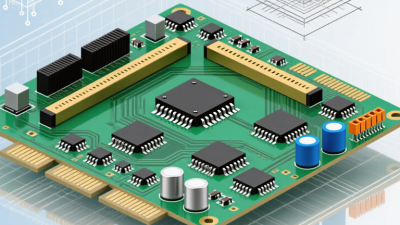
Electronic PCB board manufacturers produce printed circuit boards by combining substrates, copper layers, drilling, plating, solder masking, and electrical testing. Copper thickness is commonly specified in ounces per square foot. Standard commercial boards often use 0.5 oz to 2 oz copper, while 3 oz copper is selected for higher-current applications such as power electronics and battery systems.
China’s PCB manufacturing industry is structured around several distinct layers. Large producers handle high-volume consumer electronics and industrial orders. Mid-sized factories often specialize in rigid-flex boards, multilayer boards, or quick-turn prototypes. Smaller workshops may focus on sampling, repair, or limited production runs.
This structure supports flexible sourcing. A buyer can request a two-layer prototype from one supplier and a complex multilayer batch from another. Factory capability depends on drilling accuracy, copper thickness, surface treatment, and inspection equipment. In a well-managed plant, engineers review Gerber files, impedance requirements, and material specifications before production. Automated optical inspection and electrical testing help identify open circuits, shorts, and registration errors.
The supply chain is broad. Material suppliers provide copper foil, laminates, solder mask, and chemical inputs. PCB factories then connect with assembly companies, testing laboratories, logistics providers, and contract manufacturers. Regional clusters reduce transport time and make technical cooperation easier. However, this concentration can also create pressure on energy use, wastewater control, and delivery schedules.
Quality is not guaranteed by factory size alone. During supplier evaluation, buyers should examine process records, traceability, sample consistency, and corrective-action reports. Certifications can support trust, but they do not replace direct testing. The industry is highly capable, yet uneven. That is an uncomfortable truth. A low quotation may hide weaker controls, longer approval cycles, or limited engineering support. Careful audits remain necessary.
China’s top electronic PCB board manufacturers are best judged by capability, not factory size. According to Prismark’s 2024 PCB industry review, China produced more than half of global PCB value in 2023. That scale supports strong supply chains for copper foil, laminates, drilling, and assembly.
Look for manufacturers with HDI, rigid-flex, multilayer, and high-frequency experience. Automotive and medical projects need stronger evidence. Check ISO 9001 systems, automotive quality certification, impedance records, and lot-level traceability. IPC technical reports also stress tighter signal integrity control as products become smaller and faster. Ask for thermal cycling, solderability, and cross-section test results. Factory visits reveal details that brochures often hide, such as dusty inspection areas or weak material storage. A ranking can still be imperfect.
Tips: Request three recent sample reports. Compare defect rates, not only prices. Confirm whether testing is performed internally. Review production capacity during peak months. Clarify engineering response times before signing a contract. A supplier that answers slowly may create expensive delays later. Also inspect their handling of moisture-sensitive materials, especially for dense multilayer boards. Terms like “advanced capability” sound impressive, but measurable tolerances matter more.
Leading Chinese PCB manufacturers now offer more than standard two-layer boards. Their portfolios commonly include rigid multilayer PCBs, HDI boards, flexible circuits, rigid-flex assemblies, metal-core boards, and high-frequency designs. Many also support high-speed digital applications with controlled impedance, low-loss laminates, laser microvias, and sequential lamination.
Prismark’s 2024 industry review estimated that global PCB sales reached about US$69 billion in 2023, despite a year-on-year decline. China remained the largest production base. This scale supports rapid prototyping, automated optical inspection, X-ray inspection, and electrical testing. Advanced suppliers may also provide design-for-manufacturing reviews, impedance reports, thermal analysis, and traceability records. However, “advanced” is not always consistent. Capability claims require evidence.
Tips: Request sample cross-sections, stack-up drawings, test coupons, and reliability data. Check whether the factory controls copper thickness, drill registration, solder-mask alignment, and warpage. For automotive or medical projects, ask for documented quality systems and process audits.
IPC’s industry guidance emphasizes verification, material control, and process consistency across the PCB lifecycle. A reliable supplier should therefore explain its laminate sources, via reliability testing, cleanliness limits, and final inspection criteria. I would also compare pilot-run results with mass-production data. Small batches can look perfect. Production pressure may expose weaknesses.
When evaluating Chinese PCB manufacturers, buyers should examine production evidence, not attractive promises. A polished website proves little. Ask for recent capability tables, sample reports, and factory audit records. Check whether the facility handles your layer count, copper weight, impedance, and surface finish. For high-density boards, request cross-section images and test data from comparable projects. Small details matter.
Quality systems deserve close attention. Confirm current certifications, incoming material controls, automated optical inspection, electrical testing, and batch traceability. Ask how defects are recorded and corrected. A reliable manufacturer should explain its process clearly, including what happens after a failed test. Video audits can help, but an onsite visit often reveals more. Look closely.
I once focused too heavily on unit price. That mistake ignored engineering support, tooling charges, shipping time, and rework risk. Buyers should compare complete landed costs instead. Review prototype timing, production capacity, payment terms, and communication response times. Request references from similar industries, while protecting confidential information. Technical discussions should include stack-up drawings, Gerber checks, design-for-manufacturing feedback, and acceptance standards. Do not accept vague answers. A capable supplier may challenge your design respectfully, but every change should be documented and approved. Even a strong factory can miss a deadline during peak demand, so keep realistic schedules and a qualified backup source.
A practical, brand-neutral evaluation framework for comparing Chinese PCB manufacturers. The capability figures below are typical industry ranges or recognized compliance references and should be confirmed with current factory documentation, sample panels, and an engineering review.
| Evaluation Category | Key Dimension | Typical Capability or Reference Data | Why It Matters to Buyers | Evidence to Request | Suggested Weight |
|---|---|---|---|---|---|
| Quality Management | Quality-management certification | ISO 9001:2015 is the widely used international quality-management reference. The certificate should cover the relevant PCB manufacturing site and scope. | Shows that documented processes, corrective actions, internal audits, and management controls are in place. | Current certificate, issuing-body verification, site address, certificate scope, and latest audit status. | 15% |
| Automotive Readiness | Automotive quality system | IATF 16949 is the automotive quality-management standard. It is relevant when the PCB will be used in automotive applications or supplied into an automotive-tier chain. | Indicates stronger requirements for traceability, process control, risk management, and defect prevention. | Valid IATF 16949 certificate, approved manufacturing site, process-audit records, and customer-specific requirements capability. | 10% |
| PCB Product Standard | Rigid PCB qualification | IPC-6012 defines qualification and performance requirements for rigid printed boards. IPC-A-600 defines visual acceptability criteria. | Provides a recognized technical basis for board construction, performance, and visual inspection. | Applicable IPC qualification records, inspection criteria, sample reports, and agreed acceptance class. | 10% |
| Manufacturing Technology | Layer-count capability | Commercial PCB factories commonly offer 2-layer through 12-layer production; advanced facilities may support higher layer counts. The practical limit depends on board thickness, aspect ratio, materials, and yield. | Confirms whether the supplier can manufacture the required electrical stack-up without excessive yield or reliability risk. | Recent production examples, approved stack-up drawings, cross-sections, and yield data for similar boards. | 10% |
| Fine-Line Capability | Minimum trace and spacing | Approximately 0.10–0.15 mm trace/space is common for advanced conventional HDI-capable production; larger dimensions generally improve yield and cost. | Determines routing density, manufacturability, impedance control, and production yield. | Design-for-manufacturing review, line/space capability chart, test coupons, and cross-section measurements. | 10% |
| Drilling and Interconnection | Microvia and aspect-ratio capability | Laser microvias are commonly used in HDI boards. Mechanical through-hole aspect ratios around 6:1 to 10:1 are typical design references, but the acceptable value depends on thickness and drill diameter. | Influences HDI routing, via reliability, drill quality, resin filling, and registration performance. | Via reliability data, microsection reports, drill-size tables, laser-drilling controls, and reliability-test results. | 10% |
| Materials and Reliability | Base material and thermal performance | FR-4 is widely used for general rigid PCBs. High-speed or high-temperature designs may require low-loss or high-Tg materials. The required Tg, Dk, Df, and decomposition temperature must match the application. | Material selection affects signal integrity, thermal cycling, dimensional stability, and long-term reliability. | Material datasheets, lot traceability, certificates of conformance, and approved equivalent-material list. | 10% |
| Surface Finish | Finish selection and thickness control | Common finishes include HASL, lead-free HASL, ENIG, immersion tin, and immersion silver. ENIG is frequently selected for fine-pitch components and flatness requirements. | Surface finish affects solderability, contact performance, shelf life, flatness, and compatibility with assembly processes. | Finish specification, coating-thickness report, solderability results, RoHS status, and failure-analysis procedure. | 5% |
| Electrical Testing | Bare-board electrical test coverage | Flying-probe testing is flexible for prototypes and low-volume production. Fixture-based testing is generally more efficient for stable, higher-volume designs. | Reduces the risk of opens, shorts, and net-to-net electrical defects reaching assembly. | Netlist comparison method, test coverage report, test fixture control, retest policy, and defect Pareto data. | 10% |
| Inspection and Process Control | Automated optical inspection and cross-sectioning | AOI is commonly used to identify pattern defects. Microsection analysis is used to verify internal structures, plating, insulation, and via quality. | Provides objective evidence that internal and external features meet the approved design and process requirements. | AOI records, microsection images, plating-thickness results, solder-mask inspection, and calibration records. | 10% |
| Environmental Compliance | Restricted substances and environmental systems | RoHS restricts specified hazardous substances in electrical and electronic products. ISO 14001 is an environmental-management reference standard. | Helps buyers meet regulatory, customer, and responsible-sourcing requirements. | RoHS declaration, material declarations, laboratory reports where required, ISO 14001 certificate, and waste-management records. | 5% |
| Capacity and Delivery | Production planning and lead time | Prototype lead times are often measured in days, while volume production commonly requires several weeks. Actual timing depends on layer count, materials, finish, tooling, and order quantity. | Reliable planning is essential for product launches, inventory control, and assembly-line continuity. | Capacity plan, historical on-time-delivery data, bottleneck analysis, escalation process, and written lead-time commitment. | 5% |
| Engineering Support | Design-for-manufacturing review | A competent supplier should review clearances, annular rings, impedance requirements, stack-up, drill sizes, copper distribution, and panelization before production. | Early engineering feedback prevents redesigns, unexpected charges, and production delays. | Sample DFM report, engineering-change procedure, response-time target, and approval workflow. | 5% |
| Commercial Risk | Traceability and business continuity | Lot-level traceability should connect materials, process records, inspection results, operators or equipment, and shipment information. | Improves containment, root-cause analysis, warranty response, and supply continuity. | Traceability sample, business-continuity plan, backup-equipment list, data-retention policy, and subcontractor controls. | 5% |
Recommended buyer practice: compare suppliers using the same Gerber files, drill files, stack-up requirements, acceptance criteria, test requirements, and delivery assumptions. Capability claims should be validated through a pilot order, first-article inspection, cross-section analysis, and documented corrective-action performance.