Choosing a flex PCB assembly supplier is not simply a matter of comparing prices. Global buyers must examine engineering depth, process control, communication, and delivery reliability.
As PCB technologist Happy Holden stated, “The printed circuit board is the foundation of the electronics industry.” That foundation becomes more demanding when circuits must bend, fold, or fit inside compact medical, automotive, aerospace, and consumer devices. A reliable flex PCB assembly partner should understand bend radius, copper grain direction, stiffener placement, impedance control, and adhesive behavior. Small mistakes can create cracked traces after repeated movement.
Details matter.
This guide introduces ten flex PCB assembly suppliers serving international buyers. It considers prototyping capability, production volume, component sourcing, inspection systems, and after-sales support. It also reviews practical evidence, including certifications, factory experience, engineering response times, and sample quality. Suppliers with automated optical inspection, X-ray testing, and documented traceability deserve closer attention. Clear DFM feedback can prevent expensive redesigns before tooling begins.
No ranking can remain perfect for every project. A supplier that performs well for a wearable device may struggle with high-temperature automotive assemblies. Regional logistics, import procedures, language, and time-zone differences can also affect results. Buyers should verify current certifications, capacity, and references directly.
The strongest choice is rarely the cheapest quote. It is the supplier that explains risks clearly, reports problems early, and delivers consistent assemblies under real production pressure. Expect trade-offs. Check the details.

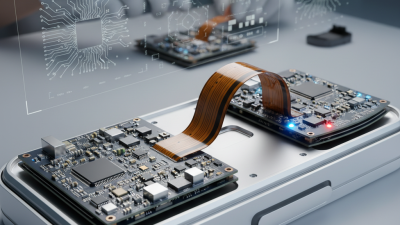
Flex PCB assembly combines a flexible circuit with electronic components, connectors, and mechanical supports. Unlike rigid boards, flex circuits can fold around tight corners and fit inside thin products. Assembly usually includes surface-mount placement, controlled soldering, stiffener attachment, and electrical testing. Small details matter. A misplaced component can restrict bending or create stress near a connector.
In practical production, engineers check the bend radius, copper thickness, adhesive layers, and component height before ordering volume. They also review thermal profiles and solder-joint quality. Automated optical inspection can find missing parts, shifted components, and solder bridges. X-ray inspection may help assess hidden joints. These steps support consistent results across different production sites. Global buyers need this control when products move between factories, countries, and distribution centers.
Flex assembly is valuable in cameras, medical instruments, wearable devices, and industrial sensors. It reduces wiring, saves space, and can improve resistance to vibration. However, flexibility does not remove design risk. I have seen layouts that worked electrically but failed after repeated folding. That mistake is easy to overlook. Buyers should request prototype samples, bend-cycle data, material certificates, and traceable inspection records. Clear communication also matters when teams work across time zones. A capable supplier should explain design limitations, not simply accept every drawing. Pricing alone is a weak selection method. A lower quote may exclude testing, tooling, or protective packaging, leaving costly corrections later.
| Rank | Anonymous Supplier Profile | Primary Operating Region | Typical Flex PCB Structure | Component Capability | Assembly Services | Typical Production Volume | Prototype Lead Time | Production Lead Time | Quality and Compliance Focus | Best Fit for Global Buyers |
|---|---|---|---|---|---|---|---|---|---|---|
| 1 | Profile A - High-Volume Flexible Electronics Specialist | East Asia | 1-6 layers; polyimide-based flex and rigid-flex | 0402 metric / 0201 metric components; fine-pitch QFP and BGA | SMT, selective soldering, stiffener bonding, cable assembly, functional testing | 10,000-1,000,000+ assemblies per year | 5-10 working days | 3-6 weeks | IPC workmanship controls, lot traceability, RoHS and REACH support | Consumer electronics, wearables and high-volume connected devices |
| 2 | Profile B - Rapid-Turn Prototype and NPI Partner | North America | 1-4 layers; single-sided, double-sided and rigid-flex designs | 0402 metric components; QFN, QFP and selected BGA packages | DFM review, SMT, hand rework, inspection, engineering change support | 10-10,000 assemblies per order | 3-7 working days | 2-5 weeks | Engineering documentation, first-article inspection and process validation | Start-ups, product developers and low-to-medium volume programs |
| 3 | Profile C - Automotive-Grade Flex Assembly Manufacturer | Central Europe | 2-8 layers; high-temperature polyimide and rigid-flex formats | Fine-pitch SMT, BGA, power components and connector integration | SMT, laser marking, conformal coating, in-circuit testing and end-of-line testing | 5,000-500,000 assemblies per year | 10-15 working days | 4-8 weeks | Automotive process controls, product traceability and environmental testing | Vehicle electronics, sensors, lighting and control modules |
| 4 | Profile D - Medical and Wearable Device Assembly Partner | Western Europe | 1-6 layers; compact flex and high-density rigid-flex assemblies | 0201 metric components; micro-connectors and fine-pitch packages | SMT, controlled cleaning, inspection, coating and device-level assembly | 500-100,000 assemblies per year | 7-14 working days | 4-8 weeks | ISO 13485-oriented controls, cleanliness management and full batch records | Medical instruments, health monitors and compact wearable products |
| 5 | Profile E - Aerospace and Defense Electronics Integrator | North America | 2-10 layers; controlled-impedance flex and rigid-flex boards | Fine-pitch SMT, BGA, RF components and high-reliability connectors | SMT, X-ray inspection, environmental stress screening and cable integration | 100-50,000 assemblies per year | 10-20 working days | 6-12 weeks | AS9100-oriented processes, configuration control and reliability testing | Avionics, navigation equipment, communications and mission electronics |
| 6 | Profile F - Industrial and Power Electronics EMS Provider | Southeast Asia | 1-6 layers; heavy-copper sections combined with flexible interconnects | 0402 metric to large power packages; mixed-technology assembly | SMT, through-hole assembly, selective soldering, coating and box build | 1,000-250,000 assemblies per year | 7-14 working days | 4-8 weeks | IPC process controls, electrical safety testing and supply-chain traceability | Industrial controls, energy systems, robotics and instrumentation |
| 7 | Profile G - High-Density Interconnect and Miniaturization Specialist | East Asia | 2-8 layers; fine-line flex and multilayer rigid-flex designs | 0201 metric components, micro-BGA and small-pitch connectors | SMT, laser drilling support, micro-assembly, AOI and X-ray inspection | 1,000-300,000 assemblies per year | 8-15 working days | 4-7 weeks | Dimensional inspection, solder-joint verification and controlled process windows | Smartphones, cameras, compact sensors and space-constrained devices |
| 8 | Profile H - Cost-Optimized Global Contract Manufacturer | South Asia | 1-4 layers; standard flex and basic rigid-flex assemblies | 0603 metric to 0402 metric components; standard QFP and QFN | SMT, manual insertion, soldering, visual inspection and packaging | 5,000-500,000 assemblies per year | 10-18 working days | 5-9 weeks | Incoming inspection, production sampling and export documentation | Cost-sensitive consumer, lighting and general electronics programs |
| 9 | Profile I - Quick-Response Regional Assembly House | Eastern Europe | 1-6 layers; single-sided, double-sided and rigid-flex boards | 0603 metric and 0402 metric components; standard BGA support | SMT, prototyping, rework, inspection and small-batch testing | 50-50,000 assemblies per order | 5-10 working days | 3-6 weeks | IPC-based inspection, documentation review and low-volume process control | European product launches, maintenance parts and engineering builds |
| 10 | Profile J - Integrated Design-to-Assembly Service Provider | Global Multi-Region Network | 1-10 layers; flex, rigid-flex and custom interconnect assemblies | 0201 metric to large components; BGA, QFN, QFP and connector integration | DFM, PCB fabrication coordination, SMT, testing, coating and box build | 100-1,000,000+ assemblies per year | 7-15 working days | 4-10 weeks | Supplier qualification, multi-site continuity planning and end-to-end traceability | International buyers requiring design, sourcing and assembly under one program |
Note: Capability ranges, volumes and lead times are representative industry benchmarks for anonymous supplier profiles. Actual performance depends on layer count, material selection, component availability, testing requirements, order quantity and design complexity. Buyers should verify certifications, process capability and delivery commitments directly during supplier qualification.